

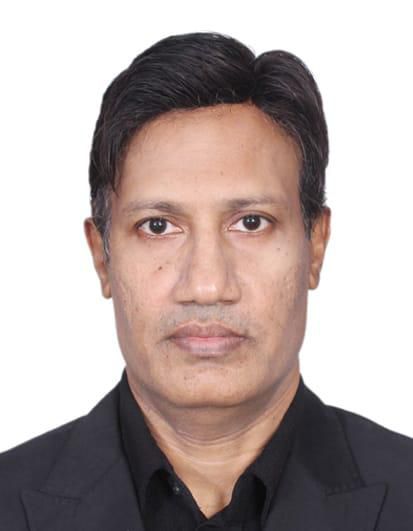
By Junaid Qaiser
As conflict deepens in the Middle East and fears of wider regional instability continue to grow, Prime Minister Shehbaz Sharif’s recent remarks in Beijing deserve closer attention. During his meeting with Chinese Premier Li Qiang, Shehbaz called for Pakistan and China to “really be together” in restoring peace in the region — a statement that goes beyond diplomatic language and reflects a larger geopolitical reality.
The Middle East today stands at a dangerous crossroads. Escalating tensions involving the United States, Israel, and Iran have once again raised concerns about regional security, global trade, and economic uncertainty. For countries like Pakistan, instability in the Gulf is not a distant concern viewed through television screens; it carries real consequences for energy security, remittances, trade routes, and economic recovery at home.
Against this backdrop, Pakistan appears to be seeking a more active diplomatic role — not as a power broker, but as a country willing to encourage dialogue at a time when confrontation seems to dominate international politics.
Prime Minister Shehbaz’s call for peace was rooted in practical concerns as much as moral ones. His emphasis on restoring “business as usual” reflects an understanding that prolonged instability in the Middle East hurts not only the countries directly involved but also economies across the developing world. Pakistan, already facing economic pressures, has little to gain from a region trapped in endless confrontation.
The symbolism of the Beijing meeting also matters. Pakistan’s military leadership, represented by Field Marshal Asim Munir, was present during the talks, underscoring the seriousness of Islamabad’s diplomatic engagement. According to the prime minister, Pakistan has been quietly involved in mediation efforts between Washington and Tehran, using diplomatic and strategic channels to help reduce tensions.
Whether these efforts ultimately produce results remains uncertain. International conflicts are rarely resolved through one country’s intervention alone, particularly when global and regional powers are deeply invested in competing outcomes. Yet diplomacy often works through gradual, behind-the-scenes efforts rather than dramatic announcements. Even modest contributions toward de-escalation can carry significance in moments of crisis.
China’s role in this evolving equation cannot be ignored. Beijing has steadily increased its diplomatic footprint in the Middle East over recent years, positioning itself not only as an economic partner but also as a political stakeholder in regional stability. Pakistan’s endorsement of Chinese peace initiatives signals an intention to deepen cooperation with Beijing beyond trade and infrastructure.
For decades, Pakistan-China relations have largely been discussed through the lens of the China-Pakistan Economic Corridor (CPEC) and strategic cooperation. However, this relationship now appears to be expanding into new areas, including diplomacy, technology, clean energy, artificial intelligence, and even space collaboration. The recent agreements signed during Prime Minister Shehbaz’s visit suggest that both countries are looking toward a broader, future-oriented partnership.
Still, there are important questions Pakistan must confront. Can Islamabad realistically influence peace efforts in one of the world’s most volatile regions? Critics may argue that Pakistan lacks the political weight of powers such as the United States or China. That argument carries some truth. Pakistan’s leverage is limited, and its domestic economic and political challenges often constrain its international ambitions.
Yet influence in diplomacy is not always measured by military or economic power alone. Pakistan maintains longstanding ties with Iran, Gulf states, China, and the West — relationships that, if handled carefully, could allow it to serve as a bridge during moments of tension. Credibility, trust, and access often matter as much as power in conflict mediation.
At the same time, Pakistan must recognise that credibility abroad begins with consistency at home and in foreign policy. If Islamabad seeks recognition as a serious advocate for peace, it must maintain a principled and balanced approach toward regional conflicts rather than appearing selective in its diplomacy.
The timing of this visit to China also carries symbolic importance. As both countries celebrate 75 years of diplomatic relations, the emphasis on an “iron-clad friendship” is familiar rhetoric. However, the real measure of this partnership will not be speeches or ceremonial language; it will be whether Pakistan and China can turn strategic goodwill into meaningful outcomes that improve lives, strengthen regional stability, and encourage peaceful engagement.
In an increasingly polarised world where wars seem easier to start than to end, the search for peace often feels like an unpopular ambition. Yet history repeatedly shows that dialogue, however difficult, remains the only sustainable alternative to prolonged conflict.
Pakistan’s outreach alongside China may not transform the Middle East overnight. But if Islamabad can contribute — even quietly — to lowering tensions and encouraging diplomatic engagement, it would represent an important step toward a more constructive foreign policy identity.
At a time when the world is desperate for responsible leadership, perhaps the real challenge is not whether Pakistan and China can solve the Middle East crisis, but whether enough nations are willing to place peace above politics.






Leave a Reply