

By Qamar Naseem
Steering Committee Member, Global South Coalition for Dignified Menstruation (GSCDM), Pakistan
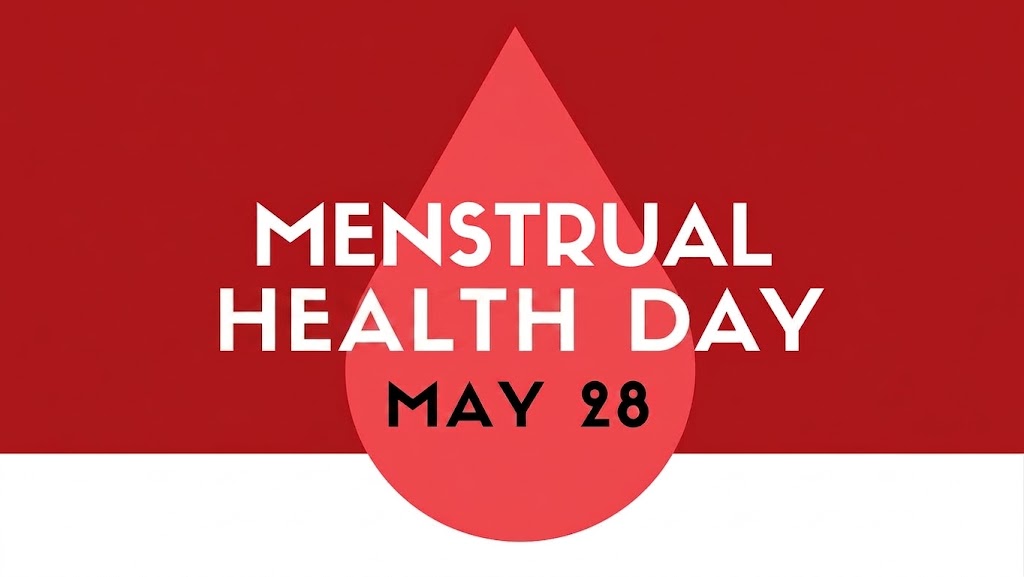
Every year on 28 May, the world observes Menstrual Health Day to raise awareness around menstruation and challenge the silence and stigma that continue to affect millions of menstruators globally. Over the years, the day has helped bring important conversations into public spaces, particularly around access to menstrual products, sanitation, information, and education. Yet despite this growing visibility, menstruation across many societies, including Pakistan, continues to be shaped by shame, discrimination, exclusion, and unequal power relationships.
The time has come to move the conversation beyond hygiene alone. Menstruation is not merely a matter of products, sanitation, or biological management. It is deeply connected with dignity, bodily autonomy, inclusion, equality, participation, and human rights. This shift in understanding lies at the heart of the growing global movement for dignified menstruation.
The Global South Coalition for Dignified Menstruation (GSCDM), founded by Nepali nurse, author and activist Dr. Radha Paudel, has emerged as one of the leading global voices advancing this framework. GSCDM positions dignified menstruation as a decolonial, inclusive, human rights-based, and life-cycle approach that challenges institutional, structural, interpersonal, and social oppressive systems affecting menstruators. The coalition emphasizes that menstruation should not be reduced to hygiene alone because such framing often unintentionally reinforces the notion that menstruation is impure or merely a matter of cleanliness. Instead, the coalition advocates placing dignity at the center of all conversations, policies, and interventions related to menstruation.
This year’s Menstrual Health Day theme, “Menstrual Talk, Dignity First,” reflects this important shift. It encourages societies not only to talk openly about menstruation, but to center dignity, rights, equality, and justice within those conversations. The message is particularly significant in contexts where menstruation remains heavily stigmatized and surrounded by silence.
In Pakistan, menstruation continues to be treated as a private and uncomfortable subject. Many menstruators grow up internalizing shame and restrictions associated with menstruation. Conversations around menstruation are often absent within homes, schools, workplaces, and community spaces. In many educational institutions, young menstruators continue to face embarrassment, teasing, or lack of dignified facilities. In workplaces, menstruation and menopause remain largely invisible despite their direct impact on wellbeing, participation, and productivity. In conservative settings, discriminatory practices and restrictions linked with menstruation continue to limit mobility, participation, and bodily autonomy.
These realities demonstrate that menstrual discrimination is not simply a health issue. It is also a social justice, gender justice, and human rights issue.
The dignified menstruation framework recognizes menstrual discrimination as a form of systemic inequality rooted in patriarchy, exclusion, and unequal power relationships. Menstrual discrimination can appear in policies, institutions, social norms, religious interpretations, education systems, workplaces, healthcare settings, and humanitarian response mechanisms. It affects access to education, employment, healthcare, mobility, participation, and dignity throughout the life cycle of menstruators.
The global dignified menstruation movement has increasingly emphasized that menstrual discrimination should not be dismissed merely as “taboo” or reduced to isolated cultural practices. Instead, it must be understood as a broader justice issue linked with sexual and gender-based violence, child marriage, educational exclusion, disability rights, SRHR, climate justice, humanitarian crises, and workplace inequality.
Importantly, this framework also calls for engaging both menstruators and non-menstruators in dismantling menstrual discrimination. Sustainable transformation requires collective social change rather than placing the burden entirely on menstruators themselves.
In many societies, silence around menstruation is sustained through unequal power relationships and deeply rooted patriarchal attitudes. Boys and men are often excluded from conversations around menstruation and grow up perceiving it as shameful, weak, impure, or inappropriate for public discussion. Such attitudes later shape institutional cultures, workplace policies, media narratives, and social behavior. This is why conversations around dignified menstruation must also engage men and boys as allies in promoting equality, dignity, and inclusion.
The issue becomes even more urgent during humanitarian crises and climate disasters. Floods, displacement, pandemics, and emergencies frequently expose how menstruators remain overlooked in relief planning and service delivery. Lack of dignified facilities, menstrual products, privacy, healthcare, and information during emergencies can intensify vulnerability and exclusion. In a climate-vulnerable country like Pakistan, integrating dignified menstruation into disaster preparedness and humanitarian response is therefore essential.
Similarly, dignified menstruation must also be reflected within schools, workplaces, healthcare systems, media narratives, and public policies. Menstruators deserve environments where they can participate fully in public life without shame, humiliation, or discrimination. Educational institutions should promote respectful and age-appropriate conversations around menstruation. Workplaces should adopt supportive and inclusive approaches that recognize menstrual dignity. Media platforms should move away from sensationalism and silence toward informed, respectful, and rights-based representation.
Another important contribution of the dignified menstruation movement is its emphasis on inclusion. Menstrual conversations have often centered only certain groups while excluding others. The dignified menstruation framework recognizes the experiences of transgender persons, persons with disabilities, elderly menstruators, marginalized communities, and those living in humanitarian settings. This inclusive lens is essential because dignity cannot exist selectively.
The language used in menstrual discourse also matters. Terms focused only on “hygiene” can unintentionally reduce menstruation to cleanliness and products while ignoring deeper questions of dignity, discrimination, participation, and rights. This does not mean hygiene is unimportant, but rather that menstruation must be understood more holistically through the lens of human dignity and justice.
Pakistan today has an important opportunity to move toward this broader and more transformative understanding. Government institutions, Women Commissions, civil society organizations, educational authorities, media platforms, youth movements, and policymakers can collectively help shift the discourse from silence and shame toward dignity and inclusion. Integrating dignified menstruation into policies, education systems, workplace frameworks, humanitarian response, and public dialogue can contribute meaningfully toward gender equality and social justice.
Ultimately, menstruation should never be a source of shame, exclusion, or discrimination. A society that denies dignity to menstruators cannot fully claim to uphold equality, justice, or human rights. Reclaiming menstruation through the lens of dignity, therefore, means reclaiming humanity itself.
As the global movement for dignified menstruation continues to grow, Pakistan must also recognize that the conversation can no longer remain limited to products and awareness alone. The future of menstrual justice lies in centering dignity first.






Leave a Reply