

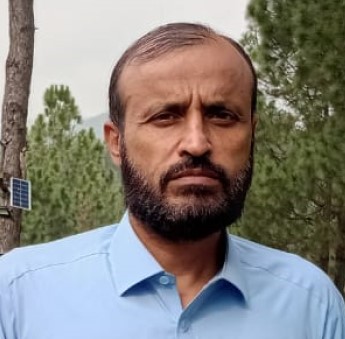
By Muhammad Daud
In a historic development, Pakistan and Iran have reopened a vital chapter in their bilateral relations by restoring direct air connectivity between their capitals after a long gap of six decades. The resumption of flights, operated by Iran Air Tour, marks not only the revival of a practical travel route but also symbolizes a renewed spirit of cooperation, cultural exchange, and economic partnership between the two neighbors.
The first direct flight from Tehran to Islamabad landed on Thursday at Islamabad International Airport, where an inaugural ceremony was held to celebrate this long-awaited step. A large gathering of dignitaries, diplomats, business representatives, and media personnel from both countries witnessed the event. For many, this moment was seen as a milestone in strengthening people-to-people contact and promoting regional connectivity in South Asia and the Middle East.
The restoration of direct flights has been hailed as a concrete outcome of recent high-level exchanges between Pakistan and Iran. Notably, the initiative follows the official visit of Iranian President Dr. Masoud Pezeshkian to Pakistan, during which both countries emphasized expanding cooperation in areas such as trade, energy, security, and cultural exchange.
Iran’s Deputy Head of Mission in Pakistan, Nabi Shirazi, speaking at the ceremony, described the launch of Iran Air Tour’s Islamabad-Tehran service as a step toward “bringing people closer.” He highlighted that the flights would facilitate religious pilgrims, students, and business communities who frequently travel between the two countries but had long struggled with the absence of direct air links.
“This agreement was finalized after constructive talks and represents the determination of both governments to deepen ties. The resumption of these flights is not just a logistical matter; it is a bridge for our nations to move forward together,” Shirazi stated.
For decades, thousands of Pakistani citizens—particularly Shia pilgrims—have traveled to Iran to visit holy sites in Mashhad, Qom, and other cities. Until now, many had to endure longer routes involving transit stops in Gulf states or arduous land journeys across the Pakistan-Iran border. The introduction of direct flights offers pilgrims a safer, faster, and more affordable option.
Tourism operators in both countries also view this development as a potential game-changer. Reza Amiri Moghaddam, Iran’s Ambassador to Pakistan, said the flights would give tourism “an unprecedented boost.” He expressed hope that Iranian travelers would increasingly visit Pakistan’s scenic destinations, including the northern areas, Swat, Gilgit-Baltistan, and cultural heritage sites such as Taxila, Mohenjo-Daro, and Lahore’s historical monuments.
“Pakistan is blessed with natural beauty, hospitality, and deep cultural traditions. This air connection will allow our people to explore these treasures more easily,” Ambassador Moghaddam noted.
Beyond tourism and religious travel, the restoration of flights is expected to aid business communities. Pakistan and Iran, despite being neighbors with a shared border of nearly 900 kilometers, have long struggled to realize the full potential of their economic relationship. Trade between the two countries currently lags far behind what geography and population size would suggest.
By facilitating easier movement for entrepreneurs and investors, direct flights could unlock new opportunities. Officials hope that enhanced connectivity will encourage joint ventures, business exchanges, and greater participation in trade exhibitions and investment forums.
Zaheer Abbas Khan, the Country Manager of Iran Air Tour in Pakistan, formally announced the start of the weekly flight service, which will operate every Tuesday between Islamabad and Tehran. He noted that additional flights may be added in the future depending on demand.
“This is just the beginning,” Khan said. “The business community, students, and families on both sides have been waiting for such a service for years. With the support of both governments, we hope to expand our operations and create more options for travelers.”
The fact that direct air connectivity between Islamabad and Tehran has been restored after 60 years underscores the importance of this development. For decades, political challenges, regional tensions, and logistical barriers prevented such an initiative from materializing. While road links between the two countries have remained functional, the absence of direct flights symbolized a gap in relations that was widely felt among ordinary citizens.
The resumption now reflects changing dynamics. Both Pakistan and Iran are increasingly focused on regional cooperation as a way to overcome economic difficulties, foster stability, and counter the influence of external powers. For Pakistan, developing closer ties with Iran aligns with its broader efforts to balance relations in the region, including with Gulf states, Turkey, and China. For Iran, which faces international sanctions, stronger ties with neighboring countries offer a path to economic resilience and greater integration into regional trade networks.
Regional analysts view the move as part of a larger trend where South and Central Asian nations are investing in connectivity to promote peace and prosperity. The Islamabad-Tehran flights could potentially pave the way for future routes linking Iran with other Pakistani cities such as Karachi, Lahore, and Quetta, while also encouraging multi-country travel packages for tourists and pilgrims.
Furthermore, the resumption of air travel is expected to complement ongoing projects like cross-border energy pipelines and trade corridors. While many challenges remain, including security concerns and bureaucratic hurdles, the restoration of flights has generated optimism that practical steps can overcome longstanding barriers.
The return of direct flights between Islamabad and Tehran after 60 years is more than a symbolic achievement—it is a concrete sign of renewed engagement between Pakistan and Iran. By opening the skies, the two nations are also opening doors for pilgrims, students, tourists, and business communities.
As the weekly service begins, expectations are high that it will foster greater mutual understanding, boost trade and tourism, and set the stage for deeper cooperation in multiple fields. For the citizens of both countries, long divided by limited travel options, the air link offers a tangible sense of closeness and shared future.
The challenge now lies in sustaining this momentum, expanding the scope of connectivity, and ensuring that this milestone serves as a foundation for even stronger ties between the two neighbors.
The writer is a senior journalist and author of a book. He can be followed on X (formerly Twitter) via the handle @daudjour.









Leave a Reply