

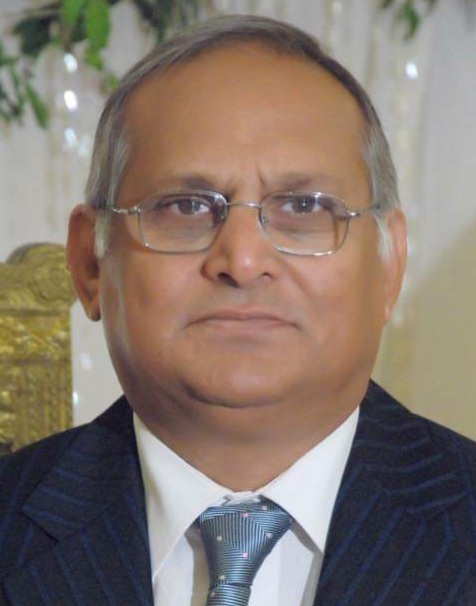
By Ghulam Haider Shaikh
The statement by the French President that U.S. President Donald Trump should ensure an end to the Gaza war if he truly seeks the Nobel Peace Prize carries profound political and moral implications. It is a clear reminder that peace cannot be achieved through speeches, symbolic gestures, or one-sided diplomacy but demands concrete action and moral courage.
For decades, Gaza has remained a tragic symbol of human suffering, where repeated cycles of violence have claimed countless innocent lives. Civilians continue to bear the brunt of military strikes, blockades, and political deadlock, leaving entire generations traumatized and hopeless. While global leaders frequently express concern, meaningful steps toward ending the bloodshed have been painfully slow.
President Trump has often spoken of his desire for global peace, but words alone cannot bring about the change the world so desperately needs. If he genuinely seeks the honor of a Nobel Peace Prize, as the French President suggests, then Gaza presents a defining opportunity. Ensuring a permanent ceasefire would not only save lives but also rebuild America’s credibility as a mediator for peace in the Middle East, a credibility that has been eroding due to perceived bias and inconsistent policies.
Moreover, the international community has grown increasingly frustrated with selective diplomacy, where powerful nations claim to support peace but fail to act decisively when their allies are involved. In the case of Gaza, achieving a ceasefire requires more than temporary truces; it demands addressing the root causes of the conflict, ensuring humanitarian access, and restarting genuine political dialogue between Palestinians and Israelis.
The French President’s remarks reflect a broader sentiment: that leadership in today’s world must be judged by the ability to prevent wars, not wage them. A Nobel Peace Prize should recognize real achievements in advancing human dignity, ending conflicts, and promoting justice. If President Trump wishes to be remembered as a peacemaker, bringing lasting peace to Gaza would be the ultimate test of his diplomacy and determination.
In the end, history will not measure leaders by their ambitions for awards but by the lives they save and the peace they deliver. Gaza offers President Trump a chance to turn rhetoric into reality, and perhaps to earn the recognition he seeks.
Talks with Afghanistan Key
The recent statement by the Chief Minister of Khyber Pakhtunkhwa (KPK) that Pakistan will win the war against terrorism while emphasizing the need for dialogue with Afghanistan reflects a balanced and pragmatic approach toward one of the region’s most pressing issues. For years, Pakistan has been battling militancy, particularly in the tribal districts and border areas, where extremist elements have exploited instability in Afghanistan to carry out cross-border attacks. Despite numerous military operations, terrorism continues to pose a significant threat to national security, economic growth, and social harmony.
The Chief Minister’s remarks highlight an important reality: military action alone cannot eradicate terrorism unless it is coupled with political engagement and regional cooperation. Afghanistan, sharing a long and porous border with Pakistan, has often been a source of concern due to the presence of various militant groups operating on its soil. The instability in Afghanistan directly impacts Pakistan, making it essential for both nations to coordinate efforts and prevent terrorists from exploiting geographical and political vulnerabilities.
Dialogue with Afghanistan is, therefore, not a sign of weakness but a strategic necessity. Negotiations can help build trust, strengthen border management, and facilitate intelligence sharing. Moreover, peaceful relations can pave the way for joint development projects in trade, energy, and infrastructure, benefitting both nations economically and socially.
Winning the war against terrorism also requires addressing root causes such as poverty, lack of education, and unemployment, which often push vulnerable populations toward extremism. The KPK government’s acknowledgment that peace cannot be achieved solely through force is a step in the right direction. A comprehensive strategy that combines military strength, political dialogue, and socio-economic reforms can ensure long-term stability.
Ultimately, victory against terrorism will not come from battlefield triumphs alone but from creating an environment where extremism finds no fertile ground to grow. The Chief Minister’s call for talks with Afghanistan signals hope that the region can move toward peace through mutual understanding and cooperation, turning a long history of conflict into a future of stability and progress




Leave a Reply