

TIMES REPORT
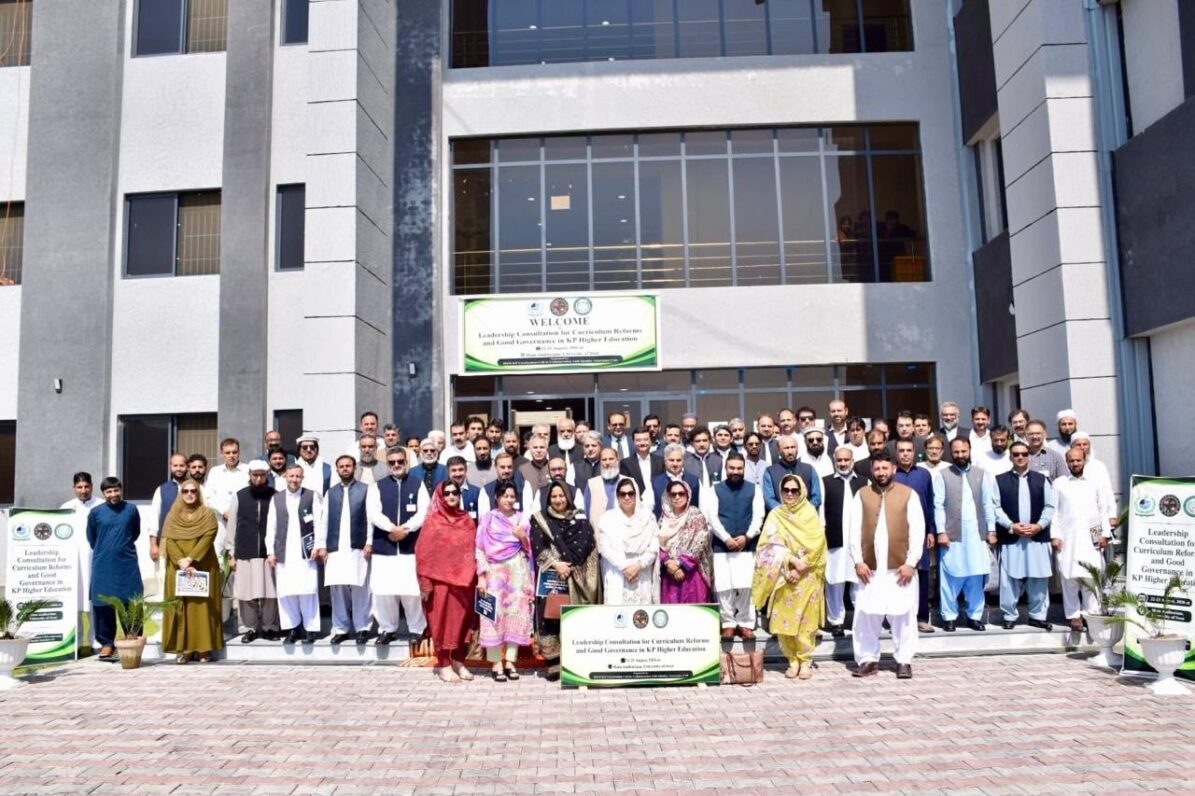
SWAT: The University of Swat hosted a two-day “Leadership Consultation for Curriculum Reforms and Good Governance in KP Higher Education” at its Main Auditorium, bringing together senior officials of the Higher Education Department (HED), Government of Khyber Pakhtunkhwa, the Higher Education Commission (HEC), vice chancellors, academic leaders, policymakers, and subject experts to deliberate on priority reforms for strengthening higher education across the province.
The consultation was organized by the Curriculum Cell of the HED in collaboration with the Quality Assurance Cell, with the University of Swat serving as host institution.
Welcoming the participants, Vice Chancellor University of Swat, Prof. Dr. Muhammad Qasim, emphasized the importance of collective leadership, innovation, and institutional collaboration in transforming higher education. He underlined that universities must prepare graduates with contemporary knowledge, practical competencies, entrepreneurial capability, and the ability to respond to emerging national and global challenges.

Opening remarks were delivered by Mr. Abdul Akram, Additional Secretary (Admin), HED KP, while Dr. Imranullah Khan Marwat, Director QA, HED KP, presented a detailed session on “Curriculum Reforms and Governance in KP Higher Education,” highlighting governance challenges and the need for coordinated institutional action to enhance academic quality.
AI Integration in Higher Education
As keynote speaker and a recognized expert in Artificial Intelligence, Prof. Dr. Gul Muhammad Khan, Vice Chancellor of UET Mardan, delivered a presentation titled “AI Integration in Higher Education.” Dr. Khan has previously been recognized as an “AI Champion” by the Planning Commission of Pakistan, and UET Mardan has been declared the leading hub for AI and responsible AI integration among Higher Education Institutions (HEIs) in the country.
Speaking from this institutional and national perspective, Prof. Dr. Gul Muhammad Khan noted that UET Mardan provides the complete spectrum of AI education and capacity-building at the BS, MS, and PhD levels, along with extensive training programs for students, graduates, staff, faculty, and university management.

He further outlined practical and responsible pathways for AI adoption across higher education institutions, focusing on the following priorities:
* Improving the quality of teaching through AI-supported learning and guided instruction
* Strengthening knowledge transfer and academic engagement
* Aligning assessment mechanisms with learning outcomes, integrity, and transparency
* Positioning HEIs as both knowledge-creation factories and job-seeking ecosystems to produce future-ready graduates
* Prioritizing policy-making, ethics, governance, and risk mitigation to ensure safe and sustainable AI deployment
Dr. Khan reinforced that AI integration in higher education must be purpose-driven, ethically grounded, and implemented through clear institutional frameworks in order to achieve meaningful and sustainable impact.
Other sessions during the consultation covered themes including Internationalization of Higher Education, Outcome-Based Education, and Financial Optimization for Value Creation in Higher Education, reflecting the event’s broad focus on academic quality, governance, and institutional performance.

The consultation concluded with closing remarks by the Executive Director of the Higher Education Commission, who attended as chief guest. He highlighted the importance of self-sustainability and institutional autonomy, drawing on his own successful tenure at Khyber Medical University (KMU) as an example of lessons that can be applied across the sector. The Executive Director reaffirmed HEC’s full support to HEIs in implementing reforms for quality education and the long-term sustainability of institutions.
About UET Mardan
The University of Engineering and Technology, Mardan, is recognized as Pakistan’s leading hub for Artificial Intelligence and responsible AI integration in Higher Education Institutions, offering a complete spectrum of AI education from undergraduate to doctoral levels, along with capacity-building programs for faculty, staff, and institutional leadership.


Leave a Reply