

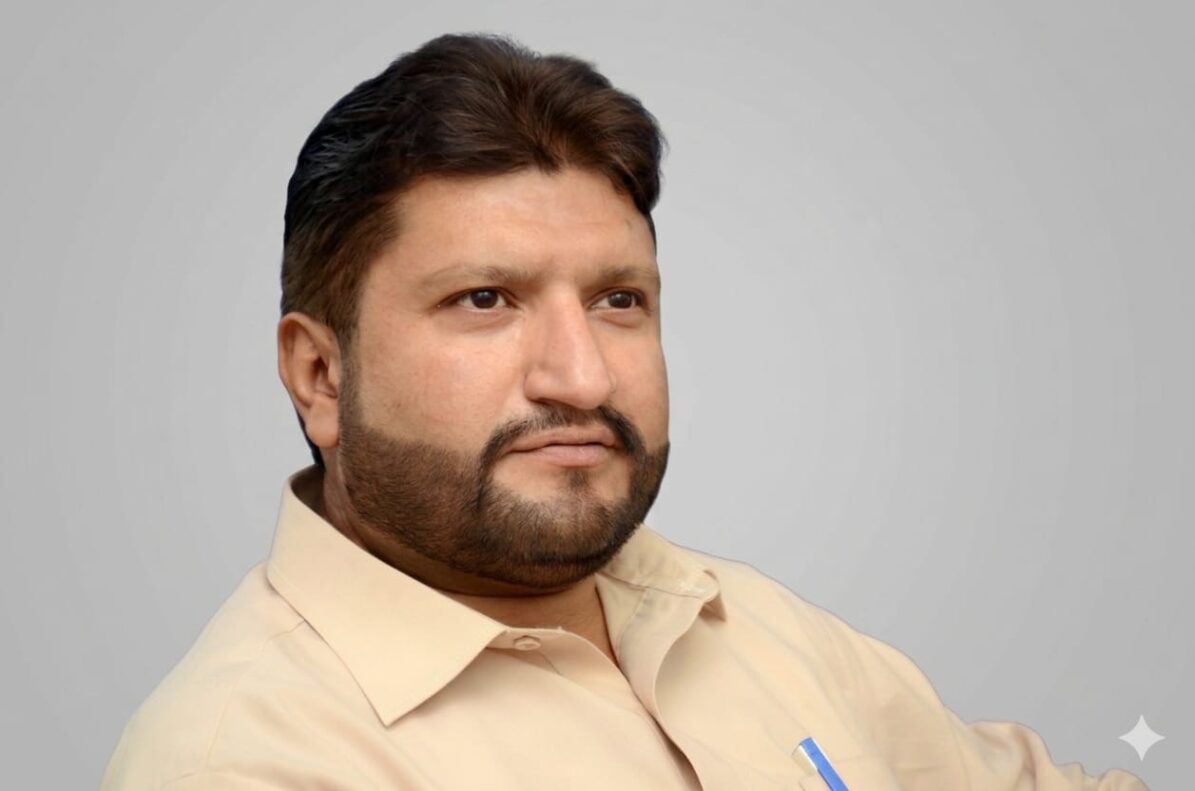
Amjad Hadi Yousafzai
In an age of smartphones, when it is considered difficult to keep young people’s attention away from their mobile screens even for a few moments, seeing a large number of students—both male and female—remain focused on the stage for an entire hour in Peshawar was more than just a scene; it was a clear demonstration of the power of theatre. The special theatre play “I Am Pakistan” drew a packed audience, with young spectators watching the performance with keen interest. Among those attending were artists Shazma Haleem and Arshad Hussain, who have recently been nominated for the Presidential Award for Pride of Performance. They appreciated the initiative and also praised the performances of the participating artists.
Supported by the Directorate of Youth Affairs, Khyber Pakhtunkhwa, the play was a commendable and meaningful effort that explored themes of identity, unity, national cohesion, love for the homeland, cultural diversity and the challenges faced by the younger generation. One of its greatest strengths was that it communicated serious subjects through characters, dialogue, satire, humour and storytelling rather than through dry speeches or direct preaching.
The story revolves around four friends belonging to Sindh, Punjab, Balochistan and Khyber Pakhtunkhwa, who are shown living together under one roof. On the surface, they are four separate characters, but symbolically they represent Pakistan’s four provinces. Tanveer Qazi, Tahir Qureshi, Abdul Jabbar Bari and Batin Farooqi portrayed these four characters. Through them, the play brought out different provincial identities, temperaments and cultural colours, while their life together in one house conveyed the message that despite their distinct identities, they are all part of one shared home—Pakistan. This is the central metaphor of the play: the four provinces may have their own identities, but their home is one.
The play did not limit itself to the theme of national unity. It also addressed some of the important challenges confronting today’s young generation, particularly Generation Z. Hassan Munir portrayed a young man who, after facing failure, becomes addicted to drugs. The character draws attention to an important issue among young people: failure should not be regarded as the end of life, but as an opportunity to try again. The play also highlights the fact that if young people receive timely encouragement, guidance and positive opportunities, they can move away from destructive paths and channel their abilities in a constructive direction.
The play was presented in a light and engaging manner, ensuring that its serious themes did not become burdensome for the audience. Imtiaz Charlie played the role of a moneylender and added an entertaining dimension through his trademark satirical humour. His character not only amused the audience but also shed light on certain social attitudes in a humorous way. Noor Hussain Noori portrayed a mischievous and disruptive neighbour, a character that, beyond the storyline, symbolically represented elements that seek to create discord and division. Veteran actress Noshaba appeared in a brief but effective role as a mother and made a strong impression despite the limited screen time. Essentially, these characters were symbolic in nature, and collectively the play conveyed the message that despite differences and problems, Pakistan is one home and its provinces are members of the same family.

The final part of the play was particularly significant and impactful. Under the instigation of a Hindu character portrayed as a troublemaker, the four friends representing Sindh, Punjab, Balochistan and Khyber Pakhtunkhwa begin fighting with one another. Those who had been living together as friends and brothers become embroiled in conflict and turn against each other. This was not merely a quarrel between four individuals; it was a symbolic depiction of how external provocation and mischief can create divisions among people who share common bonds, causing them to forget their shared identity and become consumed by internal differences.
It is at this tense moment that the mother character enters. In the background, the popular song “Tum Kaun Ho” from the successful Urdu film “Khote Sikke,” directed by Aziz Tabassum, a pioneer director of Pashto cinema, begins to play. During the song, the four characters not only remain engaged in the confrontation but also express themselves in relation to their respective identities. The scene deepens the central theme of the play: every individual and every province may have its own identity, but there is still a shared relationship and a common home. At this point, the mother character becomes more than simply a mother; she transforms into a broader national symbol. Her arrival serves as a reminder to her children of the bond they share.
Another beautiful turn in the story comes when Hassan Munir returns as a successful cricketer. The young man who had turned to drugs following failure comes back to his friends after finding success through his abilities. His achievement brings the four friends together again, and they put aside their differences and become united once more. This carries an important message for young people: failure is not the end of the road. With opportunity, hard work, encouragement and the right direction, a young person who has experienced failure can become an example of success. At the same time, the reconciliation of the four friends suggests that shared happiness, achievement and a sense of national belonging can overcome differences and bring people closer together.
In this way, the final sequence becomes a summary of the entire play: identities may be different, languages may be different and cultures may be different, but the homeland is one. Forces that seek to create division may temporarily turn people against one another, but a shared homeland, shared happiness and mutual affection have the power to bring them together again.
The script was written by Batin Farooqi, who also performed one of the principal roles. His writing demonstrated an effort to present serious subjects in a simple, light-hearted and engaging manner, while his own performance was also noteworthy. Khalid Khattak’s direction was equally effective. One of the major strengths of his direction was the way he brought different characters together within a coherent storyline while ensuring that the central message reached the audience. The other actors also performed well in their respective roles, and their performances were appreciated by the audience.
Watching this play made one thing particularly clear: Khyber Pakhtunkhwa has no shortage of talent. The province has writers, directors, actors and young people capable of excelling in theatre and the performing arts. What they need are opportunities, patronage, training and sustainable platforms through which their abilities can be brought to the forefront. The support provided by the Directorate of Youth Affairs, Khyber Pakhtunkhwa, for a meaningful theatre production such as “I Am Pakistan” is certainly a welcome initiative. However, such activities should not remain limited to occasional programmes; they need to be developed into a sustained cultural and educational movement.
There is also a need for the Khyber Pakhtunkhwa Culture Department to play a more active role in this regard. New faces should be introduced through theatre in Urdu, Pashto and Hindko, and a regular programme of such productions should be taken to schools, colleges and universities. These plays would not merely provide entertainment; they could also give young people opportunities to develop national awareness, cultural identity, social understanding, positive thinking and creative expression. Educational institutions provide the best access to young audiences, and theatre can communicate messages of social awareness, national unity, cultural identity and positive thinking in an engaging way.
Another important step would be to ensure that such theatre productions do not remain confined to the auditorium. They should be professionally recorded and released on YouTube and other social media platforms. This would have several benefits. On the one hand, artists would receive greater opportunities for work and their performances could reach much larger audiences. On the other hand, Pakistan’s positive, diverse and rich cultural image could be presented to the world. At a time when social media has become a powerful tool for shaping narratives globally, taking our own stories, artists, languages and cultures into the digital space has become an important necessity.

“I Am Pakistan” also reinforces the realization that when young people are offered quality and meaningful content, they are still willing to engage with theatre. The packed hall and the students who remained focused on the stage rather than their mobile phones for an entire hour were practical evidence of this. The problem may not be that young people have lost interest in theatre; perhaps the real problem is that we have not provided them with enough opportunities to experience quality theatre. Productions of this nature are a need of the times. We should not simply tell young people to use their mobile phones less; we must also provide alternatives that engage their attention, creativity and thinking in positive ways. Theatre can be one of the most effective such alternatives.
“I Am Pakistan” is certainly a theatre play, but it contains numerous questions, symbols and messages. Four friends representing four provinces, one home, a character seeking to create division, the arrival of the mother, the echoes of “Tum Kaun Ho,” followed by the young man’s success and the eventual reconciliation of the four friends—all combine to deliver one central message: despite our differences, our bond is one and our home is one.
The play also proves that Khyber Pakhtunkhwa does not lack talent; what it lacks is a sustained system of opportunities and support through which that talent can flourish. If such plays are taken to schools, colleges and universities, if new artists are given opportunities in Pashto, Hindko and Urdu, if government institutions provide consistent patronage, and if these productions are brought to wider audiences through digital platforms, theatre can become much more than entertainment. It can become a powerful means of nurturing young people, creating employment opportunities for artists, promoting culture and building a positive image of Pakistan.
Perhaps the most beautiful message of “I Am Pakistan” is this: four provinces, four identities, four colours—but one home; many differences, but one bond; and above all, one identity—Pakistan.







Leave a Reply