

Anwar Zada Gulyar
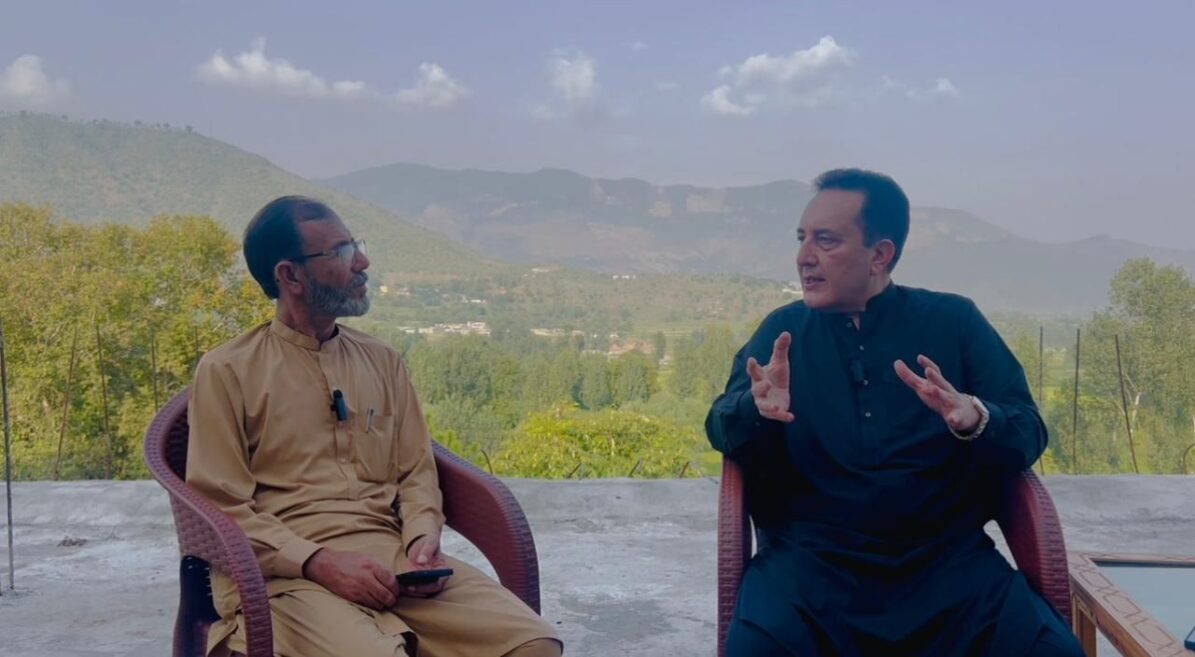
BAJAUR : Former Member of the National Assembly and Pakistan Muslim League-Nawaz (PML-N) provincial leader Shahabuddin Khan has said that the abolition of the Frontier Crimes Regulation (FCR) and the merger of the tribal districts with Khyber Pakhtunkhwa was a historic development. However, he said, further serious and sustained efforts were needed to ensure that the benefits of the merger reached the people—efforts that, in his view, were not seen after his tenure.
In an exclusive interview, Shahabuddin Khan said that the primary responsibility of members of parliament was to legislate, while the implementation of laws was the responsibility of state institutions. He said that he and his colleagues had struggled for the abolition of the FCR and succeeded in ending the system, and that it was now the state’s responsibility to make the merger successful in practical terms.
Shahabuddin Khan said the merger had brought about a major and positive political change in the merged districts. Today, he said, people in these areas can openly criticize the government, state institutions, the prime minister and even the president, and can freely express their political and democratic rights. He contrasted this with the situation during the FCR era.
According to him, the political agent enjoyed extensive powers under the FCR system, and it was not easy for ordinary citizens to openly speak out against the system. Although the merger has not eliminated all problems, he said, political awareness among the people has increased significantly, as has their courage to question authorities and raise their voices for their rights.
Regarding the federal government’s alleged lack of adequate attention to the merged districts, Shahabuddin Khan said it was the responsibility of elected representatives to demand their constitutional rights and a fair share of resources from the federal government. If representatives of the merged districts consistently and effectively raise the issues of their areas with the federal government, he said, the government would have to respond. In his view, it was unrealistic to expect the federal government to resolve all problems automatically if no one demanded action.
Commenting on the performance of the current members of parliament, Shahabuddin Khan said he had not witnessed any major mega project or significant development in the merged districts over the past nearly nine years that could genuinely be described as a notable achievement. According to him, neither any major project had been approved nor had development work been carried out at the pace required by these areas.
He said people had elected their representatives to raise their issues in parliament, secure resources from the government and play an effective role in the development of their constituencies. If elected representatives failed to fulfill these responsibilities, he said, it was only natural for the public to question their performance.
Addressing the issue of differences between the federal and provincial governments, Shahabuddin Khan said that the two governments were “two branches of the same tree.” While there was an impression of political differences between them, he said, if there were genuinely serious differences, federal institutions would play a more effective role in dealing with matters involving the provincial government.
Referring to the National Accountability Bureau (NAB), he said it was a federal institution and argued that if there were genuine and serious confrontation between the federal and provincial governments, federal institutions would take action regarding alleged corruption and other matters involving the provincial government. However, he said, this did not appear to be happening in an effective manner.
Shahabuddin Khan said that the people of Khyber Pakhtunkhwa were ultimately bearing the consequences of political confrontation, whereas what the public needed was development, peace, employment and basic services rather than political disputes.
He said the merged districts faced common challenges and that elected representatives therefore needed to adopt a collective strategy to address them. Issues including funding, development projects, education, healthcare, employment, roads, electricity and administrative challenges arising after the merger required a united and effective voice, he added.
According to Shahabuddin Khan, the merger should not remain confined to a legal or constitutional process; its benefits must be visible in the daily lives of ordinary people. Providing the people of the tribal districts with quality education, healthcare, employment, infrastructure and other basic services on an equal footing with citizens elsewhere in the country would, he said, be the true measure of the merger’s success.
In his message to young people, Shahabuddin Khan said the present era was one of practical skills and that young people should not limit themselves to obtaining academic degrees but should focus on practical education and vocational skills. He said modern technology and social media had created new opportunities for employment and income, enabling people to earn through social media and various digital platforms.
He advised young people to participate in politics if they wished, but urged them to first become economically independent. According to him, it was difficult for an economically vulnerable person to sustain a long political struggle. He therefore advised young people to first stand on their own feet, acquire useful skills and achieve financial stability, and then, if they chose to enter politics, play their role with confidence and determination.

Leave a Reply