

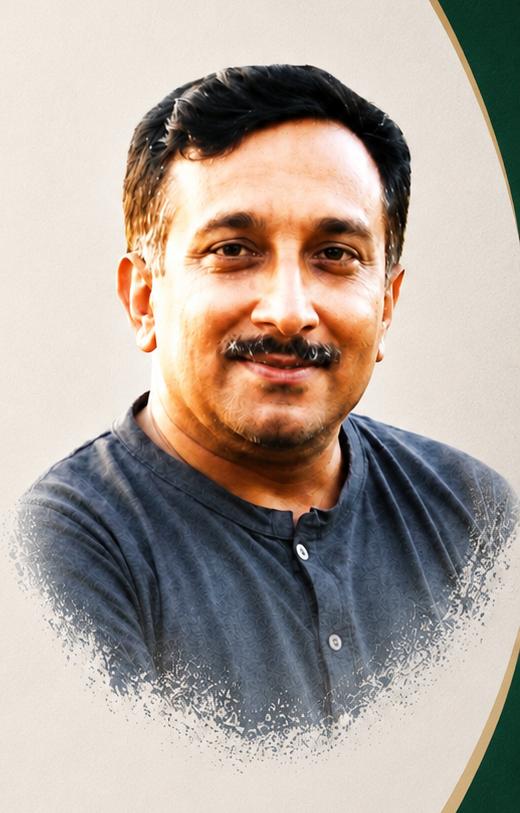
A Waseem Khattak
A healthcare system is not just a collection of big hospitals, modern machines and impressive buildings. It is a chain basic health units, district hospitals, teaching institutions, doctors, nurses and administrators, all meant to work in sequence. When the early links in that chain weaken, the pressure doesn’t disappear. It simply travels upward, landing hardest on the big teaching hospitals sitting at the top of the system.
Hayatabad Medical Complex (HMC) is one of Khyber Pakhtunkhwa’s most important teaching and treatment institutions, drawing patients not just from Peshawar but from across the province, the merged tribal districts, and beyond including cross-border patients from Afghanistan. With over 1,280 beds, more than 50 ICU beds, and a team of 115-plus specialist doctors, it has built the kind of reputation that comes from handling complex diseases, advanced diagnostics, surgery, trauma and emergencies around the clock. That reputation, though, has become its own burden. Public trust has translated into a scale of patient traffic that is now testing the hospital’s administrative limits.
Thousands of patients walk through HMC’s doors every single day. Available figures suggest the OPD alone handles more than 5,000 patients daily, while the emergency department manages somewhere between 1,000 and 1,500 patients a day trauma cases, heart conditions, strokes, respiratory emergencies and a steady stream of other urgent cases that keep the emergency system under constant strain. Lady Reading Hospital carries an even heavier load in absolute numbers: with over 1,700 beds, more than 30 specialties and upward of 350 consultants on staff, its OPD reportedly sees more than 5,500 patients a day, while its casualty and emergency department handles over 2,000 patients daily on its own. Khyber Teaching Hospital, with its 1,600-plus beds and a 100-bed casualty and emergency block rebuilt and expanded in recent years, runs the same round-the-clock model across more than 30 specialties, drawing patients from the city as well as the surrounding districts. Put side by side, these numbers tell a single story HMC, LRH and KTH have stopped functioning as hospitals for Peshawar alone and have effectively become the health system for a large share of the province.
HMC’s location adds a dimension the other big hospitals don’t carry in quite the same way. Sitting in Hayatabad, close to the Bara road and the Torkham border route, it is the nearest major teaching hospital to some of the most densely populated pockets of cross-border and settled Afghan residents in Peshawar areas like Karkhano Market and Board Bazaar in Hayatabad, both known for their large Afghan trading and resident communities. That proximity means HMC absorbs not just patients from KP’s own districts and the merged tribal areas, but a steady flow of patients crossing over from Afghanistan itself, on top of the local population living and trading around these markets. It is one more layer of demand stacked onto a hospital already stretched thin by everyone else routed its way.
The real question isn’t simply how many patients are arriving. It’s why so many people feel they have no choice but to come here in the first place. In large parts of Khyber Pakhtunkhwa, primary and secondary healthcare facilities remain limited, so patients carrying complicated conditions bypass the local level entirely and head straight for a major teaching hospital. There’s a widespread belief not entirely unfounded that real treatment, the best doctors and a complete diagnosis are only available at the big institutions. A patient with a minor illness who should be able to walk into a local clinic instead travels for hours to reach Peshawar, because that confidence in local care simply isn’t there yet.
This is, in one sense, a sign of success proof that HMC has earned the public’s trust. But it also exposes a deeper imbalance running through the entire health system. A teaching hospital carries responsibilities well beyond those of an ordinary hospital: treating patients, training the next generation of doctors, conducting medical research, and maintaining standards of modern care, all at the same time. When thousands of patients show up daily on top of that mandate, the strain on doctors, nursing staff and every other tier of personnel multiplies many times over.
The emergency department is where this pressure shows itself most starkly. Every patient who walks in wants and needs immediate attention. But when hundreds, sometimes thousands, arrive in a single day, delivering that standard of care with finite resources becomes an immense administrative challenge. Waiting times stretch longer, bed availability tightens, and medical staff are left working under relentless pressure, shift after shift.
Simply adding more beds or constructing new buildings will not solve this on its own. Unless basic health units, tehsil hospitals and district hospitals are strengthened, the burden will keep piling onto the same handful of institutions, no matter how much capacity is added at the top. A functioning health system routes minor illnesses to the local level, moderate cases to district hospitals, and only genuinely complex cases up to teaching hospitals like HMC. Khyber Pakhtunkhwa already has an extensive network of Basic Health Units and Rural Health Centres on paper the problem is that too few people trust them enough to use them as the first stop, and that trust has to be earned through consistent service, not simply demanded through policy.
This is precisely where the real fix has to begin: strengthening the structure and functioning of healthcare across the province, particularly at the primary and secondary levels — better staffing, reliable medicines, functioning diagnostic equipment, and a referral mechanism that actually works, rather than existing only as a formality. Only when that referral system becomes a genuine functioning pathway, and not just a line on paper, will hospitals like HMC and LRH be freed to do what they were built for: treating the genuinely complex cases that need specialist attention, rather than absorbing an entire province’s routine caseload as well.
Between them, HMC, LRH and KTH now function as the effective safety net for the whole province and each carries its own version of the same overload, whether that’s LRH’s sheer emergency volume, KTH’s steady flow of city and district referrals, or HMC’s added exposure as the closest major facility to the border and to neighbourhoods with a heavy concentration of Afghan residents and traders. Doctors, nurses and paramedical staff remain the backbone of this entire system, and they are the ones absorbing the daily cost of its imbalance. A doctor forced to see an extraordinary number of patients in a single day simply cannot give each one the time and attention they deserve not out of negligence, but because the math of the system leaves no other option. Providing healthcare workers with a better working environment and adequate support isn’t a side issue; it is central to whether the system holds together at all.
What’s happening at Hayatabad Medical Complex isn’t really a story about one hospital. It’s a question facing the entire provincial health system. If teaching hospitals are going to function the way they’re meant to as centres for the most complex, specialised cases then primary healthcare has to be built up to the point where people trust it enough to use it first. A truly successful health system isn’t one where every patient feels compelled to travel to a major hospital. It’s one where every citizen can get quality treatment at the right time, in the right place, according to what they actually need.
Hayatabad Medical Complex remains one of the strongest pillars of Khyber Pakhtunkhwa’s health system today. But keeping that pillar standing without it slowly buckling under a load it was never meant to carry alone depends on strengthening everything around it. Because big hospitals are never made successful by their buildings alone. They are made successful by a balanced, functioning health system holding up the ground beneath them.
The writer is Communication Officer at Hayatabad Medical Complex and can be reached @awaseemkhattak@gmail.com





Leave a Reply