

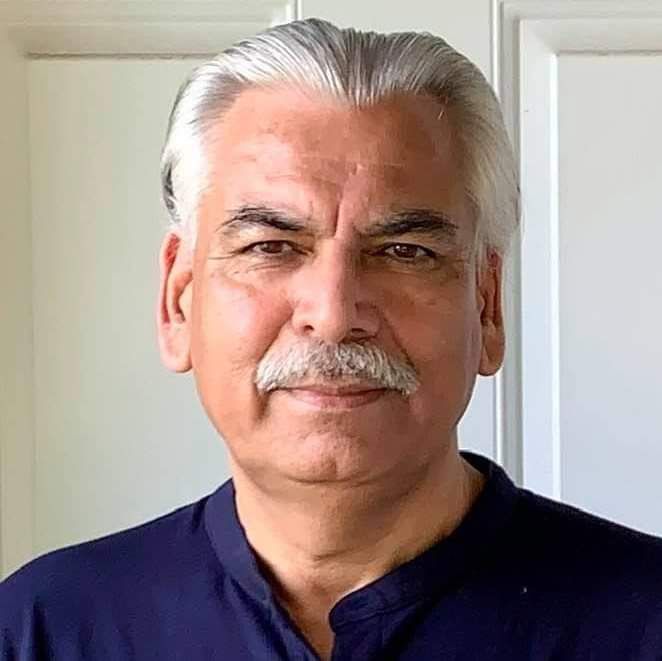
Barrister Usman Ali, Ph.D.
When Federal Interior Minister Mohsin Naqvi recently declared that Pakistan’s existing system had failed and could no longer solve the country’s problems, his remarks predictably ignited a national debate. Some welcomed the statement as a rare acknowledgement of reality. Others treated it as an indictment of the government itself, while political actors searched for ways to turn it to their advantage. Those who currently benefit from the system rushed to defend it; former beneficiaries, now excluded from power, applauded its condemnation.
Amid all this noise, one voice remained conspicuously absent: that of the ordinary Pakistani, the person who bears the heaviest cost of the system’s failure but is rarely considered important enough to participate in debates about its future.
For several days, television studios echoed with heated arguments, political statements and competing interpretations. Then, as so often happens in Pakistan, the controversy began to fade. Yet whether a minister acknowledges it or not, the reality remains difficult to deny: Pakistan’s political, administrative and social order is severely paralysed.
Even that description, however, requires qualification. The system has not failed everyone. For those with money, influence and connections, it remains remarkably responsive. Laws are activated, doors are opened, stalled files begin to move and decisions arrive with surprising speed. The system reveals its paralysis only when confronted by a citizen without political patronage, financial power or access to the right telephone number.
The real question, therefore, is not whether the system works. It is: whom does it work for?
The roots of this dysfunction are clearly visible in Pakistan’s political culture. Most political parties speak endlessly of democracy but remain unwilling to practise it within their own ranks. Internal elections are frequently ceremonial exercises. Leadership revolves around families, personalities and tightly controlled groups. Party heads often remain in place indefinitely, while disagreement is treated not as an opportunity for correction but as an act of rebellion.
Parties that cannot tolerate democracy internally cannot be expected to establish it nationally.
The pursuit of power has also become detached from public trust, measurable performance and coherent policy. Instead of earning authority through service and persuasion, political actors have repeatedly sought the approval of powerful quarters and relied on backroom arrangements. Their energy is consumed by attempts to destabilise governments, prosecute opponents and remove rivals from the political arena.
The party in office describes the arrangement as democracy; once removed from power, it denounces the same arrangement as authoritarianism, manipulation and injustice. Governments change and political narratives are rewritten, but the underlying behaviour remains intact.
The justice system reflects the same inequality. Cases remain unresolved for years, sometimes decades. For an ordinary citizen, securing justice has become expensive, exhausting and needlessly complicated. Court dates accumulate, but judgments do not arrive. A poor person accused of a minor offence may spend years behind bars, while a powerful defendant can draw upon elite legal representation, influence and every procedural opening the system provides.
Justice that is neither timely nor equally accessible eventually ceases to be justice. It survives only as a constitutional promise, solemnly repeated but selectively fulfilled.
Education and healthcare expose another face of this unequal order. Pakistan’s education system does not bridge class divisions; it reproduces them. At one end are expensive private institutions offering access to opportunity. At the other are public schools deprived of trained teachers, adequate resources and even basic facilities. Too many children remain outside school, while countless others receive an education that does little to prepare them for dignified employment in a modern economy.
Public hospitals, meanwhile, struggle with overcrowding, medicine shortages, inadequate staffing and deteriorating facilities. Quality private treatment is increasingly beyond even the middle class. A single serious illness can consume a family’s lifetime savings. It is difficult to speak credibly of a welfare state when education and medical care are treated not as rights, but as privileges to be purchased.
The police, bureaucracy and local administration are symptoms of the same disease. From the police station to the land-record office, citizens often need a recommendation, a bribe or repeated visits merely to obtain something to which they are legally entitled. Local governments are denied continuity, authority and dependable financial resources, even though many problems that directly shape daily life, water, sanitation, transport and neighbourhood development, can be addressed most effectively at the local level.
Power remains concentrated in federal and provincial capitals because decentralising responsibility would also mean decentralising money, influence and control.
The economy follows a similarly unequal logic. Salaried workers and ordinary consumers carry a disproportionate burden through direct and indirect taxation, while powerful sectors benefit from exemptions, weak enforcement and political influence. Every government announces reform, but reform usually translates into higher utility bills, more expensive fuel and additional taxes for the public.
When attention turns to elite privileges, extravagant official spending or the cost of an oversized administrative structure, the appetite for reform suddenly disappears. Sacrifice is demanded from the many; protection is reserved for the few.
Alongside this political and administrative decline lies an equally alarming intellectual and social deterioration. The spectacle created in the name of religion deserves a serious discussion of its own. On religious occasions, some individuals and groups promote bizarre practices, unsupported rituals and inflammatory rhetoric that bear little resemblance to the moral foundations of faith.
Religion, which should cultivate knowledge, justice, compassion, restraint and human dignity, is too often converted into theatre, commerce, political leverage and a weapon of group identity. Those who ask questions, demand evidence or challenge unreliable claims risk being branded hostile to religion, while invented traditions and reckless assertions are accepted without scrutiny. Social media has made this trend more dangerous by rewarding those who exploit religious sensitivities to generate outrage and deepen division. Sponsoring ignorance in the name of faith is not a service to religion; it is an assault on its moral and intellectual spirit.
None of these problems will be solved merely by creating new provinces, reshuffling ministries or waiting for another messiah, another self-proclaimed “wonder boy.”
Pakistan has already been subjected to experiments conducted under grand labels: “Islamic rule,” “enlightened moderation,” revolutionary change, and the promise that “change is not coming; change has already arrived.” Each time, the public was offered a new slogan, a new personality and a fresh set of assurances. Yet the distribution of power, the method of decision-making and the structure of governance remained largely untouched.
The slogans changed. The rulers changed. The so-called wonder boys came and went. The condition of the ordinary citizen remained the same.
Nations are not built by wonder boys, saviours or supposedly indispensable personalities. They advance through strong, impartial and accountable institutions. A sound system is not one that requires an extraordinary individual every few years to rescue it from collapse. It is one that continues to function under an ordinary but competent and honest officeholder because laws, procedures and institutional limits are stronger than personalities.
An order built around individuals begins to crumble as soon as those individuals depart. An order founded on constitutionalism, institutional responsibility and public accountability survives changes of government and leadership.
Meaningful reform therefore requires constitutional supremacy, credible elections, democracy within political parties, an independent and efficient justice system, empowered local governments, a professional civil service, politically neutral policing and sustained investment in education and healthcare. Accountability must apply equally to the government and the opposition, to the powerful and the powerless. No individual, party or institution can be placed above the law while the country continues to speak of reform.
Above all, the ordinary citizen must be recognised not as a spectator but as the central stakeholder in any discussion about the system’s future. Success is not measured by the number of seminars conducted, projects inaugurated or impressive speeches delivered. It is measured by how quickly a citizen receives justice, what kind of education a child can access, whether treatment is available during illness, and whether a person entering a government office is treated as a citizen with rights or a subject seeking favour.
Pakistan does not merely need new faces. It needs new rules, new priorities and a fundamentally different culture of governance. Until institutions answer to the law rather than personalities, rulers accept accountability instead of defending privilege, and politics becomes an instrument of public service rather than a struggle for power, the cycle will continue.
Every few years, another slogan, another experiment and another “wonder boy” will appear. And the ordinary Pakistani, the person in whose name every struggle is supposedly waged, will remain unheard, unrepresented and unchanged.





Leave a Reply