

By:Khurram Ali Raza
The Makkah Joint Defence Agreement between Pakistan, Saudi Arabia and Türkiye marks more than a new development in regional security. It points towards a changing geometry of relationships in which countries are increasingly looking beyond traditional alliances and seeking partnerships based on shared interests, complementary strengths and a common vision for the future.
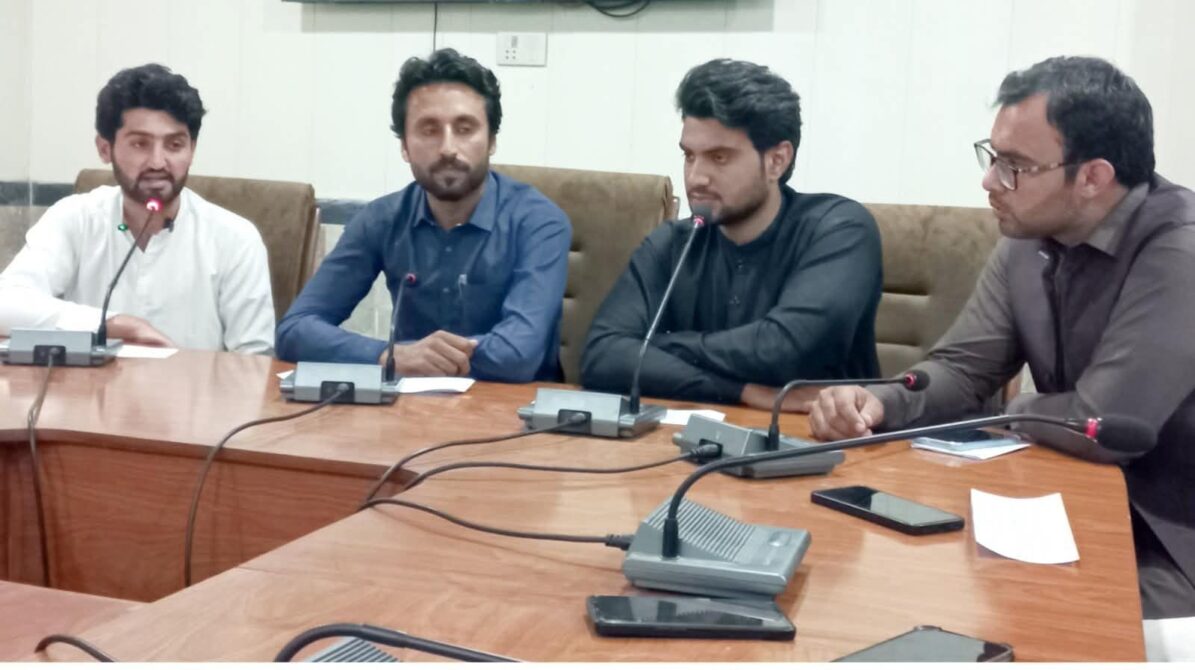
This was one of the central messages emerging from a conference on future geopolitical alliances held at the University of Lahore on September 3. The conference brought together political leaders, diplomats, former ministers, military experts, academics, journalists and business figures to discuss the implications of the changing global order.
Federal Minister for Planning and Development Ahsan Iqbal offered a particularly relevant observation. He argued that the major struggles of the 21st century will increasingly be decided in universities, laboratories, technology centres, factories and financial markets.
That observation should be at the heart of Pakistan’s thinking about the Makkah Pact. The three countries involved bring different but potentially complementary strengths. Saudi Arabia has considerable financial resources and investment capacity. Türkiye has developed substantial industrial, technological and manufacturing expertise. Pakistan has a large, young population with enormous human potential.
Individually, these strengths are valuable. Together, they could become considerably more powerful.
But partnerships do not produce results simply because agreements are signed. They require a practical vision and sustained political commitment. If Pakistan wants the Makkah partnership to become a meaningful opportunity, it must look beyond defence cooperation and ask a more fundamental question: how can this relationship help build a stronger Pakistani economy?
The answer may lie in connecting capital, technology and people.
Pakistan needs investment in industries that can create jobs and increase exports. It needs access to advanced technology and opportunities for technology transfer. It needs joint research programmes, scholarships, vocational training and opportunities for Pakistani businesses to enter new markets.
There is also considerable room for cooperation in artificial intelligence, cyber technology, energy, agriculture, food security, critical minerals, advanced manufacturing, research and innovation.
Such cooperation would give the Makkah partnership a much broader meaning. It would turn a strategic relationship into an engine for development.
For Pakistan, the greatest asset in this equation may ultimately be its people.
The country’s young population is often described as a demographic dividend. But a young population becomes a dividend only when it is educated, skilled and productively employed. Without adequate education and employment, demographics can become a burden rather than an advantage.
Conference speakers highlighted precisely this concern, stressing the importance of investing in education and human development.
This is where Pakistan’s universities have a crucial role.
Universities must increasingly become places where ideas are converted into innovation, research into products and knowledge into economic value. The UoL conference itself provided an example of what is possible when academia becomes a meeting point for policymakers, diplomats, security experts, business leaders and researchers.
The future of Pakistan’s strategic strength may therefore be decided as much in its classrooms and laboratories as in its traditional security institutions.
Security dimension remains important. Speakers at the University of Lahore generally described the agreement as defensive and focused on deterrence and cooperation. But modern security cannot be separated from economic resilience. A country with a strong economy, advanced technology, educated citizens and capable institutions is better prepared to protect its interests.
In this sense, development itself becomes a form of strategic strength.
Ahsan Iqbal described Pakistan’s challenge as a “battle for development,” emphasizing exports, education, productivity, technology, innovation and institutional reform. He also outlined ambitious economic targets for the country in the coming decades.
The Makkah partnership can also encourage Pakistan to think about connectivity in a broader sense. Roads, ports, trade routes and investment corridors matter, but so do digital networks, research partnerships, educational exchanges and technology ecosystems.
The house resolution adopted at the University of Lahore conference reflected this broader understanding, describing the Makkah Pact as part of a framework involving peace, deterrence, strategic autonomy, economic resilience, diplomacy and shared prosperity.
That is the direction Pakistan should pursue.
Leave a Reply