

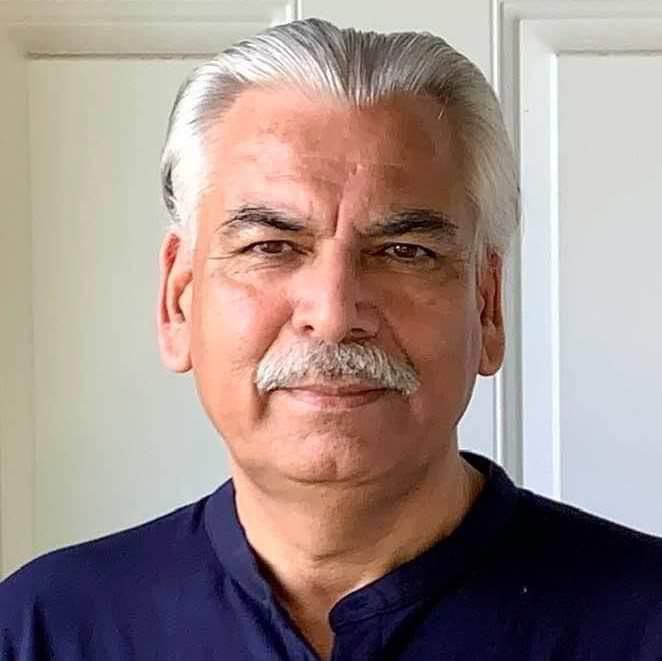
Barrister Usman Ali, Ph.D.
Gaza today lies in ruins. More than 70,000 Palestinians have been killed since October 2023, entire neighborhoods have been reduced to rubble, and hospitals struggle to treat the wounded amid collapsing infrastructure. Families are displaced on a massive scale, food and medicine are scarce, and the humanitarian crisis is worsening by the day. Into this devastation, U.S. President Donald Trump has introduced a sweeping twenty-point peace plan, describing it as the path to ending Israel’s two-year war in Gaza. The initiative has generated both cautious hope and deep skepticism, reflecting the dual reality of opportunity and ongoing brutality.
For the first time after the announcement of Trump’s plan, there are flickers of progress. Israel and Hamas have entered into indirect talks in Egypt aimed at exploring ways to implement the proposal. These discussions, though fragile and tentative, are seen as a rare diplomatic lifeline. Their purpose is not to resolve every dispute at once, but to identify steps toward a phased ceasefire, humanitarian relief, and a framework for governance. Hamas has already offered conditional acceptance: agreeing to release hostages through a defined mechanism, endorsing the creation of a technocratic Palestinian administration, and signaling readiness for negotiations on unresolved issues. It has, however, resisted immediate disarmament or the full surrender of its influence. Even so, the fact that it is engaging at all marks a potential turning point.
But the situation on the ground tells a darker story. Israeli forces continue to carry out daily operations that kill civilians, even as hundreds of humanitarian workers , whose only mission is to deliver food, water, and medical supplies to the hungry and shelterless, have been detained or obstructed. Aid convoys remain restricted, hospitals report shortages of even basic medicines, and the population suffers under relentless bombardment. This hostility undermines the very framework of Trump’s plan, feeding doubts about Israel’s willingness to match diplomatic words with meaningful restraint.
Trump himself has contributed to the contradictions. When announcing his plan with Prime Minister Benjamin Netanyahu, he leaned on deadlines, ultimatums, and threats of “complete obliteration” if Hamas refused to comply. Netanyahu, for his part, publicly embraced the plan but continues to insist that Israel’s core conditions, particularly Hamas’s full disarmament , are non-negotiable. His hardline coalition allies fiercely oppose any arrangement that leaves Hamas with even symbolic power, placing his government in a precarious position. The result is a peace initiative that risks being treated less as a framework for compromise and more as a dictate to be enforced.
This moment, however, still carries possibility. Hamas’s partial acceptance and the indirect talks in Cairo show that the door, however narrow, has not closed. Trump has presented himself as the indispensable peacemaker, and in this case, he does have leverage. But leverage alone is not enough. If the process is reduced to dictation from Washington and Tel Aviv, it will collapse as so many others have before. Palestinians ,shaped by decades of resistance, are not people who accept imposed settlements. A lasting solution must evolve, not erupt.
History makes the choice plain. Coerced settlements rarely last. From Vietnam to Afghanistan, externally imposed deals crumbled as soon as pressure faded. By contrast, lasting peace in places like Northern Ireland and South Africa came through patience, inclusivity, and impartial mediation. All sides felt they had a stake and a voice. That is precisely what Gaza needs today: a process built not on ultimatums but on dialogue, trust, and recognition of shared humanity.
For any progress to be real, humanitarian priorities must come first. Ceasefires must hold long enough to allow food, medicine, and shelter to reach civilians. Hostage exchanges should be conducted under verifiable arrangements, not political theater. Neutral mediators , from Europe, Africa, or the Middle Eas, must share the table with the U.S. to give Palestinians confidence in the process. Governance must be transitional and inclusive, built step by step with local legitimacy. Disarmament, if it is to succeed, must be phased and tied to guarantees of safety and dignity, not demanded in a single stroke.
The long-suffering people of Gaza have already paid the highest price. Their survival, not political egos, must be the center of any settlement. The indirect talks in Egypt are a fragile chance to begin shifting from war to dialogue. Yet that chance will vanish if Israeli hostility continues unchecked or if Trump and Netanyahu insist on dictating terms rather than negotiating them.
The world is weary of declarations that lead nowhere. What it demands now is action,relief for the hungry, safety for civilians, freedom for hostages, and the foundations of peace. History will not measure Trump by how many conflicts he claimed to end. It will measure him by whether his plan for Gaza brought genuine change to people who have suffered far too long.









Leave a Reply