

TIMES REPORT
TEHRAN: Iran began talks on Monday with the three countries of the Makkah security pact, Pakistan, Saudi Arabia and Turkey, to discuss regional issues as the months-long Middle East war remains locked in a stalemate, state television reported.
The meeting, requested by Pakistan, opened in Capital Tehran and focused on “regional cooperation, the US-Israeli aggression against Iran and its consequences”, Iran’s state broadcaster said.
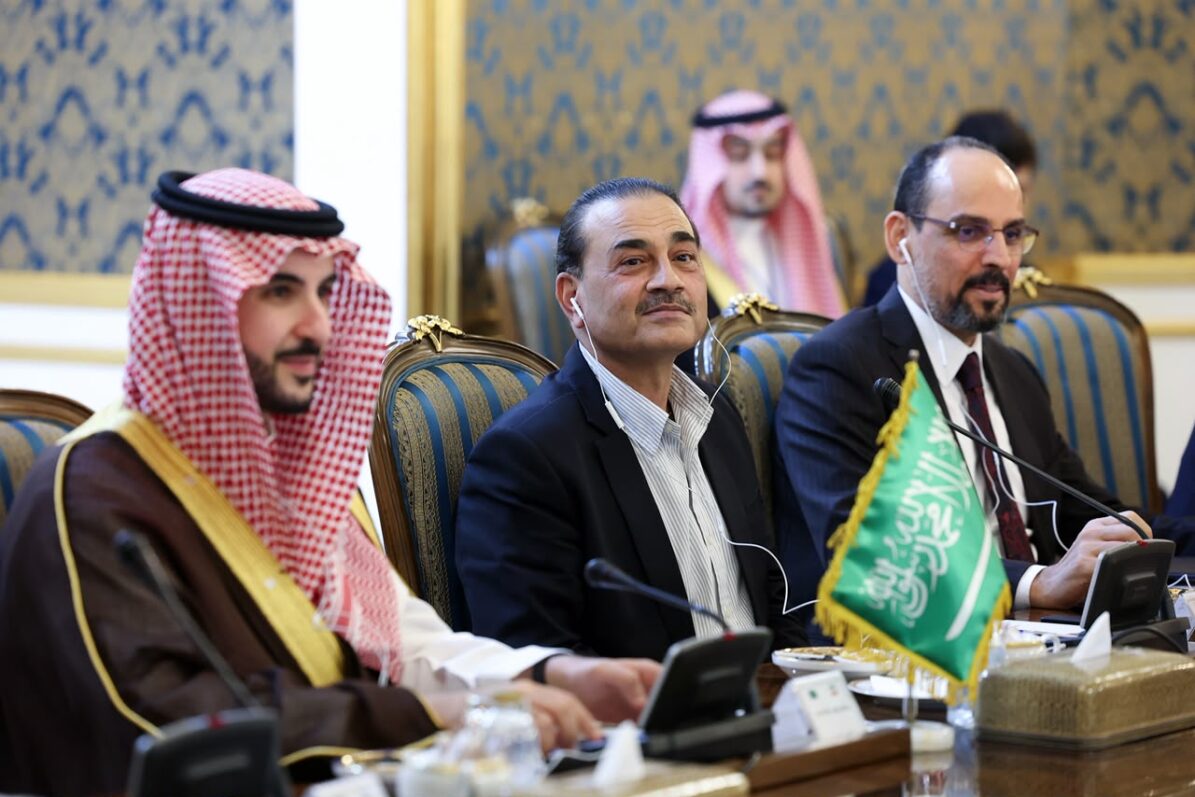
“As agreed, Saudi Defence Minister Khalid bin Salman, Pakistani army chief General Asim Munir and Turkish intelligence chief Ibrahim Kalin will participate in this meeting,” said Ali Bagheri Kani, deputy secretary of Iran’s Supreme National Security Council.
In an interview with state television, Bagheri Kani said the meeting will also include Iran’s security chief Mohsen Rezaei.
He was also to be present at all the meetings.
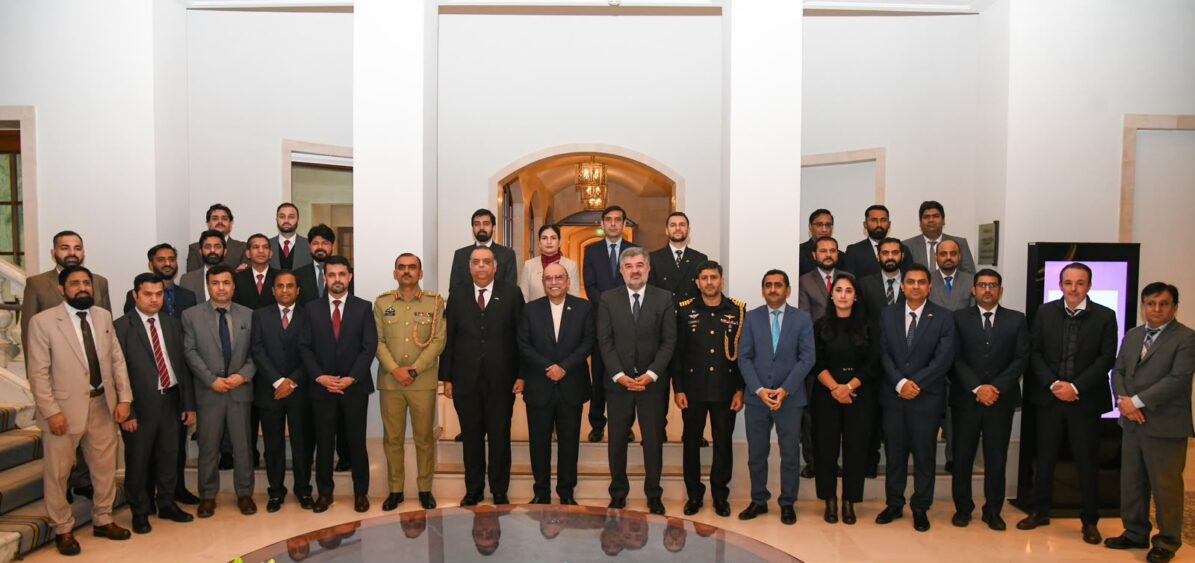
The representatives of the pact met with Iranian president Masoud Pezeshkian, according to the photos shared by the presidential website.
The talks come after nearly eight months of war following US-Israeli attacks on Iran in late February, prompting Tehran to blockade the Strait of Hormuz.
The conflict has roiled global markets and energy trade.
An April ceasefire brought an end to the initial phase of intense bombardment but the two sides have continued to vie for control of the strait, through which around a fifth of the world’s oil and liquefied natural gas used to travel.
The war has since spread across the region to include fighting between Saudi Arabia and the Iran-backed Houthis in Yemen, who have attacked airports and oil facilities in the kingdom.
Pakistan, Saudi Arabia and Iran have confirmed that senior officials from the three countries and Turkey will hold talks in Tehran today over regional security.
Pakistan military’s media wing said Chief of the Army Staff (COAS) and Chief of the Defence Forces (CDF) is visiting Iran on an official visit.
This was said by ISPR director general in a post uploaded on X platform on Monday afternoon.
Saudi Defence Minister Prince Khalid bin Salman is leading a delegation to Tehran for talks between countries party to the Makkah Joint Defense Agreement and Iran, to help ease regional tensions, Saudi Arabia’s deputy minister for public diplomacy said on Monday.
Dr Rayed Krimly said on his X account that Prince Khaled will participate in the meeting today alongside Field Marshal Asim Munir and Head of Turkish Intelligence Ibrahim Kalin.
The meeting will be held with Iranian President Masoud Pezeshkian and the Secretary-General of the Supreme National Security Council Mohsen Rezaei.
Krimly said the visit is part of ongoing efforts by the Makkah pact states to deescalate the current situation and encourage dialogue and diplomatic solutions.

It also supports the mediation efforts undertaken by Qatar and Pakistan.
An Iranian official said on Monday that senior officials from Saudi Arabia, Turkey, and Pakistan will visit Tehran for talks over regional security, without specifying when the meeting would take place.
“As agreed, Saudi Defence Minister Khalid bin Salman, Pakistani Army Chief Field Marshal Asim Munir and Turkish intelligence chief Ibrahim Kalin will participate in this meeting,” said Ali Bagheri Kani, deputy secretary of Iran’s Supreme National Security Council.
He said the meeting will be held with Iran’s security chief Mohsen Rezaei.
“This four-party meeting in Tehran could represent an important and effective step towards building lasting regional security, and we hope this initiative will contribute to establishing a stable region,” said Kani in an interview with state television, without elaborating.
He did not specify when the meeting would take place but said it was proposed during a visit by Pakistani Army Chief Asim Munir to Tehran last week.
Foreign Ministry spokesperson Esmaeil Baqaei said that Tehran will host senior officials from Saudi Arabia, Pakistan, and Turkey later on Monday (today), with regional security topping the agenda of the talks.
He said that the discussions could pave the way for measures to ensure security in West Asia through regional efforts.
Speaking at his weekly press briefing in Tehran on Monday, Baqaei said the visit by the three countries’ officials followed a proposal by Pakistan during Army Chief Field Marshal Asim Munir’s visit to Tehran last week.
The meeting marks the first talks between Iran and the three Makkah Pact countries since they signed the agreement in August.
Baqaei said the talks would address key regional security issues, including Israel’s expansionism, developments in the occupied Palestinian territories, Lebanon, and the consequences of the US military aggression against Iran.
“Naturally, the meeting is expected to address the most important issues affecting regional security, including the Zionist regime’s expansionism, developments in the occupied Palestinian territories, and the areas surrounding Lebanon.
Such a meeting cannot take place without considering the implications of the US military aggression against Iran for security across the region.
This, too, is an important issue that should be addressed in this context,” he said.
He said the meeting could pave the way for further steps toward establishing a regional security framework based on the interests and priorities of regional countries.
“In our view, it is a positive development that regional countries are seeking to establish, or at least consider, regional security mechanisms based on their own interests and priorities.
This meeting could pave the way for further steps toward establishing an indigenous security framework, a goal we have consistently advocated for decades, stressing that regional security can only be ensured by relying on the will and security considerations of the countries in the region themselves.”
Baqaei added that developments over the past two years, particularly the past eight months, had shown that lasting regional security depended on trust and cooperation among countries in the region.

Earlier, Reuters news agency reported that top officials from the Makkah Defence Pact countries Saudi Arabia, Turkey and Pakistan are set to meet Iranian officials in Tehran on Monday (today) to discuss regional coordination.
The planned talks would be the first high-level contact between Iran and all members of the three-nation bloc since Saudi Arabia has come under escalating attacks from Yemen’s Iran-aligned Houthis.
Saudi Arabia intercepted another wave of missiles and drones on Sunday as fighting with the militant group continued unabated.
Ministers from the Makkah Pact countries held an emergency meeting in Riyadh earlier this month and agreed to ensure the “rapid deployment” of military forces and capabilities in Saudi Arabia.
The conflict has become an increasingly destabilising element in the US-Israeli offensive against Iran, turning US ally Saudi Arabia into a pressure point in the wider war.
Turkey, Pakistan and Saudi Arabia signed the Makah Joint Defence Agreement in August, under which an armed attack on one member is considered an attack on all.
The agreement’s first article says the parties shall use “all necessary means” to eliminate threats to one another’s territorial integrity, sovereignty or internationally recognised borders, according to a text seen by Reuters.
Efforts by Turkey’s parliament to ratify the agreement began last week and are still underway, while Pakistan approved the pact last week.
War has engulfed the Middle East since February when the United States and Israel launched a wave of surprise attacks on Iran, while Washington and Tehran were in the midst of negotiations on Iran’s nuclear programme.
An April ceasefire brought an end to the initial phase of intense bombardment but the two sides have continued to vie for control over the Strait of Hormuz, through which around a fifth of the world’s oil and liquefied natural gas used to travel.
Iran has since claimed control over the strait and has regularly targeted vessels that attempt to cross without its authorisation, while the United States has imposed a naval counter-blockade on Iranian ports.
Diplomatic efforts with the US remain stalled, especially since the collapse of a June deal which laid out a pathway to a permanent settlement of the conflict.
The war has since spread across the region to include fighting between Saudi Arabia and the Iran-backed Houthis in Yemen.

Leave a Reply