

Written by Sabahat Sarwar
Pakistan remains one of the countries most severely affected by global climate change and the impact has become increasingly visible in recent years. In 2025, unusually heavy monsoon rains caused widespread flooding across the country, destroying thousands of homes, displacing families and devastating large areas of farmland. The destruction of crops has contributed to rising food insecurity, while many people have suffered financial losses. Experts confirm that these extreme weather events are linked to rising global temperatures, excessive carbon emissions, and deforestation, all of which are accelerating climate instability.
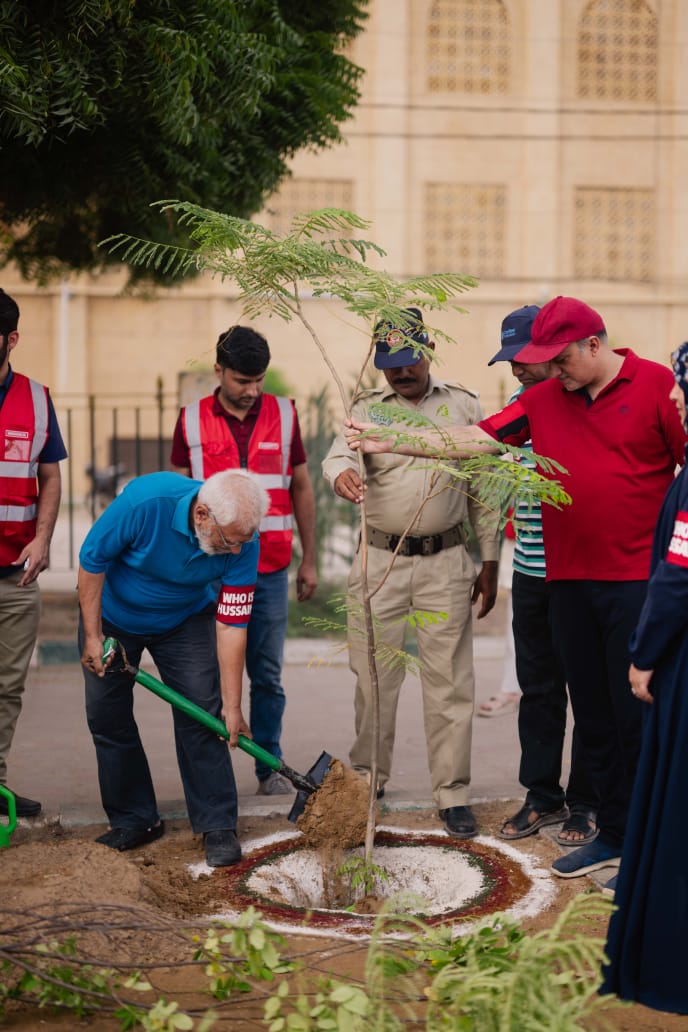
In response to these challenges, a community-driven plantation initiative was organized in Karachi by the organization Who is Hussain. With the collaboration of the Sindh Government and other supporting groups, volunteers, childrens and local community members participated in a one-day drive themed “Comparison Without Borders – Continental Plantation Drive 2025” The event took place at Nishtar Park in the heart of the city and aimed to promote awareness about environmental protection and the urgent need for plantation after witnessing the recent flood-related destruction.

Syed Kazim Mehdi, the coordinator of Who is Hussain Pakistan, explained that this initiative was not limited to tree planting but also included an eco-action workshop. Children and young participants were educated about the importance of preserving nature, the role of trees in reducing the effects of climate change and how their small efforts can bring long-term positive change. Kazim added that more than 150 trees, each standing between six to eight feet tall, were planted during the drive. These trees were carefully selected for being environmentally friendly and suitable for Karachi’s climate.
The word “Continental” in the campaign’s title signifies Asia’s vulnerability to climate change. The continent has witnessed rising temperatures, melting glaciers, intense monsoon rains and frequent natural disasters. Pakistan, being part of this region, continues to face the consequences of carbon emissions, environmental neglect and weak climate resilience. The plantation movement aims to remind society that planting trees is no longer just an option it has become a necessity for survival.
Tree plantation plays a vital role in reducing carbon dioxide levels, improving air quality, preventing soil erosion, restoring habitats, and minimizing the risks of floods and heatwaves. The recent floods are a warning that climate change is a global crisis that cannot be ignored. Nations must work collectively to reduce carbon footprints, promote renewable energy sources and support ecological restoration. Community initiatives such as the plantation drive in Karachi highlight hope, resilience and responsibility. They demonstrate how collective action, especially by the younger generation, can contribute to a safer, greener and more sustainable future for all.












Leave a Reply