

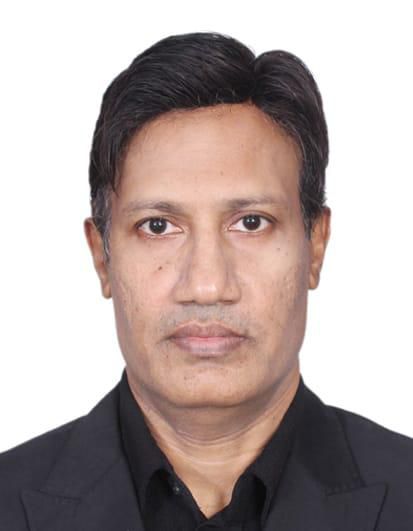
By Junaid Qaiser
Egypt’s Foreign Minister, Dr. Badr Ahmed Mohamed Abdelatty, just concluded a two-day visit to Islamabad, and it was not like a typical round of polite meetings and empty statements. What unfolded during his meetings with Pakistan’s top civilian and military leadership was not a ritual reaffirmation of goodwill. It was a reset—long overdue, highly strategic, and reflective of a Pakistan that has begun to rediscover its diplomatic weight.
This reset did not happen in isolation. Over the past several weeks, Islamabad has found itself at the center of active regional diplomacy: strategic economic agreements with Saudi Arabia, renewed ties with Jordan and Bahrain, and even praise from U.S. President Donald Trump for Pakistan’s leadership. Against that backdrop, Egypt’s foreign minister landed in Islamabad at exactly the right moment—when Pakistan is visibly moving from reactive diplomacy to proactive regional stewardship.
The sheer density of Abdelatty’s engagements was noteworthy. Meetings with the president, deputy prime minister, foreign minister, senior business leaders—and critically, a detailed session at GHQ with Field Marshal Syed Asim Munir—sent a clear message: Cairo sees Islamabad as a strategic partner, not an afterthought.
That meeting at GHQ was especially consequential. Pakistan and Egypt have long shared a comfort level between their militaries, but the renewed focus on defence cooperation, military exchanges, and regional stability signaled something deeper—a desire to align security outlooks in a Middle East and South Asia both shaped by multiplying crises.
For Pakistan, whose armed forces are increasingly central to regional security conversations, this was a reaffirmation that its military diplomacy retains broad respect and relevance. For Egypt, it was an opportunity to deepen ties with a fellow Muslim-majority powerhouse just as Cairo steps into a new role at the center of Gaza stabilization talks.
Trade has always been the weak spot in the Egypt–Pakistan relationship, stuck at a modest $300 million for years. Leaders would talk about boosting economic ties, but nothing much happened. This visit felt different. Abdelatty and Deputy Prime Minister Ishaq Dar focused on practical steps, not just big talk. They introduced a “white list” to speed up Egyptian visas for hundreds of Pakistani companies — a move aimed at cutting through business red tape. Setting up a joint Business Council and Forum, led by both foreign ministers, gives the partnership some structure it’s been missing for over a decade.
Education also got a nudge forward. Egypt doubled scholarships at Al-Azhar University for Pakistani students — a quiet but important investment in long-term ties and cooperation on issues like countering extremism.
It would be impossible to understand the significance of this visit without the Gaza backdrop.
Pakistan’s active participation in President Trump’s Gaza Peace Plan, its push for humanitarian mechanisms, and its refusal to be sidelined in regional diplomacy have all reshaped perceptions in the Middle East. Egypt, meanwhile, has been the indispensable actor—managing the Rafah crossing, conducting shuttle diplomacy, and engineering the Sharm el-Sheikh ceasefire.
The alignment between Islamabad and Cairo on Gaza is now clearer than ever. Both countries emphasized the centrality of the two-state solution and refused to deviate from the stated position. Cairo’s invitation for Pakistan to join the upcoming reconstruction conference carries weight: it signals trust, partnership, and recognition of Pakistan’s growing diplomatic relevance.
Egypt inviting Pakistan to the upcoming reconstruction conference is not just a gesture — it’s a sign of growing trust and recognition that Pakistan’s voice matters more than before.
Abdelatty’s time with Field Marshal Asim Munir really captured the bigger picture: Pakistan’s regional status is rising again. Renewed ties with the Gulf, better relations with the West, and solid military credentials have put Islamabad back in the spotlight. Egypt gets this — and wants to be in step.
The real priorities are out in the open now: fighting terrorism, keeping sea routes safe, pushing for ideological moderation, and working together on crises from the Red Sea to the Arabian Peninsula. Egypt’s offer to share its counter-extremism model, including Al-Azhar’s expertise, matches what Pakistan’s looking for in the long run.
The most revealing thing about this visit was not any single announcement. It was the sheer weight of the agenda — political, security, economic, even humanitarian. For the first time in years, Egypt and Pakistan look serious about building something lasting, not just exchanging pleasantries.
Pakistan, usually stuck reacting to crises, is starting to take control of the conversation. Egypt, now carrying more regional responsibilities, sees real value in an engaged Pakistan.
So when Dr. Abdelatty said, “sky is the limit,” it did not sound like just another diplomatic cliché. It sounded like an honest take on where this partnership is heading — and what both sides actually believe they can achieve.




Leave a Reply