

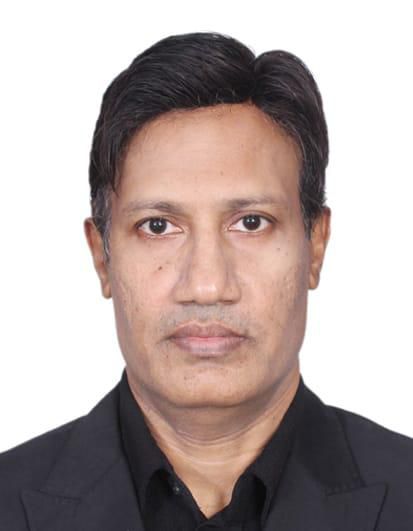
By Junaid Qaiser
Few diplomatic breakthroughs in the 21st century have defied expectations the way the Abraham Accords have. Signed in September 2020, the agreements normalized relations between Israel, the UAE, and Bahrain—later joined by Morocco and Sudan.
Five years on, the Accords remain intact, even after weathering their toughest test: the October 2023 Hamas attack and the prolonged war in Gaza, which placed immense pressure on regional partnerships.
Yet their appeal continues to grow. Kazakhstan’s recent decision to join the network highlights the Accords’ expanding influence beyond the Middle East and reflects a broader recognition that pragmatic cooperation can outlast old divisions.
What began as a bold diplomatic experiment is maturing into a central pillar of the region’s political landscape. And the recent conference at the Anwar Gargash Diplomatic Academy (AGDA) in Abu Dhabi underscored this shift. The message was unmistakable: the Accords are evolving—and with that evolution comes new opportunities, as well as new responsibilities.
At AGDA, the tone was markedly different from the celebratory mood of 2020 and 2021. Senior officials, diplomats, academics, and policy experts spoke less about “normalization” as an end goal and more about what must come next: security architecture, cross-border cooperation, and the growing web of economic and technological connections across the region.
Speakers viewed the Accords not as a diplomatic flourish, but as integral to the region’s security framework. They recognized their stabilizing influence—especially in a Middle East that has faced repeated upheavals in recent years—while also acknowledging their limitations. They argued that cooperation can not be separated from the tensions on the ground and that it requires robust mechanisms to endure political shocks. This seems to be where AGDA envisions its role: not as a cheerleader, but as a connector between diplomacy, research, and practical policy-making.

One of the most prominent themes at the conference was the emergence of cross-border networks. In areas like logistics, energy, innovation, and crisis management, the collaboration between Israel, the UAE, Bahrain, and Morocco has transitioned from a theoretical concept to a tangible reality.
It’s now part of various projects, investments, and institutions. The region is gradually cultivating shared interests that can withstand the test of election cycles and ideological shifts. This kind of slow and steady progress may not always make the news, but it has the potential to significantly alter geopolitics over time. AGDA’s conference effectively captured this transformation: the Accords are evolving from a diplomatic novelty into a foundational framework for regional cooperation.
What AGDA highlighted during this conference is that the next chapter of the Abraham Accords will demand more than just diplomatic momentum. It calls for intellectual investment, innovative policies, and structured dialogue—areas where academic institutions often take the lead.
By bringing together a blend of diplomacy, scholarship, and regional expertise, AGDA has established itself as a crucial hub for shaping the future of the Accords. Not by rewriting them, but by enriching their depth.
Perhaps the most genuine takeaway from the conference is this: the Abraham Accords have withstood challenges that many thought would lead to their downfall. Now, they face a tougher task—to evolve into a framework that can foster a more interconnected, stable, and predictable Middle East.
That transformation is already in motion. You could sense it in the tone of the discussions, the practicality of the proposals, and the understanding that cooperation needs to shift from flashy announcements to lasting structures.
If the initial years of the Accords were about demonstrating their resilience, the coming years will focus on showing their ability to deliver real results.
And judging by the conversations at AGDA, the region is quietly, steadily, and more earnestly than ever preparing to take that next step.



Leave a Reply