

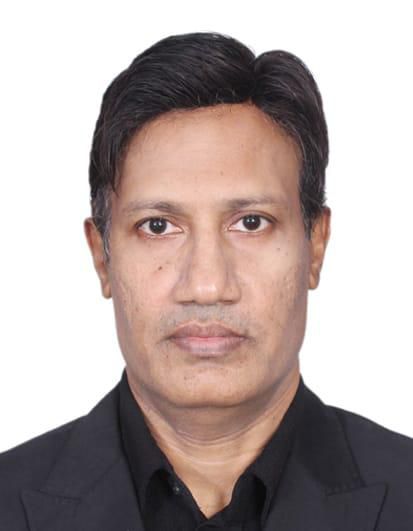
By Junaid Qaiser
When Field Marshal Asim Munir—now officially Pakistan’s first Chief of Defence Forces (CDF)—stood in Aiwan-e-Sadar and told journalists, “Everything is fine… Pakistan will now soar to greater heights from here,”. He meant it. That line marked a turning point, not just in military command but in the whole direction of Pakistan’s strategy.
Munir’s rise to CDF is the capstone to a year where Pakistan quietly rebuilt its diplomatic standing after years of turbulence and being sidelined. Since he became COAS in November 2022, and then Field Marshal in 2025, Pakistan has pushed forward with a confidence in defence diplomacy that we haven’t seen in over a decade.
Past leaders stuck to old-school security tactics. Munir, on the other hand, blends military thinking with real diplomacy. He’s become the face of Pakistan’s outreach, traveling with Prime Minister Shehbaz Sharif, hosting major forums at home, and talking to world leaders in a way that’s caught even skeptics off guard.
Pakistan’s domestic counter-terror record in 2024 tells the story: almost 60,000 intelligence-based operations, 925 terrorists neutralized, hundreds more arrested. These numbers gave Munir the clout to walk into global meetings with his head high—not as someone pleading for help, but as the leader of a country taking charge of its own security.
That success opened doors everywhere—from Central Asia and the Gulf to Beijing, Washington, and Eastern Europe. Through the Special Investment Facilitation Council (SIFC), Pakistan was able to turn security gains into deals on trade, energy, and investment. Not many saw that coming two years ago.
Look at Munir’s travel log for 2024–2025 and you’d think he was the foreign minister—except he brings a soldier’s discipline to every meeting.
In Washington, he sat down with top political and military leaders—twice in a single year. His private two-hour lunch at the White House with President Donald Trump broke all the norms: no aides, nobody else, just a straight talk about India, Iran-Israel tensions, trade, tech, and counter-terrorism. Trump walked out calling Munir “seasoned, balanced, and strategically minded.”
Soon after, Munir landed in Beijing to shore up Pakistan’s most important security partnership. China’s Foreign Minister Wang Yi called the Pakistani military the “ballast of national stability.” Both sides agreed to ramp up CPEC 2.0, deepen counter-terror work, and protect Chinese people and investments in Pakistan.
From Riyadh and Abu Dhabi to Ankara, Tehran, Baku, and Colombo, Munir’s trips put Pakistan back on the map in the Muslim world, especially with the region on edge. Pakistan’s calls for calm in Gaza, Lebanon, and across the Middle East didn’t go unnoticed—Islamabad started sounding like a steadying voice, not just a bystander.
In Central Asia, Munir hosted a Chiefs of Defence Staff conference that brought together military leaders from the US, Kazakhstan, Kyrgyzstan, Tajikistan, and Uzbekistan. They tackled counter-terrorism, cyber threats, and crisis response.
Munir’s efforts got the West paying attention again, opening up new cooperation on defence, energy, climate, tech, and education. Those moves are paying off. Foreign investors are more confident, the stock market’s booming, remittances are climbing, prices are starting to stabilize.
People say Munir’s turned Pakistan into a “responsible and confident state”—tough on terrorism, part of the global fight against extremism, committed to peace in the region. His outreach to the Pakistani diaspora in the US boosted investment flows and gave a shot of pride to Pakistan’s image abroad.
Even American Muslim community leaders notice the difference. Anila Ali, President of the American Muslim Multi-Faith Empowerment Council (AMMWEC), summed it up: Pakistan, she said, is “back on the list of American trusted allies.” She pointed to the better ties with Washington, a revived defence pact with Saudi Arabia, and Pakistan’s new sense of strategic confidence. She gave the government and military credit for putting Pakistan back on the map—going toe-to-toe with much bigger India, playing a real part in Middle East diplomacy, and cracking down on terrorism.
Field Marshal Munir’s move up to Chief of Defence Forces isn’t just some reshuffling of titles. It shows a real shift—a new strategy that puts diplomacy, business ties, and stability at home on the same level as classic military defense.
Whether Pakistan can keep racking up wins depends on how well this new approach weathers politics, pushback from the old guard, and whatever the region throws its way. For now, though, its top general has set the country on a path that mixes hard-headed realism with real ambition.
If what he said at Aiwan-e-Sadar pans out, maybe Pakistan is, at last, ready to climb higher—not with empty slogans, but with strategy, steady hands, and smart moves.





Leave a Reply