

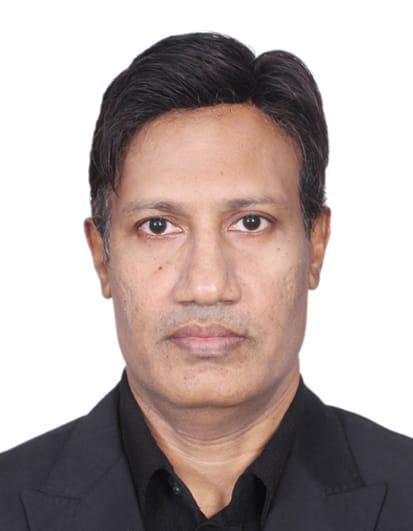
By Junaid Qaiser
Today’s security challenges in Pakistan can’t just be viewed through the old-school lens of guns, troops, and frontlines. In a series of recent talks—at the National Defence University, the National Ulema Mashaikh Conference, and the Corps Commanders’ Conference—Field Marshal Syed Asim Munir shared a more comprehensive and nuanced perspective on national security. His message was clear and intentional: the future stability of Pakistan will hinge as much on ideas, narratives, and institutions as it will on military might.
At the National Defence University, the Field Marshal stressed the importance of equipping future leaders to navigate an environment filled with uncertainty and complexity. He pointed out that hostile forces are increasingly shying away from direct confrontations, opting instead to exploit internal rifts through proxies, misinformation, cyber tactics, and economic pressure. In this kind of landscape, having intellectual clarity, adaptability, and the foresight to recognize complex cognitive threats are crucial strategic advantages. While military strength is still vital, it won’t be enough without informed leadership and resilient institutions.
This strategic thinking extended beyond military circles. Addressing scholars and religious leaders from across the country, Field Marshal Munir underscored the importance of religious coherence and state authority in countering extremism. By reaffirming that only the state has the legitimacy to issue directives related to jihad, he confronted one of the most dangerous sources of internal instability: the misuse of religion by violent non-state actors. His remarks reflected a clear understanding that terrorism thrives where ideological confusion and moral ambiguity are allowed to persist.
The Field Marshal also positioned Pakistan’s security outlook within a broader Islamic and geopolitical framework. By emphasizing Pakistan’s long-standing and principled ties with Saudi Arabia, he portrayed the nation as a responsible and stabilizing force in the Muslim world. This viewpoint underscores Pakistan’s strategic importance, especially as regional alliances and global power dynamics are shifting rapidly.
The same clarity was on display at the Corps Commanders’ Conference, where the army’s top brass reiterated that no political or external influence would be permitted to weaken national unity or exploit internal divisions. The firm rejection of any links between terrorism, criminal networks, and self-serving political interests sent a clear message that hybrid threats will be tackled head-on. Equally significant was the recognition that Pakistan’s journey toward stability has been a collective endeavor, involving civilian institutions, law enforcement, and the armed forces.
What sets Field Marshal Munir’s vision apart is its focus on building capacity rather than just managing crises. His ongoing support for professional military education, homegrown capabilities, and strategic research shows a deep understanding that resilience is cultivated over time. Institutions like the National Defence University aren’t just places for training; they serve as incubators for strategic thinking, where academic rigor translates into effective policies and operational readiness.
By referencing Allama Iqbal’s caution about nations that turn their backs on knowledge and their intellectual heritage, the Field Marshal provided a powerful reminder: true security is deeply rooted in our ideas and values. A nation that overlooks the importance of learning, discipline, and moral clarity leaves itself open to vulnerability, no matter how large its military might.
Field Marshal Asim Munir’s strategic vision goes beyond just weapons and soldiers; it envisions a Pakistan that is united, intellectually robust, and institutionally sound. In today’s world of hybrid warfare and cognitive challenges, this perspective highlights a fundamental truth: lasting security isn’t achieved through force alone—it thrives on a clear sense of purpose, collective thought, and unwavering confidence in our national path.





Leave a Reply