

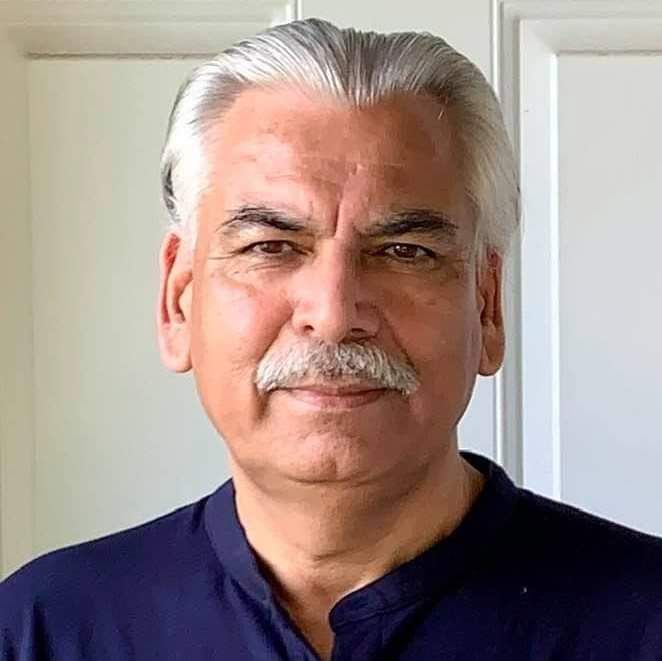
Barrister Usman Ali, Ph.D.
The first twenty-four years of this century passed at an extraordinary pace, and the twenty-fifth year has now quietly become part of history, leaving behind countless good and bad memories, marked by rapid scientific and technological progress, renewed diplomatic engagement in parts of the world, but also by conflict, instability, and growing public hardship. Time has not merely been turning calendar pages; it has been relentlessly reshaping the political, economic, and social contours of the world. A glance back at the past year reveals a series of troubling global developments. Wars erupted in several regions, long-standing conflicts resurfaced with renewed intensity, and only in a few places did fragile calm prevail. Even as innovation accelerated and connectivity deepened, public hardships grew overall. Instability increased, uncertainty spread, and ordinary people across the globe found themselves under mounting pressure. Once again, the collision of power politics and economic interests underscored a familiar truth: peace remains the world’s rarest and most valuable commodity.
From Pakistan’s perspective, however, the picture is not entirely bleak. In a brief yet sensitive military confrontation with India, Pakistan emerged with success, reinforcing confidence in its national defense. On the diplomatic front, the country appeared to move beyond a prolonged phase of relative isolation and reassert itself as a relevant and engaged actor on the global stage. Diplomatic engagement improved, Pakistan’s voice carried more weight in international forums, and the economy showed cautious but encouraging signs. While deep structural challenges persist, these developments offered rare moments of reassurance in an otherwise turbulent year and created space for guarded optimism about what lies ahead.
Yet if there is one domain that remained unchanged, or arguably deteriorated further, it is domestic politics. Political life continued to be defined by confrontation, ego, and a zero-sum mindset. The attitude of “if I cannot play, I will not let anyone else play” weakened democratic norms and replaced problem-solving with perpetual crisis. Emotional and inflammatory rhetoric crowded out serious discussion, while personalities were elevated above institutions, principles, and the broader national interest. Too often, the state, the law, and democratic values appeared secondary to individual ambitions.
The role of media and social media in this decline cannot be overlooked. The judiciary becoming entangled in political debate, mainstream media openly aligning with political preferences, and social media descending into abuse, misinformation, and character assassination all contributed to social erosion. In the race for ratings, views, and followers, lies, half-truths, and crude propaganda spread so widely that ordinary citizens struggled to separate fact from fiction. Disagreement increasingly turned into hostility, while tolerance, civility, and constructive dialogue steadily weakened.
This is the moment where serious self-reflection becomes unavoidable. We must ask where we are heading and what we are doing to the country in the pursuit of ego, revenge, and narrow self-interest. Is confrontation truly the only way to resolve every issue? Are protests, accusations, and political paralysis the only tools available to us? Is dialogue, compromise, and mature discussion really impossible? The uncomfortable truth is that there are no genuine revolutionaries in this system. Almost every struggle ultimately revolves around power. Whenever an opportunity arises, every tactic is employed and public emotions are used as political weapons. In this process, the greatest cost is paid by the ordinary citizen, who continues to grapple with inflation, unemployment, weak education, and inadequate healthcare.
The time has come to break this cycle. Politics must be taken out of permanent confrontation and returned to the realm of dialogue. There is an urgent need for a structured and credible mechanism through which government and opposition can engage on national priorities, such as the economy, foreign policy, and electoral reforms, inside parliament rather than on the streets or television studios. Disagreement is the essence of democracy, but turning it into a battle of egos serves neither the state nor the people. Reason, patience, and dialogue remain the only sustainable path forward.
Political parties must also accept their share of responsibility. Spokespersons who rely on provocation, insults, and hateful language may attract short-term attention, but they corrode politics and damage society in the long run. Parties should prioritize educated, composed, and credible representatives who can argue with reason rather than rage. Equally important is the conduct of political workers and supporters on social media. Parties must restrain their digital ranks from spreading vulgar propaganda and abusive language against opponents. Such behavior neither strengthens a party’s cause nor expands its support; instead, it fuels hatred, deepens polarization, and alienates ordinary citizens from politics altogether. Leadership must take responsibility for the tone it sets, both offline and online.
The media’s role also demands serious reassessment. Mainstream media must move away from sensationalism and ratings-driven content and return to credibility and responsibility. Journalism is not about becoming a political actor or amplifying conflict; it is about presenting facts, offering balanced analysis, and lowering the temperature of public debate. If media chooses to pour water rather than oil on the fire, many disputes could de-escalate on their own. Similarly, the state has a duty to establish transparent and effective mechanisms to curb disinformation and hate speech on social media, while safeguarding legitimate freedom of expression.
Above all, politics must once again place the public at its center. Every policy, decision, and political stance should be judged by one simple question: how does this benefit the ordinary citizen? Inflation, education, healthcare, and employment must take precedence over power struggles and personal rivalries. Performance must matter more than slogans, and results must count more than rhetoric.
The true resolution for the new year is therefore clear: country before politics, and people before personalities. There can be disagreement without hostility, politics without spectacle, criticism without falsehood, and authority without arrogance. If this resolution is translated from words into behavior, decisions, and mindset, the new year can mark not just the passage of time, but the beginning of a more stable, dignified, and hopeful future for Pakistan.


Leave a Reply