

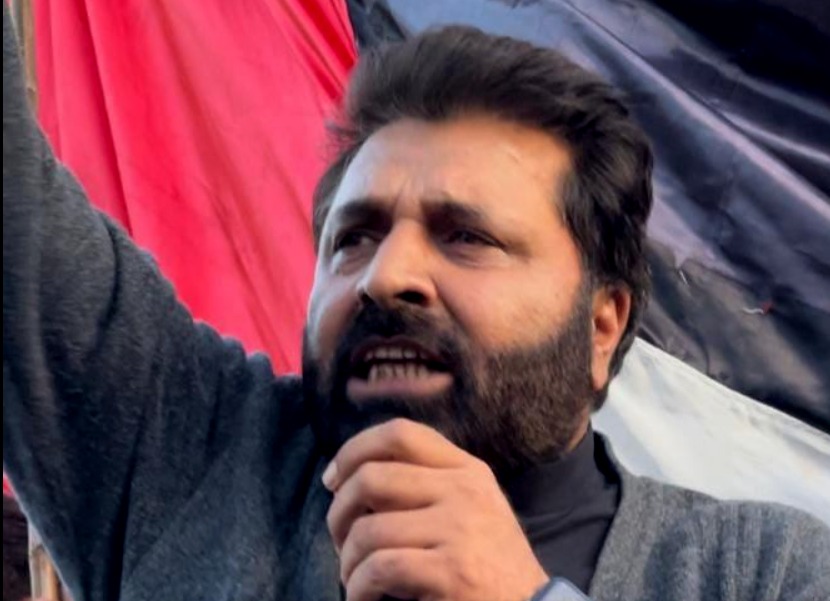
PPP credits five decade reform record from Bhutto era to present.
TARIQ KHATTAK
Gilgit (Jan 15-2026)
Pakistan Peoples Party provincial president Amjad Hussain Advocate has outlined his party’s five decade track record of expanding political and civil rights in Gilgit-Baltistan, positioning PPP as the primary advocate for the region’s constitutional integration ahead of the 2026 elections.
In 1974, Zulfikar Ali Bhutto abolished the Frontier Crimes Regulation and merged princely states into a single administrative unit, ending a colonial era legal framework that denied residents due process rights. Bhutto introduced wheat subsidies during the 1970s to address the region’s disputed status, high poverty rates and limited agricultural land while dismantling the feudal Rajgi system that concentrated land ownership among traditional rulers, he said.
Talking to this scribe, Amjad Hussain Advocate said that Benazir Bhutto’s 1994 Northern Areas Legal Framework Order expanded the Northern Areas Council from 16 to 24 elected members, introducing party based elections for the first time and creating positions including Deputy Chief Executive with federal minister status, Speaker and five advisors with provincial minister equivalents.
The 2009 Gilgit-Baltistan Empowerment and Self-Governance Order signed under President Asif Ali Zardari established a 33 member Legislative Assembly with powers to legislate on 61 subjects, alongside offices of Governor and Chief Minister, he informed.
However, the region’s two million residents remain constitutionally excluded from Pakistan’s National Assembly and Senate, lacking the fiscal autonomy granted to the four provinces despite contributing hydropower and tourism revenues to federal coffers. Gilgit-Baltistan gained de facto province like status without constitutionally becoming part of Pakistan, leaving its integration unresolved due to linkage with the disputed Kashmir issue under international frameworks.
Gilgit-Baltistan serves as the only land connection between Pakistan and China, with the China Pakistan Economic Corridor passing through its mountainous terrain to link Kashgar in Xinjiang to Gwadar port. The region contains glaciers feeding the Indus River system and holds hydropower potential exceeding 30,000 megawatts, alongside deposits of gold, copper, rare earth minerals and gemstones worth billions of dollars.
Despite its hydropower potential, Gilgit-Baltistan endures prolonged electricity shortages, particularly in winter when outages last most of the day. The Diamer-Basha Dam project on the Indus River, when completed, will generate 4,800 megawatts of electricity and store 10.5 cubic kilometers of water for irrigation and drinking, but the region does not receive royalties from such projects due to its constitutional exclusion from the National Finance Commission and Council of Common Interests.
Hussain criticized unnamed political opponents for alleged corruption and nepotism, claiming rivals have treated public office as personal enrichment vehicles while awarding contracts to relatives and associates. He pledged that PPP would advance Benazir Bhutto’s vision under Bilawal Bhutto’s leadership, promising to secure full provincial status that successive governments have deferred for 77 years.

Leave a Reply