

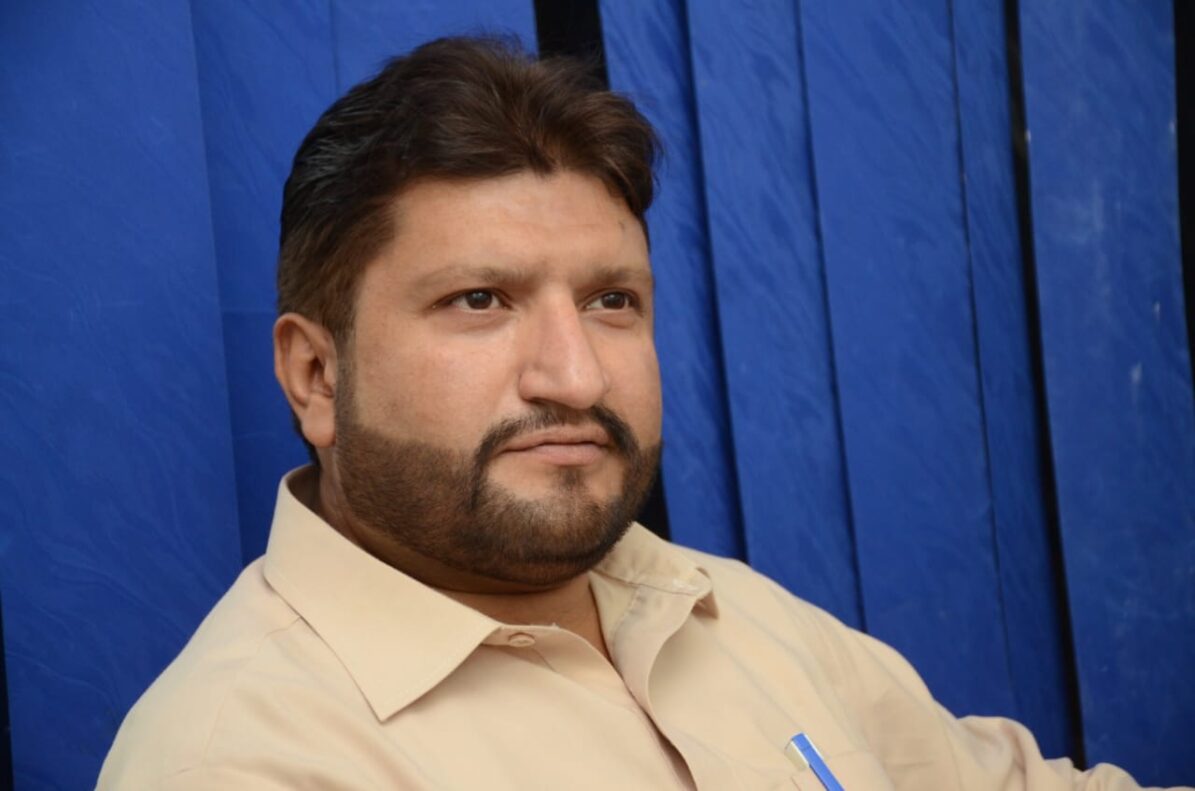
Saleem Bukhari
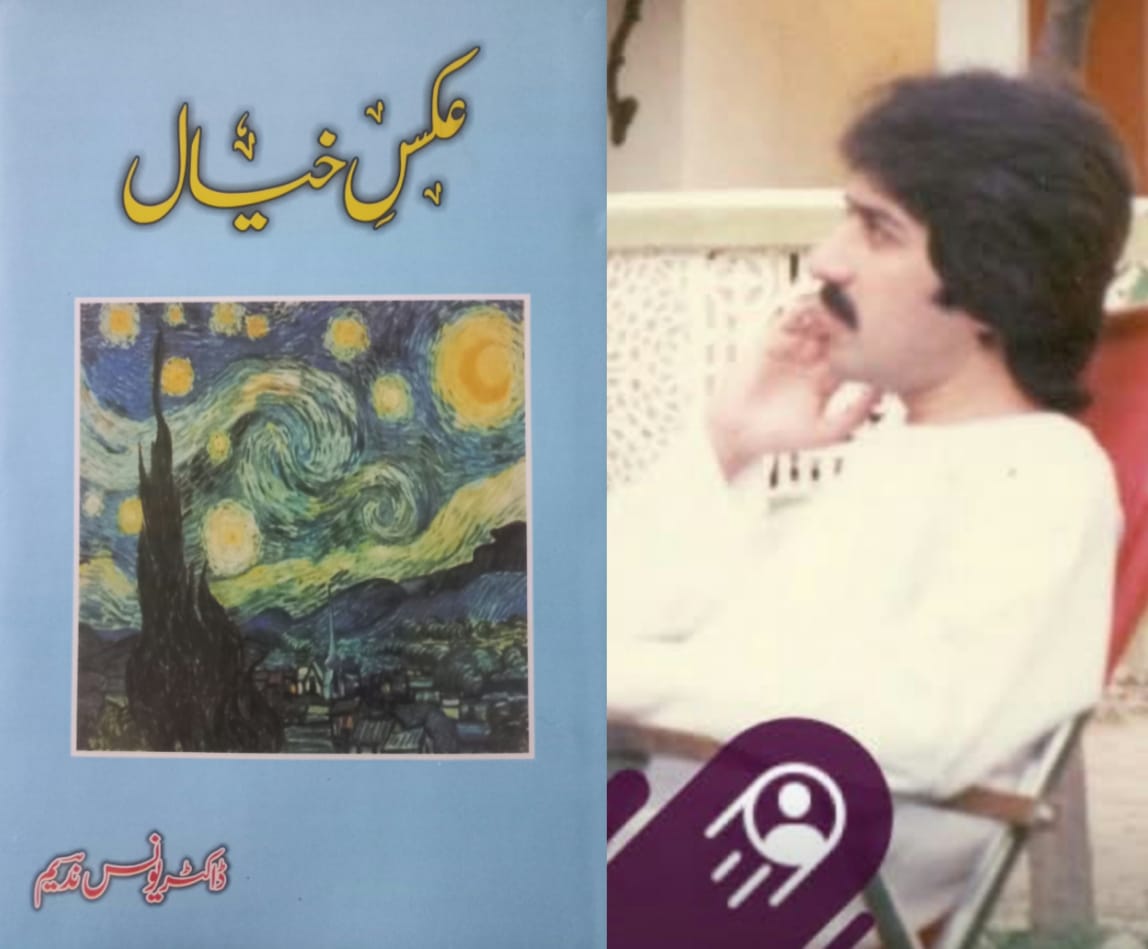
After nearly twelve years, I had the privilege of meeting my revered teacher and companion, Dr. Younis Nadeem. Time, though it has brushed his hair with silver, has not dimmed the serenity of his speech, that same composure, that soft-spoken eloquence and that ineffable fragrance of thought that once marked every conversation. The encounter brought with it a deep, wordless calm, as if a long-lost fragment of one’s own self had been rediscovered.
Before parting, Dr. Nadeem presented me with two of his latest works — Aks-e-Khayaal (“Reflections of Thought”) and Saaneha-e-Kohat (“The Kohat Tragedy”). As I received these volumes, it seemed as though he was placing luminous vessels of language into my hands.
Aks-e-Khayaal is not merely a collection of verse; it is the reflective mirror of a bruised collective consciousness. Within its pages breathe the fatigue of life, the scars of the earth, and the silent anguish of the human interior. For those familiar with Dr. Nadeem’s poetic idiom, his distinction lies in the quiet strength of his voice, a voice that does not cry out, yet unsettles the entire conscience of an era. His poetry transforms pain into perception and protest into poise. His lament is civilised, and his grief, aesthetic.
When he writes of “walls and roofs battered by the wind,” the imagery extends beyond the literal to become an allegory for the crumbling structures of faith, hope, and repose. His sorrow, though intensely felt, is not personal, it belongs to the age itself.
In one of the collection’s central couplets, the poet laments the irony of protection turning into peril: the “enemy stands before us, and the guardians behind.” The verse encapsulates the spirit of Aks-e-Khayaal, the condition of living amid invisible dangers, where trust itself becomes treacherous. Dr. Nadeem’s work thus emerges as an act of internal resistance, a subdued yet unwavering protest wrapped in the garb of lyric beauty.
The poet’s anguish does not arise from disillusionment but from awakening, the painful clarity of seeing the world as it is. When he writes of “storms of fire and iron” and of a world stripped of sanctuary “beneath roof or sky,” he is not merely describing destruction but bearing witness to an existential desolation that defines the modern condition.
The imagery of gunpowder settling upon flowers and trees, erasing color and fragrance, transforms into a haunting metaphor for a civilisation losing its capacity for beauty. Yet, amidst the ash, the poet’s voice affirms that the human heart still yearns for the beautiful, even when the world denies it.
One of the most compelling compositions in the collection depicts a “cunning city” where “the poor find no path.” Here, Nadeem exposes the moral architecture of contemporary society, a space where honesty is equated with poverty and cunningness has assumed the guise of wisdom. The imagery of “the voiceless remaining silent before every tyranny” is a striking indictment of collective apathy.
This city, for Dr. Nadeem, is not a geographical locale but a moral landscape, a reflection of the modern world, where the sacred has been subdued by the strategic and conscience muffled by convenience. His voice in such poems transcends the personal; it becomes the voice of a wounded humanity. The poet’s protest is not thunderous but luminous, a quiet illumination that exposes darkness rather than curses it.
In Nadeem’s poetics, inner fire and outer calm coexist. He does not fashion outcries from words; he draws light out of wounds. His verse both unsettles and consoles, revealing a delicate equilibrium between despair and endurance.
In one striking piece, the poet mourns “the dreamers who have died” and “the hearts turned to targets,” foreseeing “a storm approaching the trembling sails.” Here, the metaphor of the impending storm encapsulates the poet’s dual vision, his awareness of destruction and his refusal to surrender to it. Similarly, when he writes, “The light of day, the glow of night — all gone; we carried our own corpses and left,” he transforms remembrance into an ethical act. His lament is not nostalgia; it is testimony, the memory of light preserved against the encroaching dark.
The concluding pieces of Aks-e-Khayaal resonate with haunting simplicity. “The fire of love is gone; the music of the soul is gone — the houses remain, but no mystery within.” Love, here, is no mere emotion but the metaphysical flame of being itself, now extinguished. The poet sees around him a society of dwellings without souls, lives without inner resonance.
When Dr. Nadeem writes of “blood on the streets” and “chaos in the shrines,” he does not invoke sensationalism. His concern is ethical, not political. His poetry does not scream; it records. It is a chronicle of a civilisation at war with its own conscience, a documentation of silence, fear and the fragile endurance of hope.
Aks-e-Khayaal, therefore, transcends the boundaries of personal expression to become a cultural document, a poetic testimony to an age of confinement, yet also of persistent feeling. Nadeem’s diction carries a quiet pain, spoken in the soft tones of dignity. His verses whisper, but the echo they leave behind is oceanic in depth.
In this collection, words bleed yet breathe; the sensitive soul may be weary, but it remains unbroken. And perhaps therein lies the ultimate triumph of Dr. Younis Nadeem’s poetry, the thin but unbreakable filament of hope that glows amid despair. In his world, pain ascends beyond protest to become prayer. His poetry transforms anguish into grace and leaves, within the reader, a tender residue of light.
May his words continue to move alongside the light,
his dreams remain intact,
and his poetry kindle, in the hearts of generations to come, the enduring lamps of hope.







Leave a Reply