


Amjad Hadi Yousafzai
Peshawar: Filmmaker and music producer Irshu Bangash says politics has done more to silence art in South Asia than any other force. “Art is something that can build peace, but politics often tears it apart,” he told this correspondent in an interview in Peshawar.
Bangash believes that artists across Pakistan, India, and Afghanistan have become collateral damage in decades of political tensions, militancy, and cultural restrictions. The result, he says, is a generation of creative people trapped between art, politics, and survival.
Pakistan’s creative industry continues to face challenges ranging from censorship and terrorism to a lack of institutional support. Artists complain of being isolated from international collaborations, deprived of funding, and restricted by political borders that, according to Bangash, “should never exist for art.” 
Once, the subcontinent’s music, cinema, and culture connected people across South Asia. But rising nationalism and hostility between neighboring countries have eroded that connection.
Following recent border conflicts, Pakistani artists were banned from India’s entertainment industry, halting years of successful collaboration. In addition, Pakistani YouTube, Instagram, and Spotify channels have been blocked in India, silencing singers, actors, and musicians who once shared millions of cross-border fans.
“The tragedy is not only that artists are banned,” Bangash said, “but that entire creative communities are collapsing. Many have sold their instruments, closed their studios, and given up their passion. An artist needs peace, not politics, to create.”
In Pakistan, artists largely work independently, relying on concerts, online platforms, and freelance projects to survive. Without state funding or cultural endowments, most struggle to sustain themselves. Bangash laments that, unlike India and Western nations, Pakistan continues to treat art as a luxury rather than a necessity, even though it plays a crucial role in peacebuilding and social expression.
The situation is even worse for Afghan artists and refugees, many of whom fled to Pakistan with broken instruments and shattered dreams. “They are artists running from oppression,” Bangash said. “Music is banned in their homeland. Sending them back means sentencing them to silence or death.”
He urged the government to adopt a comprehensive cultural policy that provides legal and professional space for Afghan musicians, filmmakers, and performers to contribute to Pakistan’s creative economy. “If Pakistan cannot support its own artists,” he said, “it should at least give space to those who can bring light through their art.”
Bangash, himself a veteran of more than a decade in the industry, admits the struggle is personal. “Even after years of work, I am still fighting to sustain myself,” he said. “Government departments talk about promoting culture, but real opportunities and funds rarely reach independent creators.”
He added that many talented Pakistani artists have migrated abroad, particularly to Europe and Canada, seeking recognition and stability. “We are losing a generation of creative minds,” he said. “Artists shouldn’t have to choose between survival and self-expression.”
Irshu Bangash is among the few independent filmmakers and music producers from Khyber Pakhtunkhwa to gain international acclaim. His multilingual telefilm Project Peshawar was shot across three countries and won awards at several global festivals. The film was featured in over 240 international newspapers, becoming one of Pakistan’s most widely covered independent productions.
As a music producer, he has created viral hits such as Badashi (with Moez Muhammad), Sanam (for Ali Baba Khan), Jaam, Masti, Ghani Yar, and Mrama (Jaam Boys) — blending traditional Pashto and Urdu influences with modern electronic sounds.
Since 2007, Bangash has collaborated with NGOs, international organizations, and government institutions, producing socially driven projects and mentoring young artists across universities and media schools.
He continues to advocate for cross-border cultural cooperation, urging Pakistan to initiate grant programs and artist exchange platforms with neighboring countries.
“Let art be free from borders,” Bangash said. “Artists from Pakistan, India, and Afghanistan have the power to bring peace — not through speeches or wars, but through stories, films, and songs that touch people’s hearts. We just need the freedom to create.”


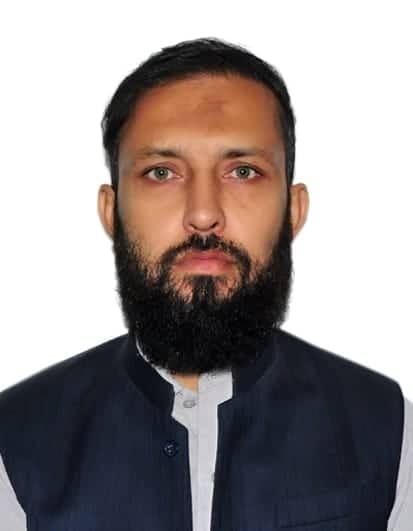
irshu bangash
Thank you Amjad Hadi