

By Anwarzada Gulyar
The tribal district of Bajaur—renowned for its scenic valleys, towering mountains, and hardworking farmers—is now stepping into a new agricultural chapter. Blessed with soil and climate naturally suited for olive cultivation, this region, once home only to wild olive trees, is witnessing a remarkable transformation. With government support and the dedication of local farmers, these wild groves are being turned into an economic treasure. This is not merely farming; it is a journey of growth, self-reliance, and prosperity that promises a brighter future for generations to come.

According to the latest figures from the Khyber Pakhtunkhwa Agriculture Department, Bajaur has nearly 11 million wild olive plants. Through grafting, these are being converted into productive, high-quality olive orchards. Thanks to the efforts of Provincial Agriculture Minister Maj. (R) Sajad Barakwal, Agriculture Secretary Ambar Ali, Director General Murad Ali Khan, and District Director Dr. Subhanuddin, grafting has already been carried out on 750,000 plants.
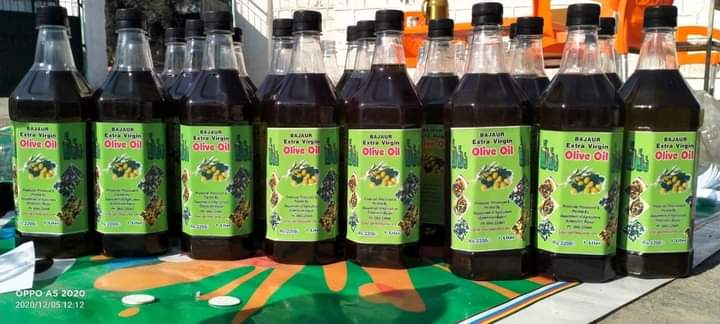
These are not just statistics but a living picture of success. So far, 71,000 kilograms of olives have been harvested, producing 7,100 liters of premium-quality olive oil. The department reports a steady increase in production, with an annual yield of 35,000 kilograms of fruit, equivalent to 3,500 liters of pure oil.

There was a time when local farmers had to transport their harvests all the way to Peshawar or other cities, a costly and time-consuming process that left little profit. Today, the story is different. The Agriculture Department has installed three modern oil extraction machines within Bajaur itself, enabling farmers to process their produce locally. This facility not only reduces expenses but also directly boosts the local economy. Farmers now see the fruits of their labor transformed before their eyes and receive higher returns.
Speaking on the subject, District Agriculture Director Dr. Subhanuddin remarked that Bajaur’s soil and climate are uniquely favorable for olive production. “Compared to other regions, Bajaur’s yield is higher, and the quality of its olives is unmatched,” he noted.
This year, under the Annual Development Program (ADP), the department has planned to graft an additional 100,000 wild plants, with work already underway in Salarzai and Barang tehsils. Meanwhile, organized orchards are also being established. To date, 950 acres of land have been converted into olive farms, with another 196 acres set to be developed this year. This expansion is turning olives from a small-scale experiment into a major commercial venture.
The varieties being cultivated in Bajaur—Arbiquina, Coratina, and Leccina—are globally recognized for their taste and oil quality. Known for their high yield and market demand, these cultivars have the potential to give Bajaur’s olives recognition not only across Pakistan but also internationally.


For farmers, this campaign is the realization of a dream. It is greening barren lands, creating jobs, strengthening the economy, and bringing new waves of prosperity to households. In hilly terrains where traditional crops are limited, olives are breathing fresh life into agriculture.
Experts believe that if this pace continues, Bajaur could become the hub of olive production in the province within a few years. This would not only uplift local farmers but also help Pakistan reduce reliance on imported oil, saving precious foreign exchange. Moreover, the expansion of the olive industry could pave the way for small-scale processing units, packaging plants, and export opportunities—opening new avenues of employment for the region’s youth.

Today, the eyes of Bajaur’s farmers sparkle with a renewed vision—a vision of lush orchards dressing valleys in green, households thriving in prosperity, and the world recognizing Bajaur’s olives as a symbol of quality. This is the beginning of a story whose every chapter speaks of development, peace, and abundance. These olive trees are not only a support for today but also a legacy of hope, wealth, and pride for generations to come.



Leave a Reply