

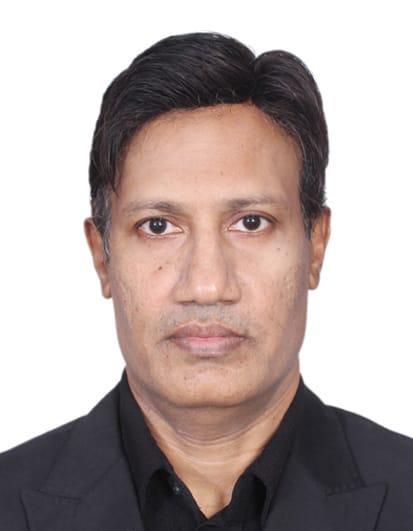
By Junaid Qaiser
There are moments when a country’s choices begin to tell a different story about its future. Not through grand declarations, but through steady, deliberate actions that signal a shift in mindset. Pakistan today appears to be in such a moment—working to strengthen stability at home while quietly contributing to peace beyond its borders.
At the center of this effort is Prime Minister Shehbaz Sharif, whose recent decisions reflect a growing emphasis on coordination and preparedness. The creation of a unified crisis management structure is not just an administrative step; it is a recognition that modern challenges—economic, political, and security-related—are deeply interconnected. Addressing them requires more than fragmented responses. It demands clarity, speed, and above all, cohesion.
Equally significant is the role of Field Marshal Asim Munir, whose alignment with the civilian leadership points to a rare but necessary unity of purpose. In a country where civil-military coordination has often been a subject of debate, this moment suggests a more synchronized approach—one that prioritizes national stability over institutional divides.
The global context makes this alignment even more important. The ongoing tensions in the Middle East have sent shockwaves across economies and political systems far beyond the region. For Pakistan, the risks are immediate and tangible: disruptions in energy supplies, pressure on foreign exchange reserves, and uncertainty affecting millions of families dependent on overseas remittances. In such an environment, hesitation can prove costly.
What stands out, however, is that Pakistan is not only preparing for the consequences of these global shifts but is also attempting to influence them. Its role in facilitating dialogue between the United States and Iran reflects a quiet confidence—an understanding that countries like Pakistan can move beyond being observers of global tensions to becoming participants in their resolution.
This is not an easy path. Diplomacy between long-standing rivals is rarely straightforward, and the space for meaningful engagement is often narrow. Yet the willingness to create that space—to host conversations, to encourage restraint, to keep channels open—matters. It reflects a belief that even in deeply polarized environments, dialogue remains possible.
There is also a deeper significance to this dual approach of internal preparedness and external engagement. Stability at home strengthens credibility abroad. And credibility, once established, allows a country to play a more constructive role in global affairs. Pakistan’s current trajectory suggests an awareness of this relationship.
Still, the real test lies ahead. Policies and structures must translate into results. Economic resilience must be felt not only in macroeconomic indicators but in the daily lives of citizens. Diplomatic efforts must move beyond symbolism to tangible outcomes. And perhaps most importantly, public trust must be sustained through transparency and consistent communication.
However, even with these challenges, there is reason for cautious optimism. The emphasis on planning rather than reacting, on coordination rather than fragmentation, and on dialogue rather than disengagement signals a maturity that is often overlooked in discussions about Pakistan.
In a world increasingly defined by uncertainty, such steadiness carries its own value. It suggests that progress does not always come through dramatic breakthroughs, but through the accumulation of thoughtful decisions—each one reinforcing the other.
Pakistan’s evolving role, shaped by leaders like Shehbaz Sharif and Asim Munir, is still unfolding. It may not transform the regional or global landscape overnight. But it points toward something meaningful: a country learning to navigate complexity with greater confidence, and choosing to contribute to stability not only within its borders, but beyond them.
And in times like these, that choice matters.

Leave a Reply