

By Syed Sajid Shah,
President Shangla Union of Journalists
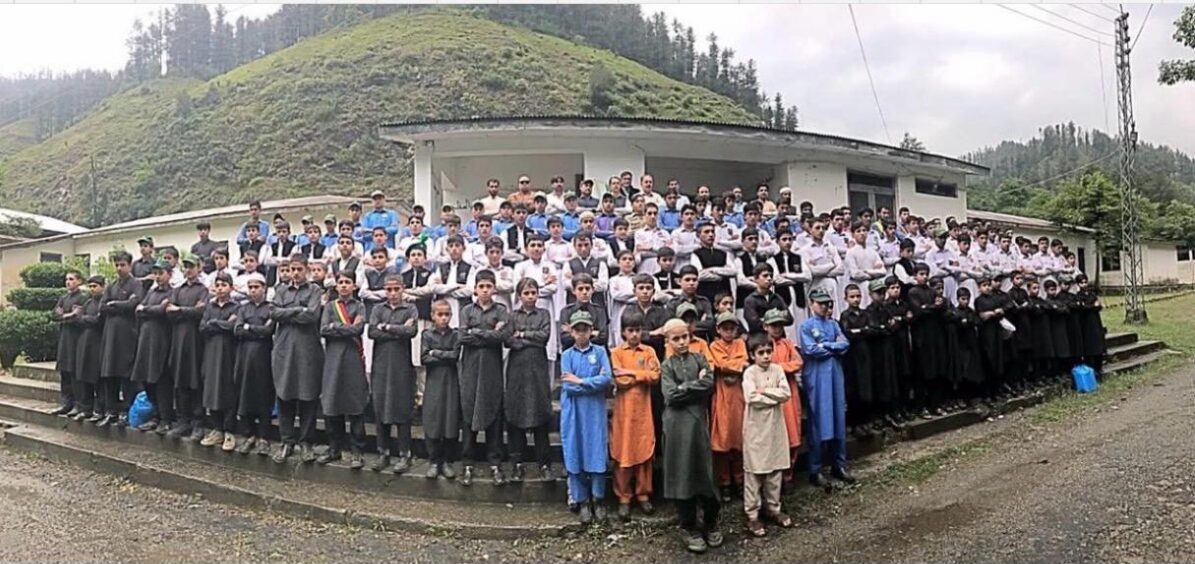
The year 2025 has once again proven to be a devastating year for coal mine workers, particularly the youth aged between 19 and 35. In Shangla district alone, 34 young men lost their lives in coal mines industry. In fact the death of a miner is never the death of one individual—it is the death of an entire family, Parents, wives, and children who are left permanently deprived to a life without basic necessities, and burdened with endless social and economic suffering.
Every year, billions of rupees are allocated in the name of these victims through government and non-governmental funds. Yet, in Shangla, very little amount reaches the families of the deceased, Corruption swallows it all. Worse still, there is no reliable data that could serve as a foundation for meaningful reforms or welfare measures.
The first martyr of 2025 was a young man from Maieron Sar Dherai village Alpuri, who died in a mine accident on January 7 this year due to a collapse in mine. From that day onward, a relentless chain of tragedies unfolded, culminating in 34 deaths by year’s end. Among the martyrs were Roshan Zeb, Muhammad Malik, Muhammad Shafi, Waheed Zaman, Akbar, Izharuddin, Umar Ali, Nizamuddin, Rahman Ali, Sar Bali, Muhtaram Shah, Abdul Rab, Abdul Salam, Sher Zaman, Gul Ahad, Gul Ikhtiar, Samiullah, Hazrat Ali, Haider Ali, Amir Rahman, Noor Salam, Ashraf Ali, Sher Afzal, Syedzada, Akbar Shah, Akhtar Zaman, Gulram, Muhammad Rahman, Momin Khan, Fazal Salam, Amanullah, and Luqman Ali.


Almost every week, we hear breaking news of mine explosions in Punjab, Khyber Pakhtunkhwa, or Balochistan, claiming the lives of Shangla’s workers. Their charred bodies are sent back to their villages in coffins, unrecognizable to their loved ones. For the public, such news loses significance within two days.but for the families, it is not just news—it is a lifelong affliction.
Consider the young bride who never even saw her husband before he perished in a mine accident. Or the unborn child who will grow up as the posthumous memory of a father lost underground. A mother waiting for her son until blindness overtakes her, or a father who dies of grief after losing his only support. These are not isolated tragedies; they are hundreds of stories repeated daily.
Coal miners are poor men whose only dream is to earn two meals a day. Yet, this pursuit of survival drags them into a deadly swamp. Their deaths are not caused by fate alone but by the collective negligence of society, mine owners, contractors, government officials, donor agencies, and even the federal and provincial welfare departments. Billions of rupees are siphoned off in their names, but no accountability exists. Even politicians exploit their funerals for votes, posing for photographs with grieving families to post on social media and harvest sympathy.
In March 2025, a newlywed miner left for Balochistan after his wedding night. Within weeks, his body returned, leaving his wife a widow. In another case, two brothers died together in a mine, shattering their parents. Still in other case a mother lost her only son accepted it as fate, but her husband could not bear the grief and passed away soon after.
Generations of Shangla’s youth have been sacrificed to coal mines. Should we dismiss these deaths as mere accidents, or should we examine the underlying causes? Who will take responsibility for guiding young men away from the illusion of quick wealth or due to poverty —earning a hundred thousand rupees a month at the cost of their lives?
Shangla today is trapped in poverty, corruption, and unemployment. Mafias, ruling elites, and resourceful classes exploit the poor in every possible way. To escape this vicious cycle, a comprehensive plan is needed—one rooted in education and training.
The youth of Shangla face two choices:
- Pick up the pen and abandon the coal sack. Endure poverty temporarily but invest in education, technical training, and skill development. The government must provide scholarships, vocational opportunities, and jobs instead of mourning over coffins.
- Continue carrying coal sacks and destroy their own future.
For decades, Shangla’s history has been overshadowed by despair. At just 16 years of age, boys are forced into mines instead of classrooms. If more than half of a nation’s youth remain trapped in mining in this age of nuclear science and technology, what future can that nation expect?
Currently, 79% of Shangla’s population is linked to coal mining. Yet, the benefits and welfare schemes announced in their name never reach them. It is time for political leaders to stop exploiting their deaths for sympathy and instead deliver their rights.

The miners of Shangla deserve more than tears and slogans. They deserve dignity, justice, and a future beyond the mines.
Despite decades of sacrifice, Shangla district has yet to see a single major project for its coal miners. Not even a modest initiative has materialized. Across Pakistan, industrial workers’ children benefit from Working Folks Grammar Schools, yet Shangla remains excluded. Health facilities, hospitals, and welfare programs for coal miners exist elsewhere, but not here. Residential Colonies have been built in the name of workers nationwide, but Shangla’s miners remain deprived.
No public data exists on scholarships or dowry funds for miners’ children in Shangla. The reason is clear: corruption and manipulation by mafias who refuse accountability. Is a single “death cheque” of 1.2 million rupees really considered compensation for a life lost? Does the government’s responsibility end with one payment?
The atmosphere in Shangla today is one of helplessness and despair. Even dowry funds, scholarships, and medical seats are controlled by mafias. Do these people not fear God?
Globally, coal mining is recognized as one of the most dangerous and exploitative forms of labor. In Pakistan, the situation is worse due to government failure, lack of planning, and widespread embezzlement of funds meant for workers’ welfare.
Our youth are dying in droves. What are we lacking? Why are we drifting further away from prosperity? Why do the government, state institutions, and even the Workers Welfare Board (WWF) remain blind to Shangla’s devastation? The answer is both simple and complex: negligence and indifference.
In 2025 alone, Shangla witnessed deaths on a massive scale. Thousands of miners are now disabled, confined to their beds without funds, medicines, or care. They wait for a savior—but the very institutions meant to protect them have become their exploiters. NGOs and government-linked organizations continue to profit from miners under the guise of “technical programs,” with no monitoring or accountability.
The tragedy is so widespread that in Shangla’s villages, there is hardly a household untouched by coal mining’s toll. Many families have lost two or three members. Widows and orphans survive only on faith, abandoned by the state.
Young men in Shangla chase the dream of earning 100,000 rupees a month in the mines. Yet this competition is a curse. Despite the money, they build no homes, no futures—only graves. Shangla, blessed with natural beauty and resources, has no voice in tourism or trade. It remains a neglected region.
Generations of Shangla’s youth, talented and ambitious, have been denied opportunities for a dignified life. For decades, deaths in coal mines have risen unchecked, with no plan for the future. How long can Shangla endure this cycle of exploitation and tragedy?
Historically and socially, Shangla has always been at the forefront of national contribution. The Karakoram Highway, the so-called eighth wonder of the world, passes through Shangla, linking Pakistan to China via Khunjerab. Yet the district has failed to benefit from this strategic gift. In the past, Shangla supplied resources and human capital to other regions.
Today, Shangla’s population stands at 891,252 despite its forests, natural resources, and tourist sites, it remains neglected. Poverty ranks it 23rd among Pakistan’s districts. This is a challenge that must be addressed.
Government and semi-government institutions must play their role in changing Shangla’s fate. By the end of next year, instead of counting coffins, we must demonstrate humanity by implementing comprehensive planning, ensuring that billions of rupees allocated in miners’ names actually reach them. Only then can we save them from the pits of death and give Shangla’s youth a chance at life.
______________________________________________
Syed Sajid Shah,
Correspondent,
From Alpurai District Shangla.
Cell #: 03492299009





Leave a Reply