

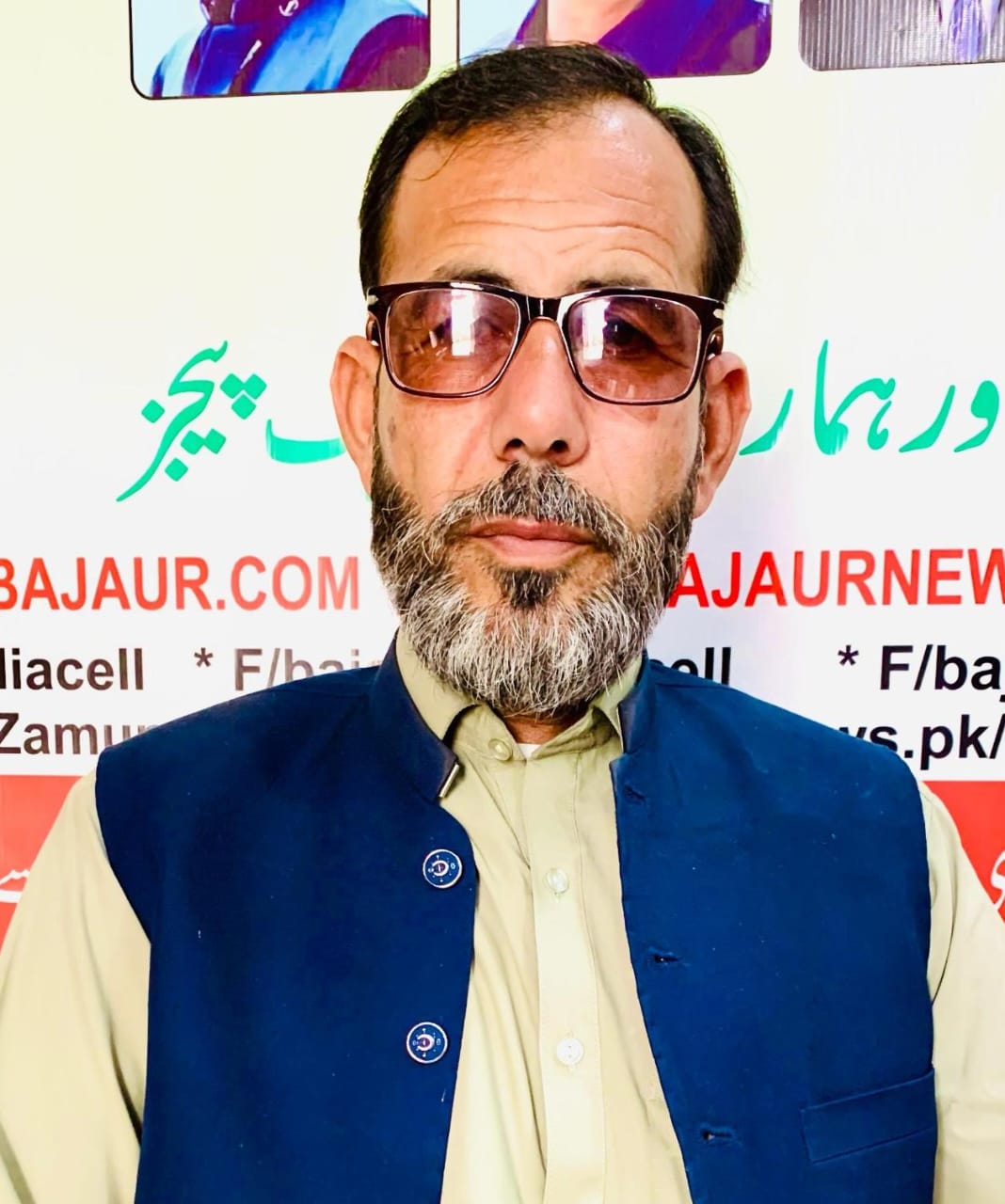
Anwar Zada Gulyar
Schools are not merely places for imparting textbook knowledge; they are fundamental centers for the intellectual, moral, and practical development of children. These are the institutions where the personality of an entire generation is shaped, where children are taught not only how to study but also how to live. If education is confined solely to textbooks, examination scores, and degrees, it deviates from its true purpose. Real education is that which transforms a child into a responsible, principled, and active citizen.
In this context, the issue of involving children in school cleanliness has emerged as an important yet sensitive topic. On one hand, this practice instills positive values in children such as cleanliness, discipline, responsibility, and teamwork. On the other hand, concerns are raised that it may harm children’s self-respect or, if handled improperly, take the form of exploitation.
Recently, this very issue was discussed in a meeting of the Standing Committee on Education of the Khyber Pakhtunkhwa Assembly. During the meeting, the view was expressed that making children clean schools is a bad practice and should not be allowed. On this occasion, the Secretary of Education clearly stated that the Education Department has already issued instructions to all Deputy Commissioners not to have students clean schools, and that full compliance with this decision must be ensured. According to him, making children perform cleaning duties is inappropriate and should be avoided.
However, in the same meeting, Mian Sharafat, a member of the Standing Committee and a Pakistan Tehreek-e-Insaf (PTI) Member of the Provincial Assembly, raised a different and thought-provoking question. He asked why children should not be involved in cleaning schools. Are our children princes? He argued that cleanliness is neither an act of humiliation nor a cause for embarrassment; rather, it is a basic human responsibility. At the same time, he emphasized that a proper mechanism should be devised for cleanliness—one that does not hurt children’s self-respect and allows them to participate in such activities with dignity.
This is precisely the point where the entire issue needs to be viewed with understanding and wisdom rather than emotion. In many developed countries, children are made part of school cleanliness, but it is not treated as punishment or humiliation; instead, it is adopted as a training activity. Japan is a shining example, where children clean their classrooms, corridors, and other areas of the school on a daily basis. There, this practice is considered part of national upbringing, aimed at fostering discipline, self-reliance, and a sense of collective responsibility among children. Similarly, this system is successfully implemented in South Korea, China, Taiwan, and Singapore, and it is due to these very values that their educational institutions and societies are regarded as exemplary.
There are many positive aspects of involving children in school cleanliness. It helps develop a strong habit of cleanliness, instills a sense of responsibility, and teaches children that spreading dirt is easy, whereas maintaining cleanliness requires effort. When a child keeps his or her own environment clean, they learn to value it throughout life. Moreover, during collective cleaning activities, qualities such as teamwork, cooperation, patience, and tolerance are nurtured—traits that are extremely important in practical life.
However, it cannot be ignored that if this practice is carried out without proper planning, guidance, or with ill intent, it can indeed hurt children’s feelings and damage their self-respect. This is why Mian Sharafat’s demand is highly significant: that a proper, dignified, and fair mechanism for cleanliness be established. For example, cleaning should not be used as a form of punishment; all students should be included equally and on a rotational basis; teachers should supervise the process themselves; and children should be made to feel that they are not doing an inferior task but fulfilling the duty of a responsible citizen.
Although direct involvement of children in school cleanliness is relatively limited in Europe and the United States, there too renewed emphasis is being placed on character building, community service, and practical training. Through various educational programs, children are being taught a sense of social responsibility, which proves that the modern world no longer considers textbook education alone to be sufficient.
In conclusion, it would be fair to say that the issue of school cleanliness should not be viewed in black and white, but requires a balanced approach. Neither is it right to force children into cleaning in a humiliating manner, nor is it appropriate to exempt them from all practical responsibilities simply because they are children. What is needed is an educational system and training framework that fully respects children’s dignity while teaching them fundamental lessons of cleanliness, discipline, and responsibility. Because clean schools do not merely signify clean buildings; they represent clean thinking, strong character, and the foundation of a civilized society.


Leave a Reply