

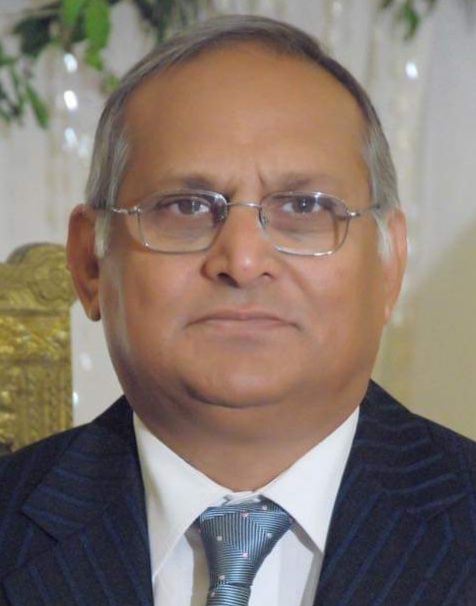
By Ghulam Haider Shaikh
The recent meeting between Khyber Pakhtunkhwa Chief Minister Ali Amin Gandapur and U.S. Consul General Thomas E. West in Peshawar has opened a crucial window for dialogue at a time when Pakistan’s economy and governance structures are grappling with deep challenges. Gandapur’s statement, “We seek investment, not aid,” is not only a diplomatic message to the United States but also a reflection of a broader aspiration to reshape the dynamics of Pakistan’s international relationships. It signals a shift from the traditional donor-recipient model toward one based on mutual economic growth and respect for sovereignty.
For decades, Pakistan’s engagement with the U.S. and other major powers has been characterized by cycles of aid, loans, and conditional support. While these inflows provided short-term relief, they also created long-term dependency and, at times, compromised the country’s policy autonomy. Gandapur’s emphasis on attracting investment rather than seeking financial aid suggests a willingness to break free from this pattern. This approach is especially vital for Khyber Pakhtunkhwa, a province that has faced the brunt of terrorism, natural disasters, and developmental neglect. By advocating for investment, Gandapur is pointing toward sustainable solutions that can generate jobs, strengthen infrastructure, and promote economic self-reliance.
The choice of words in Gandapur’s message matters deeply. Aid, while necessary in emergencies, often comes with political strings attached. It fosters a cycle where governments focus on short-term fixes instead of long-term growth. Investment, by contrast, creates partnerships that require accountability, efficiency, and mutual benefit. If the U.S. were to prioritize direct investment in sectors like energy, technology, education, and tourism in KP, the results could be transformative. For instance, Khyber Pakhtunkhwa’s vast potential in hydropower and its unique tourism landscape, from the Kalash valleys to Swat’s mountains, remain underutilized. Strategic investments could turn these natural resources into engines of economic revival.
This meeting also carries significant geopolitical weight. Relations between Pakistan and the United States have experienced turbulence over the past two decades, particularly due to mistrust stemming from security issues, counterterrorism policies, and regional conflicts. By framing the relationship in economic rather than purely security terms, Gandapur is helping to reset the narrative. His message subtly challenges Washington to reconsider its approach to Pakistan: less as a frontline state in the war on terror and more as a partner in regional economic development.
Gandapur’s government must back its vision with visible actions to prove that KP is safe, transparent, and ready for business. Investment will only flow into an environment where policies are predictable and governance is strong. Public-private partnerships, incentives for technology startups, and streamlined regulatory frameworks could all serve as catalysts for growth.
The U.S., for its part, must also recognize the opportunity at hand. A province like KP, with its youthful population and strategic location bordering Afghanistan and China, can serve as a hub for trade and connectivity. By investing in education and skill development, the U.S. can help unlock the human capital necessary for long-term stability. Such engagement would not only benefit KP but also contribute to regional peace by reducing poverty-driven extremism and fostering cross-border economic ties.
Another critical aspect of Gandapur’s message lies in its symbolism. By meeting with the U.S. Consul General and publicly advocating for investment, he is sending a signal to other international stakeholders as well. Pakistan’s regions are increasingly asserting their voices in foreign policy conversations. This decentralization can be a strength if managed wisely, allowing provinces to directly showcase their strengths to foreign investors. It also reflects a growing awareness that local development cannot wait for federal initiatives alone.
Ultimately, Gandapur’s statement goes beyond a provincial wish list; it signals a potential shift for Pakistan. If implemented, it could redefine relations with the U.S. and other global players, moving from dependency to partnership. Emphasizing investment over aid reflects a commitment to dignity, self-reliance, and national development.
The meeting in Peshawar may seem like a small diplomatic event, but it carries broader implications. It challenges both Pakistan and the United States to rethink their roles and responsibilities. If Gandapur’s vision is realized, Khyber Pakhtunkhwa could become a model for sustainable growth, proving that with the right mix of leadership, reform, and international cooperation, Pakistan can chart a course toward prosperity without sacrificing its independence. In a world where aid often breeds dependency, KP’s call for investment stands as a beacon of hope for a different kind of future—one built on partnership, productivity, and mutual respect


Leave a Reply