

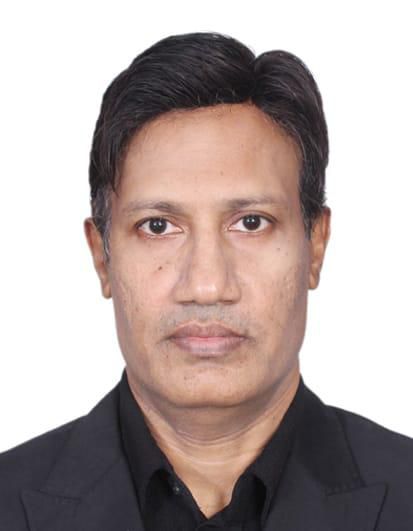
Aiman Khattak
The sixth of November 1947 remains etched in the collective memory of Kashmir as a day of unimaginable horror and sorrow. It was on this day that the plains of Jammu were drenched in the blood of countless innocents Muslims who were hunted down, butchered, and driven from their homes for no other reason than their faith and their yearning to be free. The tragedy that unfolded seventy-eight years ago was not an accident of history but a deliberate, orchestrated campaign of extermination. Under the Dogra regime, aided by extremist Hindu groups and with the silent complicity of the newly formed Indian government, one of the most gruesome massacres of the twentieth century took place, claiming over two hundred thousand Muslim lives in a matter of days.
Those who survived tell of deceit and betrayal. The Dogra authorities, under the guise of compassion, announced that convoys would be arranged to safely escort Muslims wishing to migrate to Pakistan. Thousands of families, men, women, children, and the elderly gathered with whatever they could carry, their hearts torn between grief and hope. But as the caravans wound their way toward the border, the escorts turned into executioners. The so-called protection parties opened fire on the unarmed refugees, mowing down entire columns of humanity. Women were assaulted, infants slain, and homes reduced to ashes. The massacre not only depopulated Muslim-majority areas of Jammu but was also designed to permanently alter its demography. It was an act of ethnic cleansing that sought to erase the Muslim identity of the region before the world could intervene.
The massacre of 1947 cannot be seen in isolation; it was the prelude to the long and tragic story of repression that continues in Indian-occupied Jammu and Kashmir. When the subcontinent was divided and the princely states were given the choice to join either India or Pakistan, the people of Jammu and Kashmir overwhelmingly favoured accession to Pakistan. The Maharaja, however, chose defiance and deceit. Instead of respecting the will of his subjects, he unleashed his army against them, and in the chaos that followed, invited Indian troops into Kashmir under a dubious instrument of accession. That document, questionable both in legality and intent, became the foundation for a decades-long occupation — one that has brought only bloodshed and grief to the valley.
What began with the massacre in Jammu evolved into a pattern of systematic suppression. From the burning of villages and the mass rapes of 1947 to the forced disappearances, custodial killings, and clampdowns of the present era, India’s approach to Kashmir has been characterised by the same impulse: to silence, subjugate, and deny. Over the decades, generations of Kashmiris have grown up under the shadow of militarisation, their every expression of identity treated as rebellion, and their every demand for justice labelled as sedition. The abrogation of Article 370 in 2019 was merely the latest chapter in this long tale of betrayal an attempt to extinguish even the semblance of autonomy and to tighten India’s grip on a region that has never accepted its rule.
Pakistan’s position on Kashmir has remained firm and principled since the first day of Partition. It is rooted not merely in geography or faith, but in justice and humanity. Pakistan has never accepted the forced occupation of Kashmir nor the fabricated narratives that seek to legitimise it. At every international forum from the United Nations to the Organisation of Islamic Cooperation Pakistan has stood as the voice of the voiceless, reminding the world that the right to self-determination is not a privilege to be granted by the oppressor, but a fundamental right guaranteed by international law. The martyrs of Jammu, who perished in 1947, were the first witnesses to that right, and Pakistan honours their memory as a moral duty, not a political convenience.
For the people of Pakistan, Kashmir is not a distant cause; it is part of the national conscience. Every year, the commemoration of Kashmir Martyrs Day is an act of remembrance and renewal a promise that the sacrifices of those who fell in Jammu will not be forgotten, and that the struggle of the Kashmiri people will not be allowed to fade into silence. It is a reaffirmation that Pakistan’s solidarity with Kashmir is unwavering, not conditional on diplomacy or global indifference. Successive generations of Pakistanis have grown up with the conviction that the unfinished business of Partition cannot be complete until the people of Kashmir are free to decide their destiny.
Yet the world’s conscience remains largely dormant. The same international community that invokes human rights in other conflicts has, for decades, looked away from Kashmir. The photographs of mass graves, the testimonies of widows and orphans, the curfews and communication blackouts all speak of a region under siege, yet the silence of global powers remains deafening. This moral failure emboldens India to persist with its policy of denial, confident that its actions will be met with no consequence. But history is not so easily rewritten. The truth of November 1947 continues to haunt India’s moral standing, and the blood of Jammu’s martyrs continues to cry out for justice.
There will come a day when the valley of Kashmir will no longer echo with the sounds of mourning but with the call of freedom. When that day dawns, the sacrifices of the martyrs of Jammu will find their fulfillment. Until then, Pakistan’s support remains unshaken and its solidarity unbroken.




Leave a Reply