

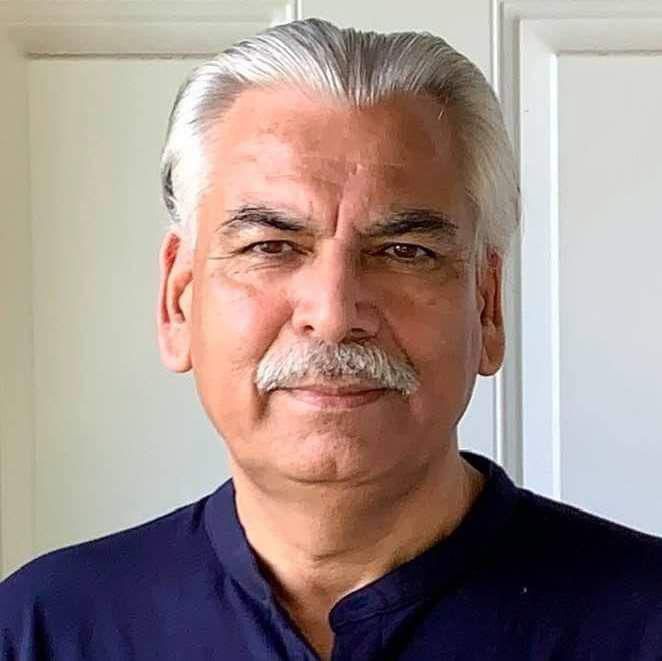
Barrister Dr. Usman Ali
Khyber Pakhtunkhwa has once again been pushed to a dangerous crossroads. Imran Khan’s decision to appoint a young, emotional, and inexperienced chief minister for Pakistan’s most sensitive province has sparked serious concern among political observers and policy circles alike. At a time when the province is already mired in insecurity, economic fragility, and institutional decay, this choice signals confrontation instead of reconciliation. What the province desperately needed at this fragile moment was a mature and steady hand , leadership that could restore public trust, strengthen institutions, and offer people a measure of relief and stability.
The youth are the future of any nation, and when guided properly they can become the architects of progress, peace, and stability. It would have been far more inspiring had Imran Khan nominated a young leader whose purpose was to promote harmony, development, and service to the people. Such a gesture would have earned wide appreciation. Instead, he deliberately elevated someone whose declared mission has been to incite agitation and confrontation in the streets, and who repeatedly takes pride in that stance. Unfortunately, Imran Khan and his party have confined politics to protests and perpetual confrontation. Even after thirteen years in power in the province, they have failed to shift from politics of agitation to governance focused on solving people’s real problems.
During his premiership too, Imran Khan remained trapped in hostility with the opposition. Whenever rival parties proposed dialogue on the economy, parliamentary ethics, or a national charter, he dismissed it as a plea for an “NRO” and ridiculed their leaders. As a result, his government became consumed by political disputes instead of reforms, governance, and public welfare. The same pattern is now visible in Khyber Pakhtunkhwa. The new provincial leadership, instead of seeking reconciliation, has made confrontation its first priority. The new chief minister, from his earliest speeches, presented himself as a champion of protest, while figures around him, notably Junaid Akbar, have issued open threats to state institutions. Statements warning that party workers will “enter officials’ homes” if Imran Khan is not released are not politics; they are a recipe for anarchy. Such reckless conduct is poison for a province already struggling with terrorism, instability, and economic collapse.
Khyber Pakhtunkhwa’s history is defined by sacrifice and resilience. From the colonial era to the Afghan war and the long battle against terrorism, the province has always stood in the front line of Pakistan’s defense. Its people have borne immense human and financial costs, yet their basic problems remain unresolved. Tragically, the province has long been treated as a laboratory for political experimentation. Governments change, slogans shift, but the lives of ordinary citizens do not improve. Democracy demands respect for the people’s mandate, but it also demands responsibility. Winning a majority does not entitle any party to ignore those who did not vote for it. The true test of leadership lies not in attaining power but in exercising it with wisdom, tolerance, and service to the public.
At a time when the province is sliding toward greater instability, figures like Aftab Ahmad Khan Sherpao represent a ray of hope. For decades, he has been recognized as one of Khyber Pakhtunkhwa’s most seasoned and farsighted leaders. As chief minister and later as a federal minister, his tenure was marked by order, balance, and a genuine focus on public service. His politics has always been free of vendetta , rooted in pragmatism, reconciliation, and a clear grasp of the province’s realities. People still remember his period in office as one of peace, development, and institutional stability. Sherpao’s greatest strength lies in his belief in dialogue and inclusion; he brings people together across political and social divides. At this moment, that spirit of consensus is precisely what the province needs.
Alongside him, leaders such as Maulana Fazlur Rehman and Asfandyar Wali Khan also stand out as mature and balanced politicians who have consistently prioritized dialogue, institutional process, and democratic continuity. Despite his strong ideological leanings, Maulana has always worked for national cohesion. Asfandyar Wali Khan, though facing health challenges, remains a voice of insight and experience whose counsel is invaluable. Both men symbolize politics grounded in stability, respect for institutions, and continuity of democracy. Unfortunately, marginalizing such experienced and thoughtful voices has inflicted deep damage on the province’s political balance.
There are also several senior politicians, Barrister Masood Kausar, Ghulam Ahmad Bilour, Ameer Haider Khan Hoti, Mian Iftikhar Hussain, Humayun Khan, Siraj ul Haq, Akram Khan Durrani, Pervez Khattak, and Mohsin Dawar , whose experience, vision, and moderation could play a constructive role in building an atmosphere of reconciliation. Even within PTI, there remain level-headed, experienced figures capable of lowering the political temperature if they are brought forward. Barrister Gohar Ali and Asad Qaiser, for instance, possess the ability to steer affairs back on a responsible course. Sadly, these moderate voices have been sidelined, replaced by emotional loyalists. If such balanced leaders were included in decision-making, much of the mistrust between the government and state institutions could be eased.
What Khyber Pakhtunkhwa needs now is collective wisdom, patience, and unity. A non-partisan advisory council should be established, comprising respected leaders from all parties, former bureaucrats, educators, jurists, and civil-society representatives. Meeting regularly, this body could address the province’s most urgent issues, law and order, unemployment, economic recovery, and the rehabilitation of terrorism-affected areas. Its work must transcend party interests and ensure continuity of sound policy regardless of who holds power.
Imran Khan must also recognize that true leadership is built on humility, not ego. Politics is not about vengeance or hostility; it is about service and restraint. If he genuinely seeks to serve the people, he must guide his provincial government away from agitation and toward governance, development, and stability. The people need jobs, security, and peace , not slogans and street battles.
The people of Khyber Pakhtunkhwa have given more for Pakistan’s security and survival than perhaps any other region. It is time they were repaid, not with words, but with competent, peaceful, and just governance. Under the steady leadership of Aftab Ahmad Khan Sherpao, supported by the balance and experience of Maulana Fazlur Rehman, Asfandyar Wali Khan, and other seasoned politicians , including moderate elements within PTI , the province can still return to a path of progress and stability. Time is running short, but hope remains. If Pakistan’s political leadership can rise above ego and place the province’s welfare before personal ambition, Khyber Pakhtunkhwa can once again move toward peace, development, and dignity.

Leave a Reply