

Staff reporter
Peshawar:
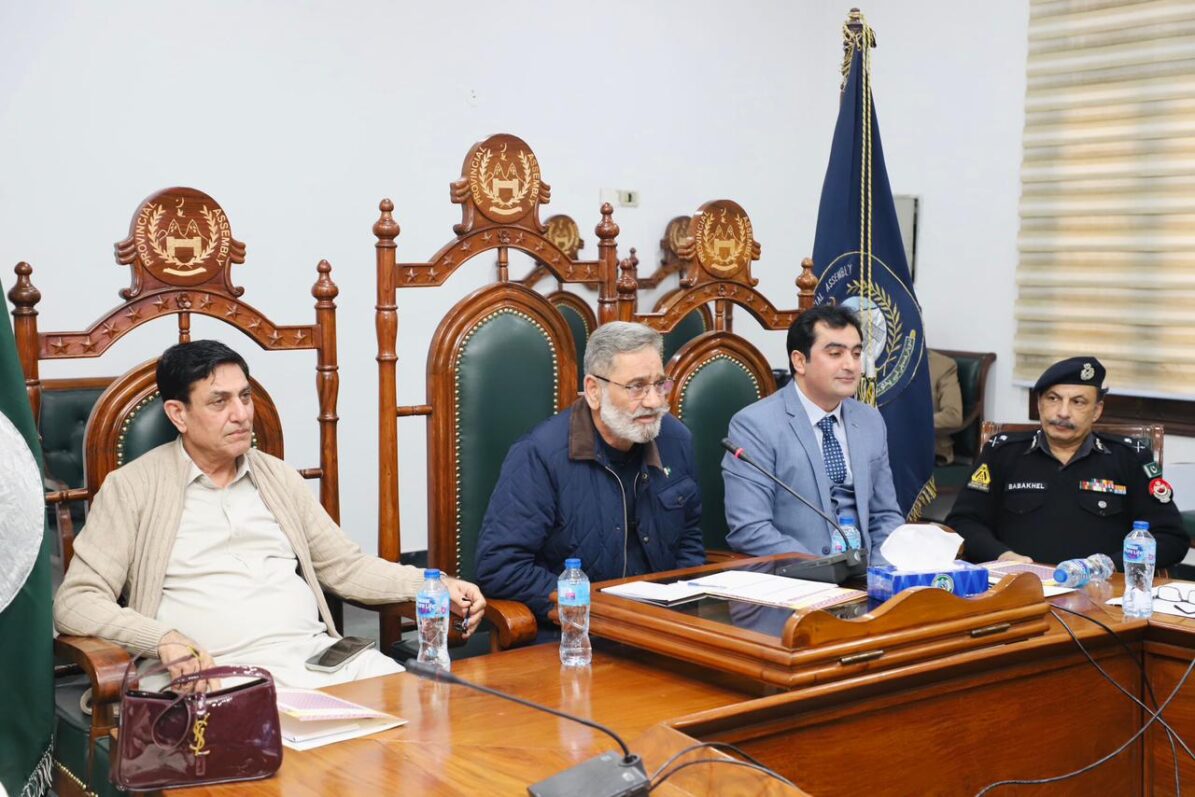
Paiman Trust, in collaboration with the Khyber Pakhtunkhwa Centre of Excellence on Countering Violent Extremism, commemorated the 25th anniversary of the United Nations Security Council Resolution 1325 (Women, Peace and Security) with a high-level event held at the Khyber Pakhtunkhwa Assembly. Speaker Babar Saleem Swati was the chief guest, while Members of the Provincial Assembly, senior government officials, education experts, civil society representatives, and media personnel participated in the ceremony.
In her opening remarks, peace education expert Ms. Bushra Haider highlighted that Resolution 1325 aligns closely with Pakistan’s constitutional principles of justice, equality, dignity, and inclusive development. She said the resolution is not foreign to Pakistan; rather, it is connected with the country’s national resilience and shared commitment to lasting peace. She added that today’s gathering represents a strong partnership between state institutions and women leaders, reaffirming that women are central to the national vision of peace and security.
Dr. Sameera Shams, Chairperson of the KP Commission on the Status of Women, presented a comprehensive overview of Resolution 1325 and discussed its four foundational pillars—prevention, participation, protection, and relief & recovery—while also explaining their relevance to the lived realities of women in conflict-affected regions.
Speaking about the importance of sustained efforts at the provincial level, Ms. Musarrat Qadeem, Executive Director of Paiman Trust, stressed the need to develop a provincial action plan based on Resolution 1325. Addressing lawmakers, she noted that Khyber Pakhtunkhwa has long borne the burden of conflict. By initiating a provincial action plan, the Assembly can lay the foundation for a new legacy built on resilience, inclusion, and sustainable peace. She reiterated that Paiman Trust stands ready to fully support the Assembly in this process.
MPA Amna Sardar underscored the crucial role of the legislature in advancing the Women, Peace and Security agenda. She proposed establishing a WPS Secretariat within the Department of Social Welfare & Women’s Development or the Home Department to oversee the formulation and implementation of the provincial action plan, with technical support from Paiman Trust.
Representing law-enforcement agencies, Additional Inspector General of Police Muhammad Ali Babakhel emphasized that while Resolution 1325 provides global guidance, its effective implementation depends on coordinated efforts among police, parliament, government departments, media, and communities. He stated that women’s protection, leadership, and participation are integral components of national security.
Former AIG Akhtar Ali Shah highlighted the need for strong coordination between state institutions, civil society, government departments, and women peacebuilders to ensure meaningful implementation of the resolution.
In his concluding remarks, Speaker Babar Saleem Swati reaffirmed the Assembly’s commitment to advancing the Women, Peace and Security agenda. He announced the formation of a working committee within the Women’s Parliamentary Caucus that will develop a provincial action plan on Resolution 1325 in consultation with experts, relevant government departments, and civil society partners.
At the end of the ceremony, all participants signed a joint pledge to support the development and future implementation of the provincial action plan—an important step toward institutionalizing gender sensitivity, peace, and security in Khyber Pakhtunkhwa.

Leave a Reply