

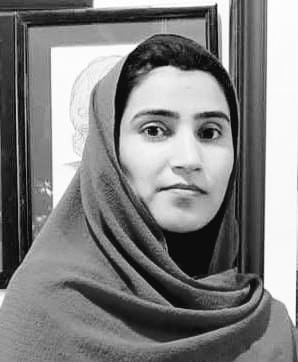
By Ayesha Wazir
As a tribal and patriotic citizen of Pakistan, this is a profoundly significant moment for me to share my thoughts on the historic occasion when Sohail Afridi was nominated as the Chief Minister of Khyber Pakhtunkhwa (KP). I am neither a Pashtun nationalist nor affiliated with any political party, but since I belong to the tribal areas, I feel this change on a deeply personal level. Afridi hails from Khyber Agency, part of the former Federally Administered Tribal Areas (FATA), and his success is not merely a political transition — it represents a new ray of hope for the entire region. His nomination marks a historic moment for the tribal people and stands as a remarkable milestone in our collective history.
A Revolutionary Change: Liberation from the Elite
Sohail Afridi’s selection is particularly extraordinary for the former FATA, where politics has long been dominated by influential and wealthy families. Afridi’s rise signifies a break from those entrenched traditions. Emerging from a humble and middle-class background, he embodies the experiences of ordinary tribal citizens. His nomination sends a powerful message — leadership is no longer confined to the elite; it can now emerge from among the common people.
As a tribal woman, I take immense pride in the fact that one of our own now holds the province’s highest political office. This is not just the appointment of a new leader; it is a historic recognition that the common tribal population is finally receiving the political representation it has long deserved.
A New Dawn for Tribal Women
One of the most important aspects of Sohail Afridi’s leadership will be how he addresses the issues faced by women in the former FATA. As someone who has witnessed the struggles of our mothers, sisters, daughters, and wives firsthand, I know how deeply entrenched their hardships are. It is a painful reality that women in tribal society often suffer abuse — sometimes at the hands of their brothers, sometimes their husbands or fathers.
Afridi’s appointment offers a vital opportunity for reform. It is hoped that he will adopt a balanced approach that respects cultural values while protecting women’s rights. Under his leadership, there is a genuine desire to ensure that tribal women’s voices are heard and that they are granted legal protection, access to education and healthcare, and freedom from domestic violence.
In my view, Afridi’s leadership could usher in a new era of justice and dignity for tribal women — perhaps the first time their fundamental rights are truly recognized.
Development and Governance: A Call for Change
As a tribal person, it pains me to see how far behind our region remains in terms of development. For decades, the former FATA has been neglected, and even after its merger with Khyber Pakhtunkhwa in 2018, there has been little meaningful improvement. The infrastructure is fragile, healthcare is insufficient, and the education system remains underdeveloped.
Now, Sohail Afridi carries the enormous responsibility of bridging this gap. For the tribal people, the time for mere slogans is over — what is needed now is practical action. We hope that Afridi will introduce long-term policies to bring real change in education, healthcare, infrastructure, and the economy.
The challenges are immense, but given Afridi’s deep connection to his roots and his understanding of local realities, there is hope that he will respond effectively to these pressing issues.
A New National Identity: Time to Bridge Divides
A Chief Minister emerging from the former FATA marks a major transformation in Pakistan’s political landscape. It sends a clear message that the tribal areas can no longer be ignored and that their people are now part of the national mainstream. For years, the voices of the tribal regions were suppressed, but Afridi’s rise symbolizes the end of that silence.
As a patriotic Pakistani, I see this as a vital step toward uniting all regions and ethnicities of the country. Afridi’s leadership represents the vision of a Pakistan where no region or community is left behind.
Conclusion: A New Dawn for Former FATA and KP
As someone deeply connected to the tribal belt, I can confidently say that Sohail Afridi’s appointment as Chief Minister marks a historic turning point for the former FATA. His rise to power represents the long-awaited transformation — one of better governance, inclusion, and justice.
This is not merely a political shift but a personal triumph for all those who have long been neglected by the system. Under Afridi’s leadership, we hope that the tribal people — especially women — will finally gain the peace, dignity, and equality they deserve.
Afridi’s government will be judged not by words but by the real and lasting reforms it delivers — not only for the province but for the tribal communities he represents. Indeed, this is the beginning of a new era for the former FATA.
(The columnist is a Ph.D. scholar at Quaid-e-Azam University, Islamabad, and conducts research for the National Institute of Historical and Cultural Research.)


Leave a Reply