

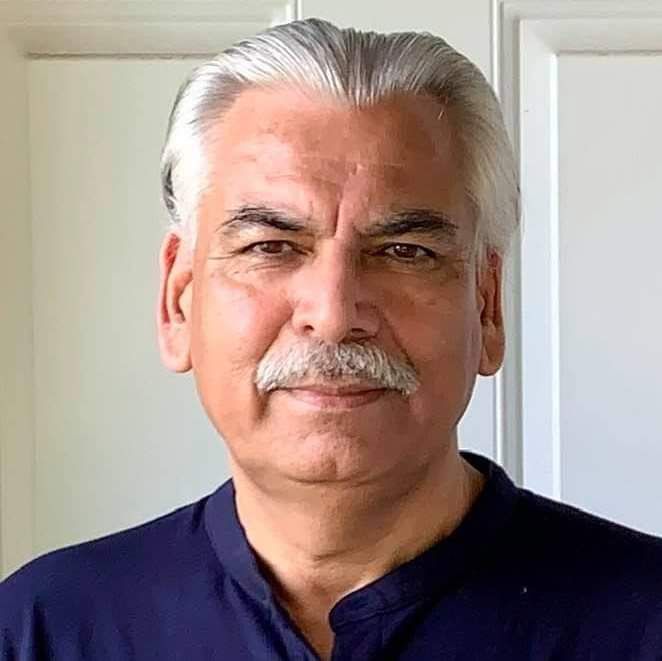
Barrister Usman Ali, Ph.D.
The United States, which once claimed leadership in democracy, law, and human rights, now stands at a turning point in the politics of power where its own principles and global credibility are undergoing a severe test.
U.S. President Donald Trump, intoxicated by power, has once again pushed the world toward a dangerous crisis through a series of reckless decisions. The unjustified attack on Iran, carried out in partnership with Israel, has not only destabilized the Middle East but has elevated global instability to a new level. As a result of this futile war, the international order appears shaken; an entire region is engulfed in smoke and fire, and innocent lives continue to be lost.
To understand the gravity of this moment, one must look back at America’s democratic history. It is not merely a record of the transfer of power, but a story of values, vision, and the standards of leadership that shaped the nation’s global role.
In that history we find leaders such as Abraham Lincoln, who placed unity, freedom, and human dignity above all else even amid the devastation of civil war. By proclaiming the abolition of slavery, Lincoln did not only transform the destiny of the United States; he elevated America to a moral position that resonated across the world for generations.
Franklin D. Roosevelt later led the nation through the twin crises of the Great Depression and the Second World War. His New Deal policies revived the American economy, while his leadership on the global stage helped rally democratic nations against fascism.
John F. Kennedy, facing the Cold War’s most perilous moment during the Cuban Missile Crisis, demonstrated restraint and diplomacy that helped prevent a nuclear catastrophe.
Despite differences, criticism, and political disagreements in those eras, one fundamental principle remained constant: power carried responsibility. America’s leaders understood that its strength was not measured only in military or economic terms, but also in moral authority and respect for democratic values.
For decades, American voters expected foresight, character, and a sense of global responsibility from those who sought to lead them. Power was meant to be balanced by accountability, personal integrity, and institutional restraint.
Over time, however, the political landscape changed. The expansion of media, the rise of social platforms, and deepening domestic polarization amplified emotional rhetoric and populist slogans. In this climate, Donald Trump emerged as a dominant political figure.
Trump’s political style challenged long-standing diplomatic norms, strained global alliances, and weakened institutional balance. His slogan “America First” was presented as a defense of national interest, yet in practice it translated into distancing from allies, withdrawing from international agreements, and adopting a confrontational tone that unsettled the international order.
Under Trump’s leadership, the United States withdrew from the Paris Climate Agreement, announced its exit from the World Health Organization, abandoned the Iran nuclear deal (JCPOA), and created tensions within NATO alliances.
Policies such as travel bans on several Muslim-majority countries, the construction of a border wall, and aggressive immigration measures further intensified criticism.
The attack on Iran, carried out with Israel, deepened these concerns. The bombings in which members of Iran’s leadership’s family, including Supreme Leader Ayatollah Ali Khamenei, his fourteen-month-old granddaughter and more than 160 schoolgirls were killed have intensified global outrage.
At home, confrontations with the judiciary, media, and other institutions have strengthened the perception that personal authority is overshadowing institutional balance.
In the modern international system, principles such as international law, national sovereignty, and the ethics of warfare were at least nominally respected by major powers. Under Trump’s leadership, however, these principles appear increasingly secondary to the raw exercise of power.
The arrest of Venezuelan President Nicolás Maduro and his wife in a military operation and their transfer to the United States, alongside the killing of Iran’s Supreme Leader Ayatollah Ali Khamenei in a joint U.S., Israeli strike, illustrate a troubling shift: power increasingly appears to be replacing law.
The consequences are already visible. The Middle East, already one of the world’s most fragile regions, is once again being pushed toward wider conflict.
Iran, Israel, the Gulf states, Yemen, Syria, and Lebanon are part of a deeply interconnected network of tensions. Any escalation involving a major power can quickly destabilize the entire region.
Trump’s rhetoric and confrontational approach have narrowed the space for diplomacy. Displays of force may produce short-term pressure, but they rarely create lasting stability.
Meanwhile, global perceptions of the United States have shifted. Where America was once associated with human rights, democracy, and the rule of law, images of domestic polarization, racial tension, and political turmoil now dominate international discourse.
If goodwill toward America was once rooted in its values, that goodwill has weakened. Power may deliver temporary advantage, but moral credibility, once lost, can take decades to rebuild.
It is equally important to recognize that not all Americans share the same aggressive outlook. Within the United States there remain powerful democratic voices: the judiciary, independent media, civil society, and younger generations who seek to restore institutional balance and global responsibility.
American history contains many examples of self-correction. From the Watergate scandal to the Civil Rights Movement, American society has repeatedly demonstrated its ability to confront its own mistakes.
Once again, the moment has arrived for those voices to rise together and push their country back toward responsibility.
The question now facing the United States is fundamental: what path will it choose?
Will America define itself purely through military and economic power, or will it return to the moral leadership that once defined its role in the world?
The global challenges of our time, climate change, pandemics, economic inequality, and regional conflicts, demand cooperation rather than unilateral action. Leadership driven by impulsive decisions and emotional rhetoric risks consequences that may prove irreversible.
The challenge before the American people is therefore clear. The nation that once produced leaders such as Lincoln, Roosevelt, and Kennedy must decide whether it can restore its political standards.
Will Americans once again choose leaders who combine strength with responsibility and national interest with global justice?
The intoxication of power may offer short-term triumphs, but history remembers nations not for their dominance, but for their character, justice, and humanity.
The question confronting the United States today is larger than Donald Trump himself.
It is a question of national conscience.
Will America become a symbol of resentment and power politics, or will it reclaim its role as a defender of human rights, democratic values, and international law?
If the United States turns away from its principles, it may remain a powerful state. But if it rediscovers those principles, it can once again become a moral example to the world.
Decisions made in the intoxication of power may bring temporary victories, but in the court of history nations are always held accountable.
And today, the verdict will not be written only about Donald Trump.
It will be written about the conscience of America itself.




Leave a Reply