

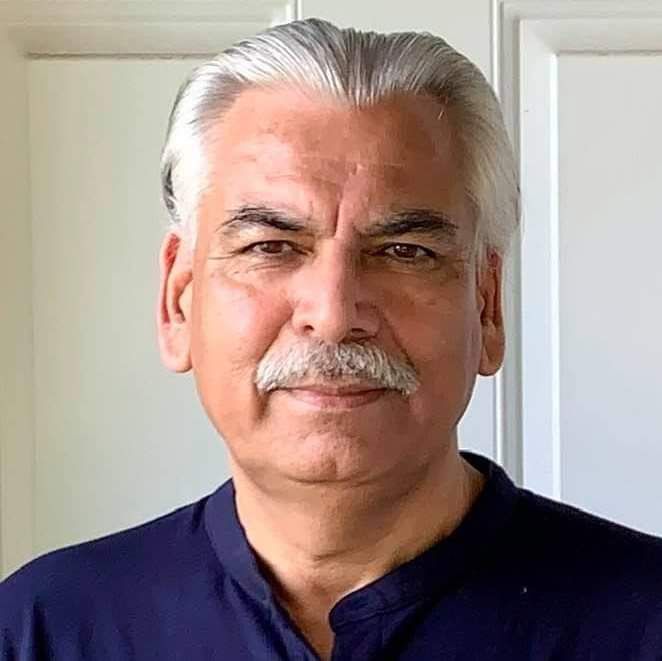
Barrister Usman Ali, Ph.D.
The recent Counter Terrorism Department’s (CTD) reports on the human cost of terrorism in Khyber Pakhtunkhwa during 2025 present a deeply alarming picture. The province today stands at the centre of a grave and multi-layered crisis. After enduring terrorism, instability, and lawlessness for more than a decade, Khyber Pakhtunkhwa once again appears drenched in blood. According to official data, 1,588 terrorist incidents this year alone claimed the lives of hundreds of civilians and security personnel, while dozens of areas remained trapped in a constant state of insecurity. This is not merely a security failure; it is a serious indictment of governmental priorities, political conduct, and administrative neglect. These figures amount to an indictment of the province’s overall system of governance and confirm a bitter reality: terrorism is not only alive, but in several regions it has become more organized and deadlier than before.
A closer look at the official reports shows that civilians and law-enforcement agencies have borne the brunt of the violence. The continued loss of police officers, Federal Constabulary personnel, and other security forces demonstrates that those standing on the front lines are still operating with inadequate resources, limited intelligence support, and uncertain political backing. North and South Waziristan, Bannu, and Dera Ismail Khan remain among the worst-affected areas, where the government’s presence appears fragile while militant networks continue to function with disturbing resilience.
It is important to recognize that Khyber Pakhtunkhwa is not confronting a new crisis. Between 2007 and 2014, the province endured one of the most devastating waves of terrorism in its history. Subsequent military operations, including Zarb-e-Azb and Radd-ul-Fasaad, succeeded in restoring a measure of stability. That period offered a crucial opportunity to convert temporary calm into lasting peace through police reforms, strengthened local intelligence, effective border management, and comprehensive social rehabilitation. Unfortunately, this opportunity was largely squandered.
Pakistan Tehreek-e-Insaf has governed Khyber Pakhtunkhwa for the past thirteen years. Such a prolonged tenure is more than sufficient for any government to implement reforms, build institutions, and deliver measurable results. Yet a fundamental question remains unanswered: what sustainable and effective counterterrorism policy has emerged during this period? Has the police force been equipped with modern technology, forensic capacity, and genuine operational autonomy? Has the CTD evolved from a reactive body into a proactive, intelligence-driven institution? Regrettably, the answer to these questions remains in the negative.
A major reason for this failure lies in the provincial government’s misplaced priorities. In recent years, governance in Khyber Pakhtunkhwa has revolved less around public welfare and security and more around protest politics, perpetual confrontation with the federal government, and the pursuit of political narratives. A significant share of the province’s resources, energy, and administrative focus has been consumed by political battles that offer little relevance to the safety of ordinary citizens. A party that once projected itself as a symbol of reform and change has struggled to meet even the most basic requirements of governance, while excelling instead in hostile rhetoric, emotional speeches, and polarizing slogans.
Terrorism, however, cannot be defeated by force alone. It is a multidimensional challenge with deep social, economic, and ideological roots. In many districts of Khyber Pakhtunkhwa, unemployment, educational deprivation, unresolved local disputes, and limited access to justice provide fertile ground for extremist narratives. A serious investment in education, employment, and effective local governance could have weakened these foundations. Instead, these critical sectors remained persistently neglected.
Equally troubling is the pattern that follows every major terrorist incident. Official responses are largely confined to statements of condemnation and short-term measures. There is little evidence of comprehensive policy review or meaningful acceptance of political and administrative responsibility. Rather than engaging in self-accountability, provincial leaders have repeatedly shifted blame onto the federal government or security institutions. When those in power avoid accountability, institutions weaken and adversaries gain strength.
Today, the people of Khyber Pakhtunkhwa are asking a simple yet fundamental question: if citizens remain unsafe after thirteen consecutive years of rule, if soldiers, police officers, and Federal Constabulary personnel continue to be martyred, and if terrorist networks remain operational, by what standard can this governance be described as successful? The recurring practice of blaming past governments, the federation, or external actors is no longer acceptable to the public.
The time has come to formulate a serious, non-political, and comprehensive security policy for the province. Police and the CTD must be granted real operational autonomy, modern technological capabilities, and sustained professional training. Local intelligence networks, particularly in the most affected districts, must be strengthened, and border management must be made coherent and effective through coordination with federal authorities. Above all, provincial leadership must move away from performative protest politics and return to the fundamentals of governance. The people of Khyber Pakhtunkhwa seek peace, development, education, healthcare, and prosperity, not slogans.
If the current approach to governance continues, the province will not escape this crisis through military operations alone. Recovery will require years, if not decades. The public can no longer afford to be the subject of repeated political experiments.
Ultimately, the question is not merely why terrorism is rising. The real question is whether the provincial government is prepared to stop prioritizing political interests over the lives and safety of its citizens. History records such moments clearly, and the people are no longer silent. An answer must be given, because tomorrow may already be too late.






Leave a Reply