

 DR. MUHAMMAD FAZAL-UR-REHMAN
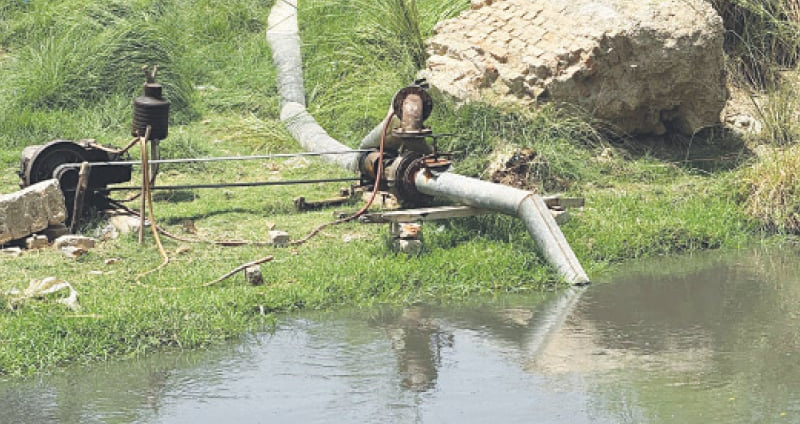
Most residents of Dera Ismail Khan are unaware that the very water they drink daily is dangerously contaminated. Thousands of people in this region consume groundwater laced with arsenic a toxic element silently destroying their health. According to the World Health Organization (WHO) and the Pakistan Standards and Quality Control Authority (PSQCA), the safe limit of arsenic in drinking water is 10 parts per billion (ppb). Yet the reports regarding D.I. Khan’s water are alarming. A 2019 study published in Environmental Geochemistry and Health revealed that groundwater samples from D.I. Khan contained arsenic levels as high as 500 ppb 50 times greater than the WHO safety threshold. Similarly, a 2021 study in the International Journal of Environmental Research and Public Health found arsenic concentrations between 50–200 ppb in several parts of the D.I. Khan region. In some union councils, water samples from community wells revealed levels ranging between 100–400 ppb. What Exactly Is Arsenic? Scientists describe arsenic as a naturally occurring metalloid that is invisible, tasteless, and odorless. Once it leaches into groundwater, it becomes a silent poison. Consuming arsenic-laden water over time leads to devastating health consequences, including cancers of the lungs, bladder, kidneys, and skin. It also contributes to cardiovascular disease, neurological disorders, skin lesions, and developmental issues in children. Pregnant women, children, and the elderly are especially vulnerable. A Ray of Hope from Gomal University Despite this grim picture, there is a silver lining. The administration of Gomal University, D.I. Khan, under the leadership of Vice Chancellor Professor Dr. Zafar Iqbal, has stepped up to address this crisis. In collaboration with former Pay Officer Mr. Inayat Jan and the non-governmental organization Noor Water Project, the university has installed a modern filtration plant on its main campus. This facility provides safe, arsenic-free water to students, faculty, staff, and residents of the campus colony. Dr. Zafar Iqbal emphasizes that alongside education, universities carry the responsibility of serving their communities. He further revealed that tests conducted on groundwater in Islamabad’s Sawan Garden also showed highly disturbing arsenic contamination, proving that the problem is not confined to D.I. Khan alone. Looking ahead, Gomal University plans to expand its efforts by installing another filtration plant at the city campus and distributing clean water under the brand “Aab-e-Gomal” for the residents of D.I. Khan. Dr. Hidayatullah, a senior faculty member in the Department of Chemistry, explained that all water quality tests were conducted in the university’s state-of-the-art chemistry laboratories, ensuring accuracy and reliability. The Way Forward Providing safe drinking water is not just a health necessity but a fundamental human right. Protecting citizens of D.I. Khan from lethal arsenic contamination requires urgent, multi-layered action: Public Awareness Campaigns must be launched to educate people about the dangers of arsenic. Government Responsibility is crucial filtration plants should be installed at multiple locations across the city and rural villages. Community-Based Solutions should be promoted, with small-scale filtration units established under the supervision of experts from Gomal University. The proposed “Aab-e-Gomal” initiative by Gomal University is highly commendable and offers a practical model. Yet the real challenge lies in scaling such solutions beyond the university and into rural communities where the majority of residents rely directly on contaminated wells. Conclusion The water crisis in D.I. Khan is not just an environmental issue, it is a public health emergency. Left unchecked, it threatens the wellbeing of current and future generations. By combining government support, academic expertise, and community involvement, we can ensure that the people of D.I. Khan have access to clean, safe water. Safe water is life itself and protecting it is the most important investment we can make for our people.





Leave a Reply