

At certain stages in a nation’s development, it becomes necessary to pause and ask a simple yet vital question: what truly unites a society? For Pakistan today, this question is especially significant. Economic pressures are widely experienced, social tensions appear in everyday life, and institutional challenges are openly discussed. These realities require thoughtful responses rather than just rhetoric. In such moments, nations often reaffirm the importance of principles that quietly strengthen their foundations. One such principle is social inclusion.
In public discussions, social inclusion may sometimes appear as a theoretical concept. In reality, it is very practical. Its core is the understanding that every citizen, regardless of ethnicity, faith, language, gender, or social background, belongs fully within the national fabric. It requires that opportunities are genuinely available, that institutions operate fairly, and that dignity is consistently protected rather than selectively.
Inclusion, therefore, goes beyond mere tolerance. Tolerance may allow for coexistence, but inclusion promotes active participation. When individuals and communities feel recognised within the shared life of a nation, diversity ceases to be a source of anxiety and instead becomes a collective strength. In this way, social inclusion becomes not only a moral pursuit but also a practical foundation for stability and progress.
History offers many reminders of this reality. Civilisations that governed large and diverse populations often discovered that unity could not be sustained through uniformity alone. Stability required wisdom, accommodation, and confidence in the value of diversity.
The Roman Empire offers an early example. Under Emperor Augustus’s leadership, Rome began consolidating a vast territory spanning Europe, North Africa, and parts of Asia. Managing such diversity required more than just authority. The Roman administration gradually extended citizenship and brought regional leaders into the governing system, enabling various communities to take part in public life. Trade and communication linked distant provinces into a larger civic network. Internal tensions continued, as they do in every society, but inclusion within public institutions helped sustain stability across this remarkably diverse empire.
Closer to home, in our own subcontinent, the Mauryan emperor Ashoka provides another instructive example. Deeply moved by the human cost of war, he adopted policies that emphasised restraint, justice, and respect for diverse religious traditions. His inscriptions promoted ethical governance and harmony among communities. Although the empire later faced administrative challenges, the lesson that emerges from Ashoka’s leadership remains compelling: authority gains legitimacy when guided by conscience and moral responsibility.
Even earlier, the Persian Empire under Cyrus the Great governed extensive territories inhabited by diverse cultures and faiths. Instead of enforcing strict conformity, Persian governance permitted local traditions and religious practices to continue under imperial protection. This strategy did not eliminate all challenges, but it promoted cohesion across differences and facilitated economic connectivity via expanding trade routes. Respect for identity, in that context, reinforced the political order rather than undermining it.
These historical experiences do not indicate that inclusion alone guarantees success. No civilisation is free from flaws. Yet, they reveal a recurring truth: societies tend to endure when diversity is recognised in law, incorporated into institutions, and treated with fairness in public life. Where exclusion deepens, trust diminishes. Where dignity is applied inconsistently, unity weakens.
For Pakistan, this reflection holds special importance. Our country is shaped by many languages, cultural traditions, and religious beliefs. This diversity is a vital part of our heritage. In fact, the beauty of our nation lies in this variety of identity. When guided by wisdom and mutual respect, diversity becomes a source of unity rather than division.
Our Constitution already affirms equality and the protection of rights. These commitments provide a solid foundation. The question before us is whether these principles are consistently reflected in our national life and public institutions.
In practical terms, inclusion means ensuring fair access to education, transparent economic opportunities, and an unbiased rule of law. It urges policymakers to legislate fairly, administrators to implement policies with integrity, educators to foster responsible citizenship, and media institutions to maintain balance in shaping public discourse. It also encourages religious scholars and community leaders to promote mutual respect among communities.
Inclusive governance enhances legitimacy and fosters trust between citizens and the state. It boosts economic confidence and reassures international partners of institutional stability. Most importantly, it guarantees to ordinary citizens that they are not marginalised but are recognised as active participants in the country’s shared future.
The way forward doesn’t need grand declarations. Instead, it calls for steady commitment and sincere effort. When institutions operate without bias, public trust increases. When communities feel valued, cooperation grows. When diversity is seen as an asset rather than a threat, harmony naturally develops rather than being forced.
And so we return to the question with which we began: what truly sustains a society? History and experience suggest a clear answer. Not uniformity, but fairness. Not exclusion, but participation. Not fear of difference, but the confidence to welcome it. In that spirit, social inclusion is not just a hopeful ideal but a responsible way forward for a stable, confident, and forward-looking Pakistan.
________________________________________
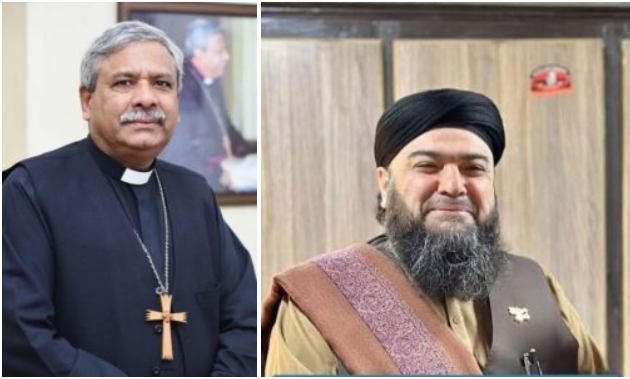
Maulana Muhammad Tayyab Qureshi
Chief Khateeb, Khyber Pakhtunkhwa
Bishop Humphrey Sarfaraz Peters
Bishop of Peshawar, (Khyber Pakhtunkhwa), Church of Pakistan





Leave a Reply