

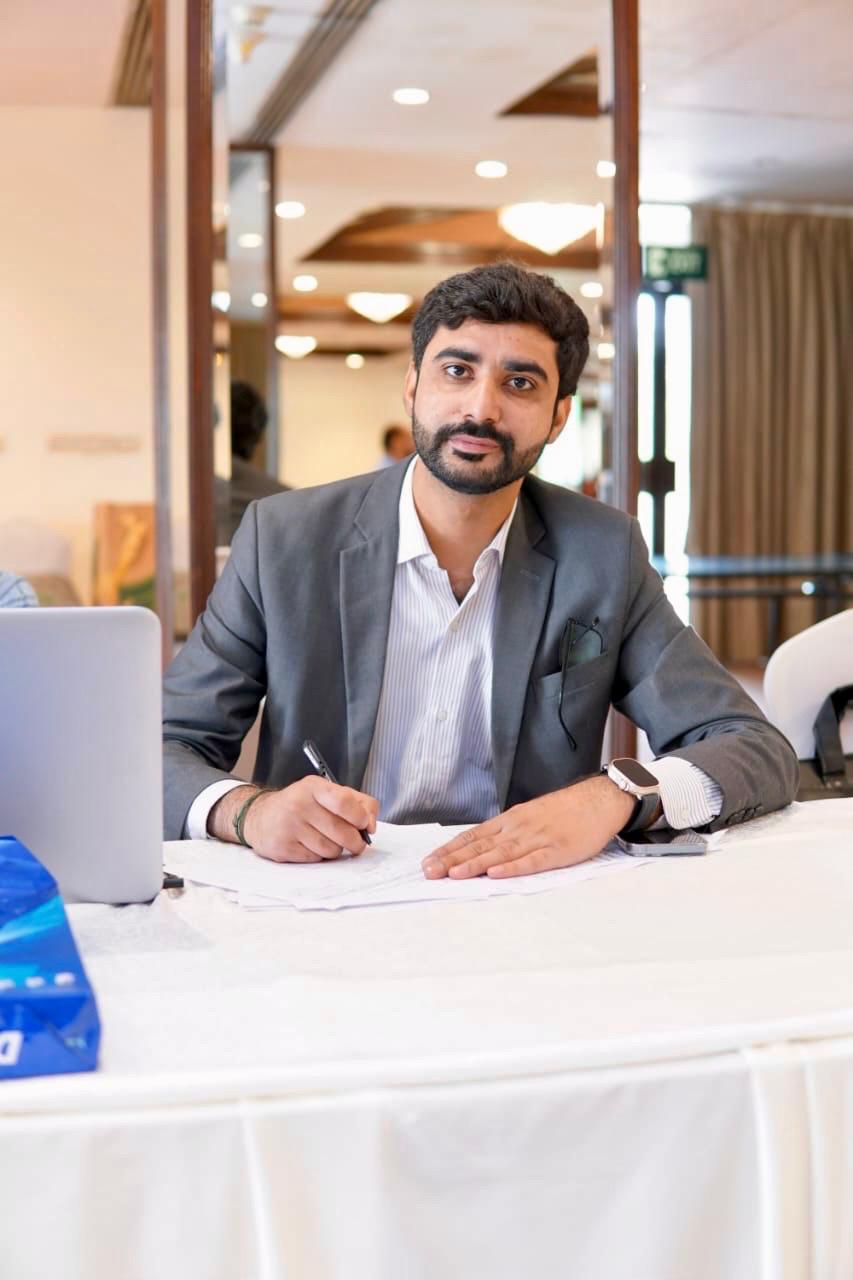
Nabeel Abro
In Pakistan today, it has become difficult to tell who is a journalist, who is an activist, and who has quietly turned into a politician. On television screens, in vlogs, and across social media, many journalists have stopped reporting and started performing. Instead of informing the public, they often act like political players, using microphones to settle scores, promote opinions, or push personal causes.
The line between journalism and activism is blurring, and the casualty is credibility. A journalist’s job is to present facts, not to influence outcomes. Yet, in the age of sensationalism and clicks, the temptation to take sides has grown irresistible. Many now use their platforms to champion political figures or attack rivals, sometimes crossing the boundary between professional reporting and personal rivalry.
As veteran journalist Edward R. Murrow once said, “To be persuasive we must be believable; to be believable we must be credible; to be credible we must be truthful.” Sadly, truth has become secondary in much of modern media. In talk shows and YouTube debates, some journalists shout louder than politicians, turning discussions into disputes and newsrooms into arenas.
This growing activism within journalism has led to a dangerous confusion. When journalists become part of the story, who remains to tell it? When reporters act like campaigners, how can the audience trust their neutrality? Journalism was never meant to be about applause or alignment; it was about accuracy. Some journalists have even crossed fully into politics, contesting elections or joining parties. While every citizen has the right to political participation, such shifts blur professional boundaries. Once a journalist becomes a political player, their past reporting comes under suspicion. Were they informing the people, or preparing the ground for their own campaign?
Faiz Ahmed Faiz wrote:
“Bol ke lab azaad hain tere, bol zubaan ab tak teri hai”
Speak, for your lips are free, your voice still yours.
But Faiz’s message was about truth and courage, not noise and bias. Today, freedom of speech is often mistaken for freedom from responsibility.
Ethics and education are urgently needed in Pakistan’s media. Journalism schools must teach not only how to report but also why to report. Laws on mass media and broadcast regulation should be implemented in spirit, not to silence journalists but to safeguard their integrity. The Pakistan Federal Union of Journalists (PFUJ) and media houses must also play a stronger role in setting professional standards and drawing clear lines between journalism and activism. Social media has made every journalist a potential influencer, but influence must not replace integrity. The real power of journalism lies in credibility, not virality. A journalist’s pen should highlight facts, not fuel feuds.
Activism, of course, has its place. Activists challenge systems and demand change. Journalists, however, must question both sides and let the facts speak for themselves. The activist says, “I believe.” The journalist says, “I found.” One seeks followers; the other seeks truth.
As George Orwell once remarked, “Journalism is printing what someone else does not want printed; everything else is public relations.” That essence must not be lost.
In the end, journalism’s greatest strength is not its loudness but its fairness. The role of a journalist is not to act but to ask, not to lead protests but to present facts. Pakistan’s media must remember that truth, even when spoken softly, carries more weight than the loudest slogan.
As Ghalib beautifully put it:
“Haqeeqat khoob ho to husn e tahrir aap hoti hai,
Yeh daur e da’wa hai, sab kuch shuharat ke liye hai.”
If truth is strong, writing finds its own beauty.
But today, fame seems the only goal.

Leave a Reply