

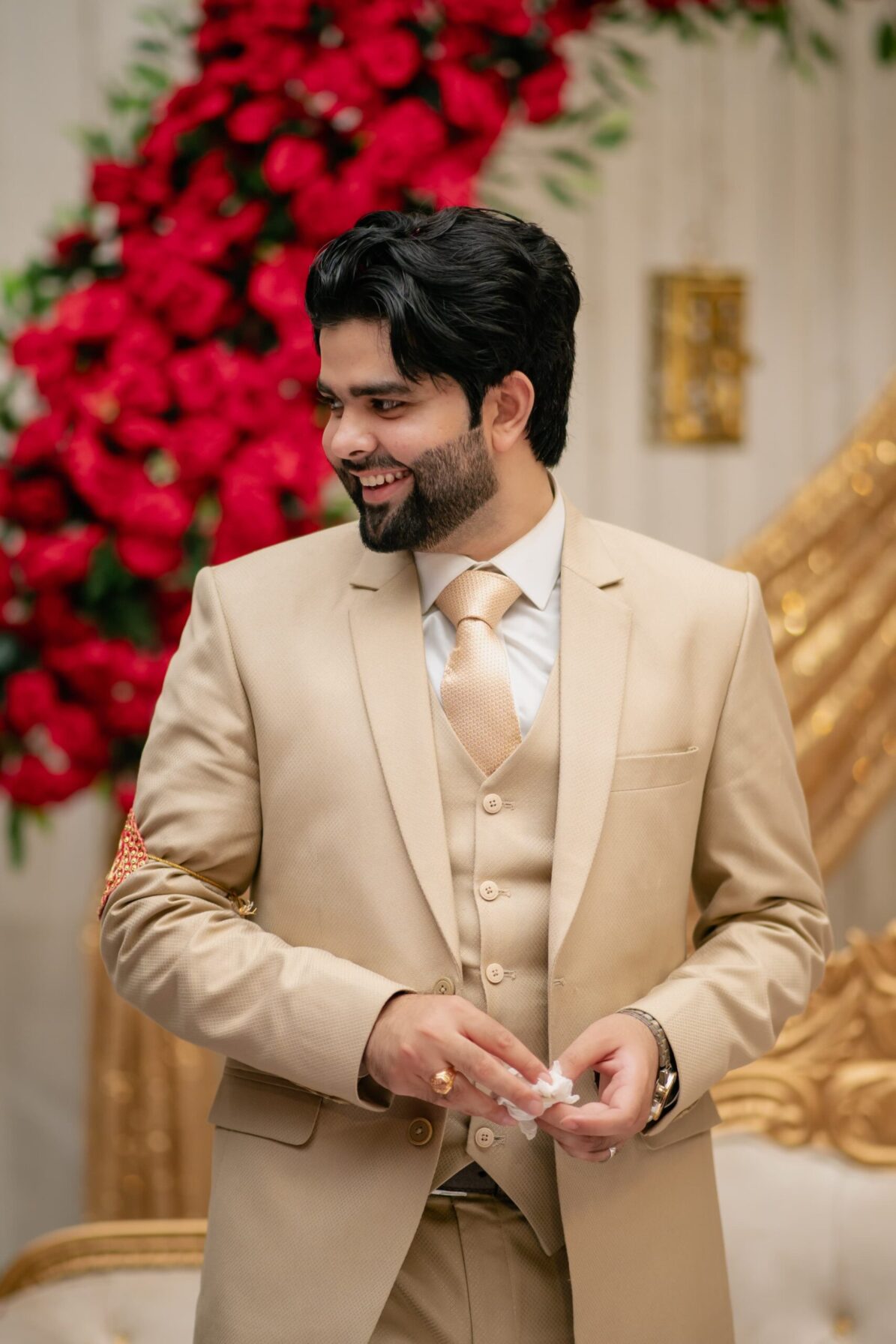
Beyond the Laughter: Yaseen Malak’s Story and a Message for the Social Media Generation
Millions know Yaseen Malak as the cheerful face behind viral comedy sketches and short-form videos that turn everyday moments into laughter. On social media, he is the young entertainer who effortlessly brings smiles to people’s faces. Yet, away from the camera, a different personality emerges—one that is thoughtful, disciplined, and deeply aware of the fleeting nature of online fame.
Throughout our conversation, Malak never described his popularity as an extraordinary achievement, nor did he portray fame as his ultimate destination. Instead, his thoughts repeatedly returned to four ideas: time, responsibility, consistency, and the belief that no success on social media lasts forever.
Born in December 2000 in Peshawar, Pakistan, Yaseen Malak belongs to the Gagyani family of Charsadda. Growing up in the old city of Peshawar, he shared the same dream as countless young people around him—to become someone and accomplish something meaningful. That ambition eventually became the foundation of his journey.
His digital career began in 2016 when he started creating short videos across different social media platforms. At the time, there were no millions of followers or viral moments. Everything changed in 2018 when one of his early TikTok videos unexpectedly reached millions of viewers within days. More successful comedy videos followed, gradually establishing him as one of Pakistan’s recognizable digital comedians.
Surprisingly, Malak’s perspective on fame differs from what many might expect. Even today, he says he rarely thinks of himself as a celebrity.
“There will always be someone better than you,” he says, explaining that every artist remains a student throughout life.
For Malak, early fame was never simply a reward—it became a responsibility.
Public recognition at a young age, he believes, can be exciting, but staying grounded is far more difficult. He credits his family and elders for constantly reminding him not to let popularity define who he is.
That humility becomes evident throughout the conversation. Rather than attributing his success to exceptional talent, he repeatedly points to discipline, patience, and years of consistent effort.
Then comes a sentence that perhaps best captures his entire philosophy:
“I paid for my fame with my time.”
According to Malak, since 2016 he has devoted the most creative years of his life to developing characters, producing videos, and building content. He admits that if he had invested the same amount of time in another profession, he might have found success there as well. But he chose to pursue what he genuinely loved, even if it meant dedicating much of his youth to that passion.
His view of social media is equally realistic.
Going viral, he says, is no longer the hardest part.
Remaining relevant is.
He points to numerous creators who once dominated social media but gradually disappeared from public attention as trends changed and audiences moved on. For him, fame is never permanent—it is only a temporary phase.
This philosophy also shapes his long-term plans.
Malak believes relying solely on social media is risky because digital platforms constantly evolve. Real success, he argues, lies in transforming popularity into something sustainable.
With that mindset, he expanded his family’s traditional business by establishing a restaurant chain under his own name in two major cities of Khyber Pakhtunkhwa. Rather than treating the business as an extension of his online fame, he hopes it will become a lasting part of his identity.
The conversation also turns deeply personal.
Malak identifies two defining moments that changed his outlook on life.
The first was the death of his father in 2010—a loss that, he says, forced him to understand life’s realities at an early age.
The second came in 2023 when his mother became critically ill, another period he describes as one of the most difficult chapters of his life.
Both experiences, he believes, taught him responsibility far sooner than most people his age.
Speaking about Pashtun society and the arts, Malak challenges a common misconception.
The issue, he says, is not entertainment or comedy itself, but how it is practiced.
Families are naturally concerned that young people may lose their direction, he explains, but creative work carried out with dignity, respect, and responsibility can earn admiration within society.
He is equally concerned about certain trends dominating today’s social media landscape.
In his view, some creators pursue attention by promoting humiliation, insults, or low-quality content simply to gain views. While such tactics may bring temporary visibility, he believes they rarely build lasting careers.
Instead, he encourages young creators to focus on meaningful, responsible, and high-quality content that can stand the test of time.
Perhaps most importantly, Malak refuses to treat social media as the destination.
To him, it is merely a tool.
Real success, he believes, comes from continuously learning new skills, improving one’s abilities, and remaining adaptable. In the years ahead, he argues, creating videos alone will no longer be enough. Young people will need practical skills and lifelong learning to remain relevant.
That perspective is what ultimately sets this conversation apart from a typical influencer interview.
It is less about followers than discipline.
Less about popularity than responsibility.
Less about viral success than perseverance.
Social media platforms will continue to change. Algorithms will evolve. New faces will rise while old ones fade.
But if there is one message that defines Yaseen Malak’s journey, it is this:
Temporary fame may open doors.
Time, character, and consistency determine how long they remain open.
As Malak himself puts it:
“Going viral is easy. Staying viral is the difficult part.”



Leave a Reply