

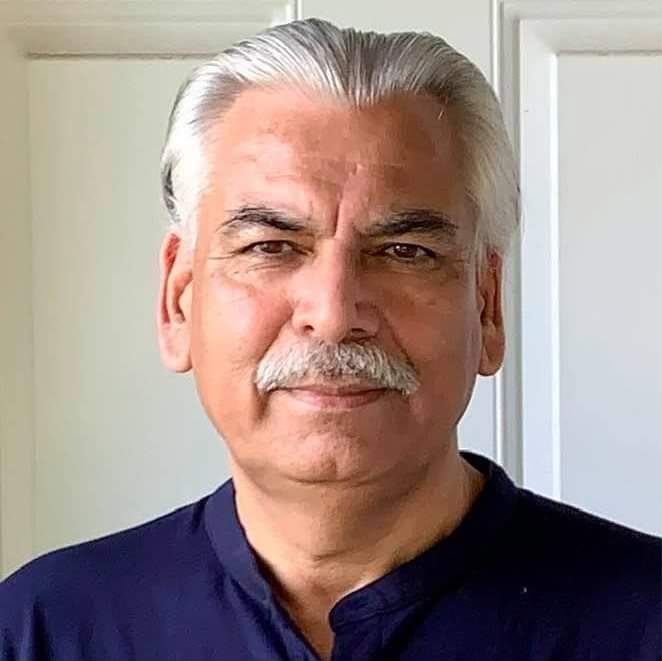
Barrister Usman Ali, Ph.D.
Khyber Pakhtunkhwa is once again paying a devastating price for terrorism. Police officers are being targeted, soldiers are sacrificing their lives, and ordinary citizens are being killed in mosques, marketplaces and public squares. A sense of fear and anxiety hangs over the province, leaving people to live under a constant shadow of uncertainty and insecurity. Terrorism is no longer confined to a handful of border districts; its impact is now being felt across large parts of the province. In such circumstances, the foremost responsibility of any government should be to establish the writ of the state, protect the lives and property of its citizens, and provide law-enforcement agencies with every possible political, administrative and financial support.
Yet the political tragedy of Khyber Pakhtunkhwa today is that the distinction between governing and opposing has all but disappeared. The provincial government has authority, resources, an administrative machinery, a police force and a clear constitutional mandate. And yet much of its political energy appears to remain focused on protests, confrontation, political slogans and the campaign for Imran Khan’s release.
The demand for Imran Khan’s release may be a legitimate political and legal issue, and his supporters have every right to pursue their cause through peaceful and constitutional means. But the responsibilities of an elected provincial government extend far beyond the fate of a single political leader. A government does not exist for one individual, one party or one political movement. It governs on behalf of the entire province.
Success against terrorism requires trust, sustained communication and meaningful cooperation between the federal and provincial governments. The police fall under provincial authority, while border security and several major national-security functions are primarily the responsibility of federal institutions. Intelligence sharing and counterterrorism operations, however, cannot succeed without coordination between agencies at both levels.
If a provincial government treats the federation as though it were a political enemy, distrusts it at every turn, or allows political disputes to interfere with matters of national security, the beneficiaries are not the people. The beneficiaries are those who thrive on division, institutional weakness and political paralysis. The deteriorating security situation in Khyber Pakhtunkhwa is a stark reminder of the dangers of such fragmentation.
The real issue here is not political disagreement. It is one of priorities.
A provincial government is entirely entitled to disagree with federal policies. It may question the conduct of state institutions or their leadership, and it may adopt a forceful political position within constitutional limits. But when a province is confronting a serious terrorist threat, political differences must be kept separate from operational cooperation.
Linking security cooperation to the arrest, prosecution or release of a political leader is a dangerous approach. Terrorists are not concerned with political rivalries, court cases or the struggle for power. They look for weaknesses in the state , and whenever they find them, they exploit them.
Afghanistan is another crucial part of this security equation. Pakistan has long maintained that the Tehreek-e-Taliban Pakistan and other militant groups benefit from sanctuary and operational space across the Afghan border, and considerable evidence has been cited over the years to support those concerns. Whatever political arguments may surround the issue, militant networks operating from Afghanistan remain a serious challenge to Pakistan’s security.
In such circumstances, the political leadership of Khyber Pakhtunkhwa is expected to speak with clarity rather than ambiguity. There is nothing inherently wrong with advocating negotiations, diplomacy or treating military action as a last resort. But that position must be accompanied by an equally unequivocal message: there can be no political or moral justification for those who attack Pakistani civilians, police officers or soldiers.
Unfortunately, years of political confrontation have created an atmosphere in which the line between criticism of state institutions and hostility towards the state itself has increasingly become blurred.
Every citizen has the right to question the political role of the military. But disagreement with military leadership is not the same as hostility towards the ordinary soldier who risks his life on the battlefield. Similarly, opposing a government is one thing; celebrating damage inflicted upon the state is something altogether different.
On social media, disturbing reactions have at times emerged from some Pakistan Tehreek-e-Insaf leaders and supporters in which political hostility appears to have become so intense that even martyrdom, terrorist attacks or national tragedy are interpreted through a partisan lens. More troubling still is the perception that, instead of unequivocally discouraging such behaviour, rhetoric from sections of the senior leadership can sometimes deepen the same divisions.
When a soldier or officer dies in Waziristan, Khyber or Bajaur, he is not fighting for a political party. When a police constable or officer confronts a terrorist, he does not first ask who governs in Islamabad or which political leader is in prison. He stands there on behalf of the state.
When his body is returned to his family, it is not wrapped in the flag of a political party. It is wrapped in the flag of Pakistan.
That is a reality our politics desperately needs to rediscover.
Few regions have paid as heavy a price for terrorism as Khyber Pakhtunkhwa. The province has buried its dead, watched its markets devastated, its schools destroyed and its mosques attacked. It has seen the coffins of soldiers and police officers return home, and it has witnessed families carry the burden of terrorism across generations.
Such people deserve more than perpetual political confrontation, accusations and protest politics. They need a government that is serious, capable and focused. They need leadership that can disagree without abandoning its responsibilities; that can challenge the federal government politically without closing the door to cooperation when the interests of the province demand it; and that places national security above political expediency in its dealings with Afghanistan.
Governing, after all, is not the same as running an election campaign.
Once a party assumes power, slogans must give way to decisions. Protest must give way to administration. Accusations must give way to accountability. And political loyalty must become secondary to the safety and welfare of citizens.
A party that remains permanently in opposition mode even while holding power may be able to keep its supporters mobilised, but it cannot run the machinery of the state effectively.
What Khyber Pakhtunkhwa needs today is not more political noise. It needs governance that can be felt in its police stations, markets, schools, hospitals and border posts. Its police require modern equipment, better training, stronger intelligence support and effective protection. Counterterrorism institutions must be kept above political confrontation. And on matters of security, the federal and provincial governments must learn to regard one another not merely as political rivals, but as partners in the defence of the country.
The message to terrorists must be unmistakable: Pakistan’s political parties may disagree on a thousand issues, but when someone takes up arms against the state, they stand on the same side.
The question, therefore, is no longer whether Khyber Pakhtunkhwa has a government.
The question is: is that government actually governing?
Remaining in perpetual opposition mode while holding power may offer political advantages, but for a province already carrying the burden of terrorism, fear and bloodshed, it can have disastrous consequences.
Khyber Pakhtunkhwa does not need another political movement. It needs a government.
If Pakistan Tehreek-e-Insaf has been entrusted with a majority in the province, then the responsibility of governing millions of people should rest with individuals who possess experience, judgement, seriousness and administrative competence. Khyber Pakhtunkhwa needs peace, development and prosperity far more than it needs political theatre.
And perhaps that is the province’s greatest tragedy today:
it has a government, but that government has yet to leave the mindset of the opposition.





Leave a Reply