

Kalu Khan is a bustling town of over 39,400 people yet its households live without a basic necessity. Despite lying just two kilometers from the nearest gas pipeline corridor, Kalu Khan remains totally deprived of piped Sui gas. Ironically, nearby villages like Turlandi and Karnal Sher Kili are fully gasified, underscoring how Kalu Khan’s exclusion is not a question of geography or resource but of neglect. “It’s hard to believe,” a local shopkeeper told, “That in a province that produces more gas than it uses, our families have never gotten any.” The disparity is stark: for years provincial leaders have touted expansion projects in KP, yet Kalu Khan has been left behind.
The official record only deepens the mystery. Kalu Khan’s union council registered for household gas connections back in 2008, during the ANP government, but two decades later nothing has changed. In June 2019, the provincial Local Government Minister Shahram Khan Tarakai even inaugurated a “Sui gas supply project” for UC Kalu Khan, promising that gas lines would be installed and “Thousands of houses” would benefit. Yet today not a single pipeline reaches Kalu Khan’s homes. Residents report that contractors dug test trenches years ago and then disappeared; numerous promises evaporated with changing administrations. In the meantime, the cost of that broken promise is paid every day by households forced to spend more simply to meet the basic need of cooking.
Without piped gas, Kalu Khan’s families have been forced into the expensive and unhealthy alternatives. Most homes cook on Liquefied Petroleum Gas cylinders or burn wood and biomass. LPG cylinders and firewood have long been the only practical cooking fuels available to families in Kalu Khan. With LPG prices rising, the cost of daily cooking has become increasingly difficult for low-income households to manage. Firewood, meanwhile, is consumed quickly and must either be purchased regularly or collected from nearby areas, adding to household expenses and placing further pressure on the local environment.
This regression threatens both pocketbooks and public health: WHO reports that household smoke from burning wood or dung causes about 2.9 million deaths worldwide each year, mostly among women and children who do the cooking. In Kalu Khan, children cough over smoky stoves and some people walk farther each day to fetch firewood. The environmental cost is also real: Pakistan’s ambitious reforestation efforts risk being undermined as desperate families fell nearby trees for heat.
This pattern of neglect can only be described as a systemic failure of policy and governance. SNGPL and provincial authorities regularly announce gas expansion projects across Khyber Pakhtunkhwa. But for Kalu Khan, such announcements have yet to translate into action. Residents registered for gas connections in 2008, while nearby settlements have since been connected, leaving the town to ask a simple question: why has it been left behind? it is neither too remote nor outside the rules; its exclusion reflects uneven implementation and perhaps influence, not a lack of feasibility. Meanwhile, in areas like Turlandi and Karnal Sher Kili, projects funded by sympathetic politicians or alert bureaucrats have quietly gone ahead. The result is an inequitable landscape: a gas connection in KP feels more like a political favor than a universal right. Opposition leaders and local activists alike criticize this imbalance. They point out that even as KP’s politicians crow about “development” in speeches, Meanwhile, the poorest households pay the highest price, diverting an increasing share of their limited incomes to cooking fuel and cutting back elsewhere to keep their kitchens running. Access to Sui gas is, at root, a basic infrastructure right, not a luxury or handout. For Kalu Khan’s 40,000 residents it should not take twenty years of petitions, protests, and promises just to get a fair share of a provincial resource. The provincial government and SNGPL must acknowledge this injustice and act immediately. KP’s leadership must now move beyond assurances and ensure that the long-delayed gas supply project for the town is completed without further delay. SNGPL should prioritize completing the project inaugurated in 2019 and offering fast-track connections under its policy (especially since the town already applied back in 2008). Lawmakers must also ensure that all communities of Khyber Pakhtunkhwa, not just politically connected ones, receive transparent updates and timelines.
The plight of Kalu Khan illustrates a simple truth: energy access is an engine of dignity and development. The region has invested two decades of patience, only to be met with frustration and hardship. Continuing to ignore Kalu Khan will only deepen the public’s alienation and anger. It’s time to turn the valve and deliver on the promise of Sui gas not as charity, but as a fundamental right for every household.
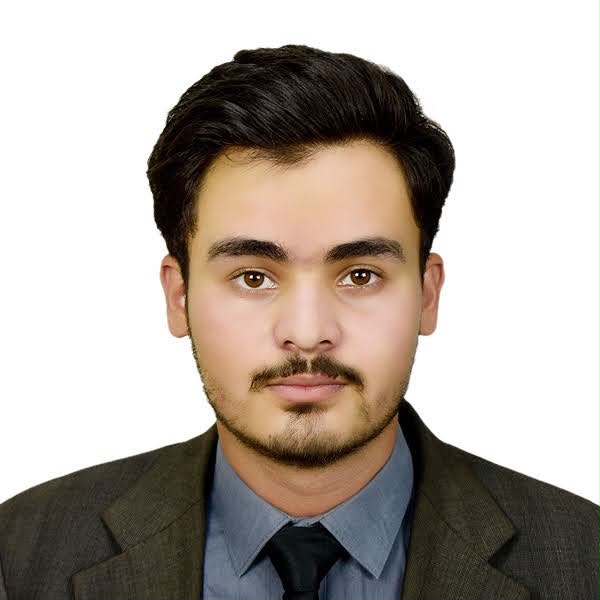
Muhammad Talmeez is a young columnist and student-entrepreneur who covers every challenge Pakistan faces, from tech and finance to cleanliness and beyond.
He can be reached at X: @m_telmeez | LinkedIn: Muhammad Talmeez



Leave a Reply