


(Abdul Basit Alvi)
Saudi Arabia’s hosting of a Pakistan Air Force contingent at King Abdulaziz Air Base reflects a significant deepening of the Strategic Mutual Defense Agreement signed in September 2025, moving the relationship from traditional cooperation to a more binding military alliance. The deployment, including fighter jets and support personnel, is viewed in Pakistan as both a strategic necessity and a mission tied to religious responsibility, particularly the protection of Makkah and Madinah. It comes at a time of rising regional tensions, enhancing deterrence due to the base’s proximity to vital energy routes while signaling a broader shift in Middle Eastern security dynamics. The agreement formalizes mutual defense commitments, linking the security of both nations and reflecting changing geopolitical realities, including declining reliance on Western guarantees and increasing regional instability.
Operationally, the deployment represents a major leap in military integration, with Pakistan and Saudi Arabia forming a unified air defense framework through shared intelligence, coordinated radar systems, and joint mission planning. This level of interoperability goes far beyond past cooperation, enabling real-time responses under a more unified command structure. The move is also shaped by tensions involving Iran, as Saudi Arabia seeks to avoid direct conflict while strengthening deterrence through its alliance with Pakistan. The presence of a nuclear-armed partner reinforces this deterrent effect, while Pakistan balances its role as both mediator and security guarantor. Domestically, the deployment has generated strong public support in Pakistan, blending national pride with religious sentiment and elevating the country’s perceived role as a protector of key Islamic sites.
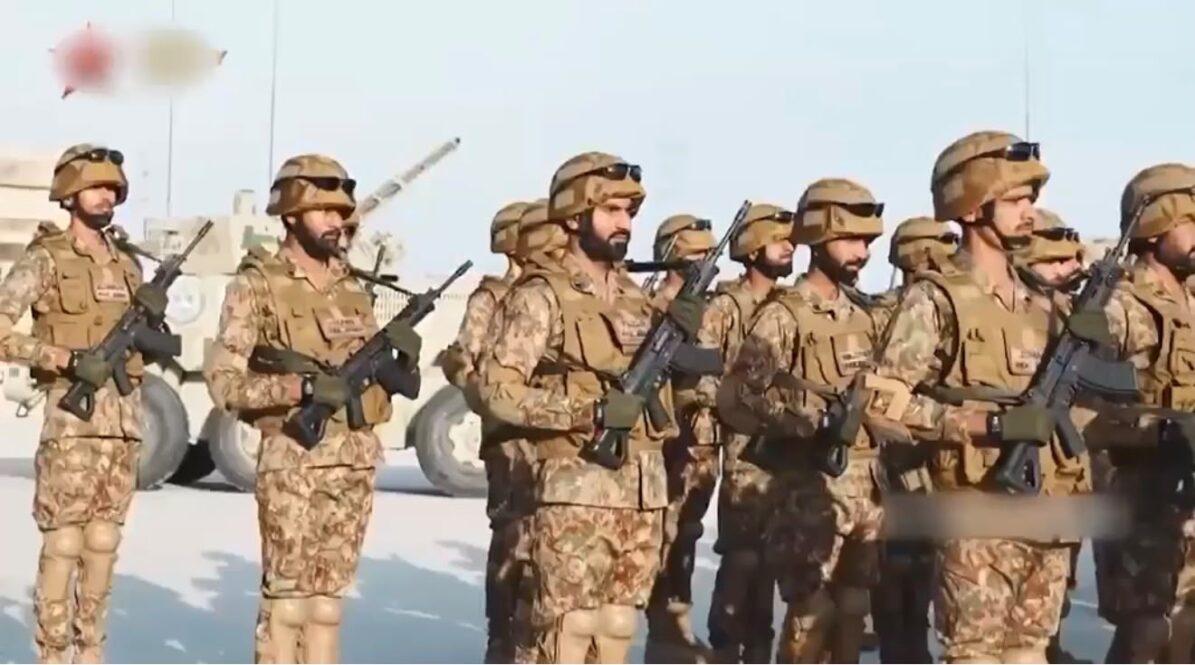
Furthermore, the scale of the deployment suggests a long-term commitment rather than a temporary show of force. Reports from various news agencies indicate that the contingent includes not just the fighter jets but also “support aircraft,” which typically encompass electronic warfare planes, airborne early warning and control (AEW&C) systems, and aerial refueling tankers. The presence of these force multipliers indicates that the PAF contingent is self-sufficient and capable of conducting sustained combat operations if required. Moreover, some sources have cited figures as high as 13,000 Pakistani troops being involved in the broader security architecture within the Kingdom, supplementing the thousands already present in advisory and training roles. This represents a significant forward deployment of Pakistani manpower, further cementing the “boots on the ground” aspect of the alliance. This is not merely a contingent visiting for an exercise; it is a garrison force arriving for a sacred mission. For Saudi Arabia, this bolsters its defense against ballistic missile threats and aerial incursions. For Pakistan, it provides invaluable experience in integrated air defense operations in a high-threat environment, far from its traditional theaters of operation.
Looking toward the future, the “Blessed Mission” of the Pakistan Army in Saudi Arabia is poised to redefine the security architecture of the Muslim world. It challenges the historical dominance of Western powers in guaranteeing Gulf security and replaces it with a model of South-South cooperation rooted in shared faith and strategic convergence. For the people of Pakistan, watching their soldiers and jets depart for the land of the Prophet was an emotional spectacle that washed away the fatigue of economic hardship and political instability. It reaffirmed their belief that their nation, despite its flaws, has a pivotal role to play on the world stage—not just as a consumer of security, but as a provider of it. The sight of the Pakistani flag flying alongside the Saudi flag at King Abdulaziz Air Base is a powerful symbol of unity. It tells the world that the defense of the holy sanctuaries is a collective obligation, and that the bond between Riyadh and Islamabad is now forged in steel, sealed in blood, and blessed by faith. As regional tensions continue to simmer, this contingent stands ready, a vigilant sword guarding the holiest of grounds, watched over by the prayers of 250 million grateful Pakistanis.







Leave a Reply