

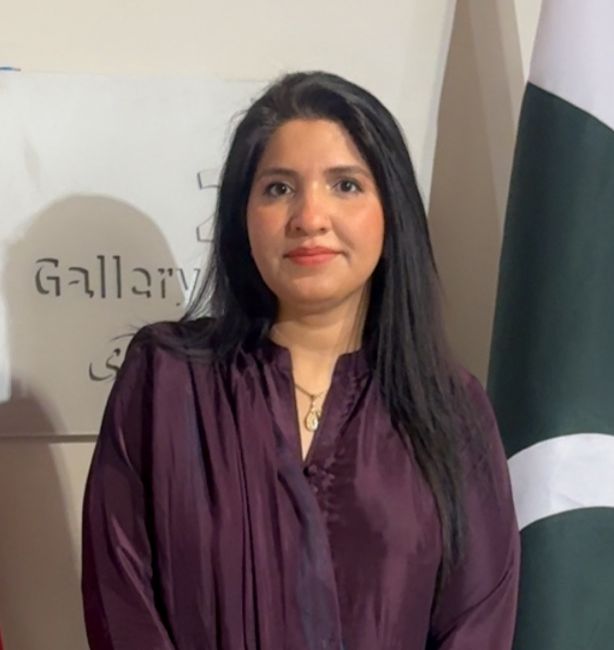
Dr. Gul.i.Ayesha Bhatti
At a time when the global order no longer coheres around a single center of gravity, the growing prominence of the Kazan Forum reflects something deeper than diplomatic routine. It signals an ongoing reconfiguration of power, connectivity, and economic imagination across Eurasia. Scheduled from 12 to 17 May this year, in the city of Kazan, the XVII International Economic Forum “Russia–Islamic World: Kazan Forum” is not simply another multilateral gathering; it is an arena where competing visions of globalization are being negotiated in real time.
What makes Kazan consequential is not only its expanding scale drawing thousands of participants from dozens of countries but its evolving function as a strategic interface between Russia and the Islamic world. In a period marked by sanctions, financial fragmentation, and geopolitical polarization, the forum has become a platform through which Moscow seeks to recalibrate its external engagement and embed itself more firmly within the economic and political networks of the Global South.
The significance of Kazan lies in its alignment with broader structural shifts in international politics. Russia’s outreach to the Islamic world is central to this recalibration. The 57 member states of the Organization of Islamic Cooperation represent a vast and diverse economic space, encompassing energy producers, emerging markets, and strategically located transit hubs. By institutionalizing engagement through Kazan, Russia is transforming bilateral ties into a structured multilateral framework that facilitates trade, investment, and policy coordination. The forum’s expansion over the years evidenced by high participation and a growing number of agreements, demonstrates that it has moved beyond symbolism. It now functions as an operational platform where economic diplomacy is actively practiced.
To understand Kazan’s deeper significance, it must be situated within Russia’s broader strategic trajectory. Confronted with Western sanctions and exclusion from key financial systems, Moscow has pursued a deliberate pivot toward Eurasia, the Middle East, and other parts of the Global South. This shift is not merely reactive; it reflects a longer-term effort to reposition Russia within a changing global economy. President Putin’s concept of a “Greater Eurasian Partnership” underpins this approach. It seeks to connect existing regional frameworks such as the EAEU, the SCO, and BRICS with China’s BRI and the economic aspirations of Islamic countries. Kazan serves as a convening platform where these overlapping networks intersect.
Economic diplomacy is central to this strategy. By developing interest-free banking mechanisms and attracting investment from Gulf economies, Russia is exploring financial alternatives that operate beyond Western-dominated systems. Similarly, discussions around new logistics corridors linking Russia with Iran, Turkey, Central Asia, and South Asia reflect an effort to diversify trade routes and reduce dependence on traditional maritime pathways. The forum also reflects a broader reconceptualization of Eurasia as an integrated economic space. Regions that were once peripheral to each other’s strategic thinking are now being connected through infrastructure, energy networks, and digital corridors. Central Asia, the Caucasus, and South Asia are increasingly central to this transformation.
Another interesting aspect is Kazan’s location in Tatarstan, which naturally strengthens this broader vision. With its deep Islamic heritage and position within the Russian Federation, it symbolizes a bridge between cultural and economic spheres. This allows Russia to present itself not as an external partner to the Islamic world, but as a state with internal linkages to it. For countries like Pakistan, the 2026 Kazan Forum carries particular significance. Notably, the forum will host the Second Russia–Pakistani International Conference, bringing together professors, researchers, and policy experts from Pakistan and Russia. Their participation reflects a growing intellectual and institutional engagement that complements state-level diplomacy.
This development is important for several reasons. First, it expands the scope of Pakistan–Russia relations beyond traditional diplomatic channels into academic, economic, and technological collaboration. Second, it provides a platform for Pakistani scholars and practitioners to engage directly with Russian and Islamic world counterparts, facilitating knowledge exchange and joint initiatives. At a broader level, the forum offers emerging economies opportunities to access new markets, diversify partnerships, and participate in evolving connectivity frameworks.
An often-underappreciated aspect of the Kazan Forum is its role in fostering parallel pathways of globalization. Rather than replacing existing global systems, initiatives emerging from Kazan are creating additional layers of economic coordination alternative financial arrangements, regional trade mechanisms, and sector-specific collaborations. This trend reflects a broader shift in how states approach globalization. Instead of relying on a single set of institutions, they are diversifying their engagements, participating in multiple frameworks simultaneously. Middle powers and emerging economies play a crucial role in this process, shaping regional orders through active participation rather than passive alignment. Kazan provides a venue where such agency is exercised. It enables states to explore partnerships that may not be readily available within established Western-centric institutions, thereby contributing to a more pluralistic global landscape.
The implications of these developments extend beyond Eurasia. As alternative platforms gain prominence, the structure of global economic governance is likely to become more decentralized. Traditional institutions may continue to play a significant role, but they will increasingly coexist with regional and thematic arrangements that reflect diverse interests and priorities. Therefore, Kazan Forum underscores a broader transformation in international relations: the gradual emergence of a world where economic and political alignments are more fluid, and where regions like Eurasia are reclaiming strategic centrality.


Leave a Reply