

STAFF REPORTER
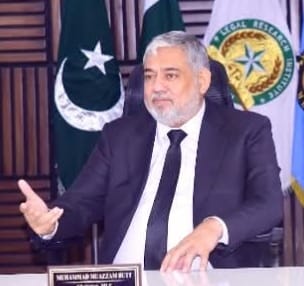
PESHAWAR : Senior lawyer Moazzam Butt Advocate has called for revisiting the political vision and administrative model of former provincial leader Khan Abdul Qayyum Khan, saying his contributions to governance, industrial growth and public welfare continue to offer important lessons for Pakistan.
He expressed these views while addressing a gathering held to commemorate the death anniversary of Khan Abdul Qayyum Khan in Peshawar. Lawyers and people from different walks of life attended the event.
Moazzam Butt said Khan Abdul Qayyum Khan was among the prominent and patriotic political leaders in Pakistan’s history, whose development-oriented approach and administrative policies had left a lasting impact on the region.
Highlighting his development initiatives, the senior lawyer said particular attention had been given to industrial expansion, employment generation and public welfare during his tenure. He cited sugar mills and flour mills as examples of efforts aimed at strengthening the local economy, creating job opportunities and promoting industrial activity.
He also referred to irrigation projects in Charsadda, reforms aimed at ending the feudal system in Hazara, and measures concerning the property rights of tribal people in Khyber Pakhtunkhwa, describing these initiatives as significant aspects of Khan Abdul Qayyum Khan’s political legacy.
Moazzam Butt observed that Pakistan was facing multiple internal and external challenges that required prudent policymaking, political stability and national unity.
He said relations with Afghanistan, Iran and India, coupled with security concerns along the country’s borders, demanded serious attention, strategic foresight and responsible decision-making.
Emphasizing the importance of national interests, he said state security, economic stability and national cohesion must remain central to the country’s policy priorities.
The senior lawyer urged policymakers and political leaders to undertake a comprehensive review of Khan Abdul Qayyum Khan’s political and administrative approach and draw practical lessons relevant to contemporary challenges.
He said Pakistan could achieve sustainable progress by strengthening national unity, encouraging investment, promoting economic development and improving governance while safeguarding the country’s sovereignty.
Moazzam Butt concluded that visionary leadership, effective administration and a commitment to public welfare were essential for steering Pakistan towards stability and prosperity. He stressed that learning from the country’s political history could help shape policies that address present-day challenges and secure a better future for coming generations.


Leave a Reply