

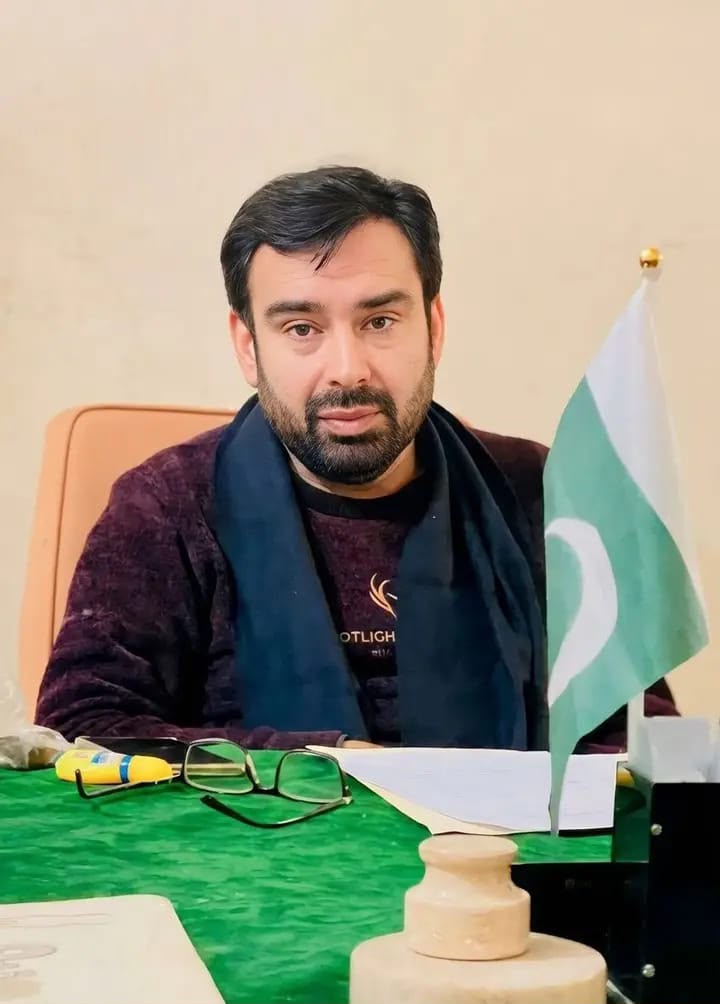
By: Dr. M Hamayun khattak
The Khyber Pakhtunkhwa Government’s ongoing efforts to reform the Elementary and Secondary Education Department are a welcome initiative. Education is the backbone of national development, and any reform aimed at improving governance deserves appreciation. The Education Minister has repeatedly demonstrated his commitment to modernizing the department and strengthening service delivery. However, meaningful reforms require more than administrative reshuffling—they must address the real challenges faced by schools, teachers, and students across the province.
Recent proposals under discussion suggest upgrading six male and six female Assistant District Education Officer (ADEO) posts from BPS-16 to BPS-17 on the premise that the financial implications would be minimal. While this may appear to be a simple administrative adjustment, its long-term consequences on the departmental hierarchy deserve serious consideration.
The Elementary and Secondary Education Department employs more than 250,000 personnel and manages over 37,000 schools across Khyber Pakhtunkhwa. Such a vast system requires reforms based on institutional needs rather than isolated cadre adjustments.
The proposed upgradation of a limited number of ADEO posts raises an important question: why should one nature of post exist simultaneously in two different pay scales? At present, ADEOs and Assistant Sub-Divisional Education Officers (ASDEOs) largely perform comparable field responsibilities. If only a few ADEO posts are upgraded while the majority of ASDEOs continue to work in BPS-16, the department may face permanent disparities in authority, promotion prospects, and administrative hierarchy.
A further concern is that, once upgraded, these posts may eventually lead to demands for the creation of additional ASDEO positions merely to accommodate promotional avenues. Such expansion would increase the lower-tier administrative structure without necessarily improving educational outcomes.
Reforms should focus on strengthening the administrative capacity where decision-making actually occurs. District Education Officer (DEO) offices continue to suffer from shortages of ministerial staff, Dy District planning ,sports professionals, planning personnel, General ‘secondary or primary and monitoring specialists. Without enhancing these support systems, simply upgrading field posts is unlikely to improve governance.
Equally important is the fact that Khyber Pakhtunkhwa has generally adopted a cautious approach toward cadre upgradations in recent years. Successive upgradation exercises across different departments have often triggered similar demands from other employee groups, resulting in prolonged service disputes and disturbances in departmental seniority. Any reform should therefore be evaluated not only from a financial perspective but also in terms of its institutional consequences.
The inclusion of School Leaders in the proposed administrative framework is a positive development because it recognizes their contribution to academic leadership. However, if officers performing closely related duties are placed in significantly different pay scales without corresponding differences in responsibility, morale and administrative efficiency may suffer.
Experience from other provinces offers useful lessons. Punjab has gradually strengthened its education administration by creating higher-level management positions instead of relying primarily on upgrading lower-tier posts. Such an approach provides clearer promotional pathways while preserving the integrity of the service structure.
The real challenges confronting Khyber Pakhtunkhwa’s education sector extend far beyond designation changes. Thousands of schools require stronger academic monitoring, digital governance, improved teacher training, better infrastructure, enhanced financial management, and modern information technology support. Administrative reforms should ultimately translate into improved learning outcomes for millions of students.
Reform is not merely about changing nomenclature or redesigning organizational charts. It is about creating an efficient, accountable, and professionally managed education system capable of responding to the needs of students and teachers alike.
The Education Minister, whose progressive outlook and commitment to reform have generated considerable optimism, has an opportunity to initiate truly transformational change. Before finalizing the proposed restructuring, the government may consider undertaking a comprehensive review involving field officers, education administrators, and institutional experts.
The department does not merely require cosmetic adjustments; it requires comprehensive administrative overhauling. Instead of creating disparities within existing field posts, greater emphasis should be placed on strengthening district offices, expanding higher management positions where genuinely required, modernizing administrative support systems, and ensuring that every reform ultimately benefits the classroom.
After all, the true measure of educational reform is not the number of posts upgraded but the quality of education delivered to millions of children across Khyber Pakhtunkhwa.











Leave a Reply