

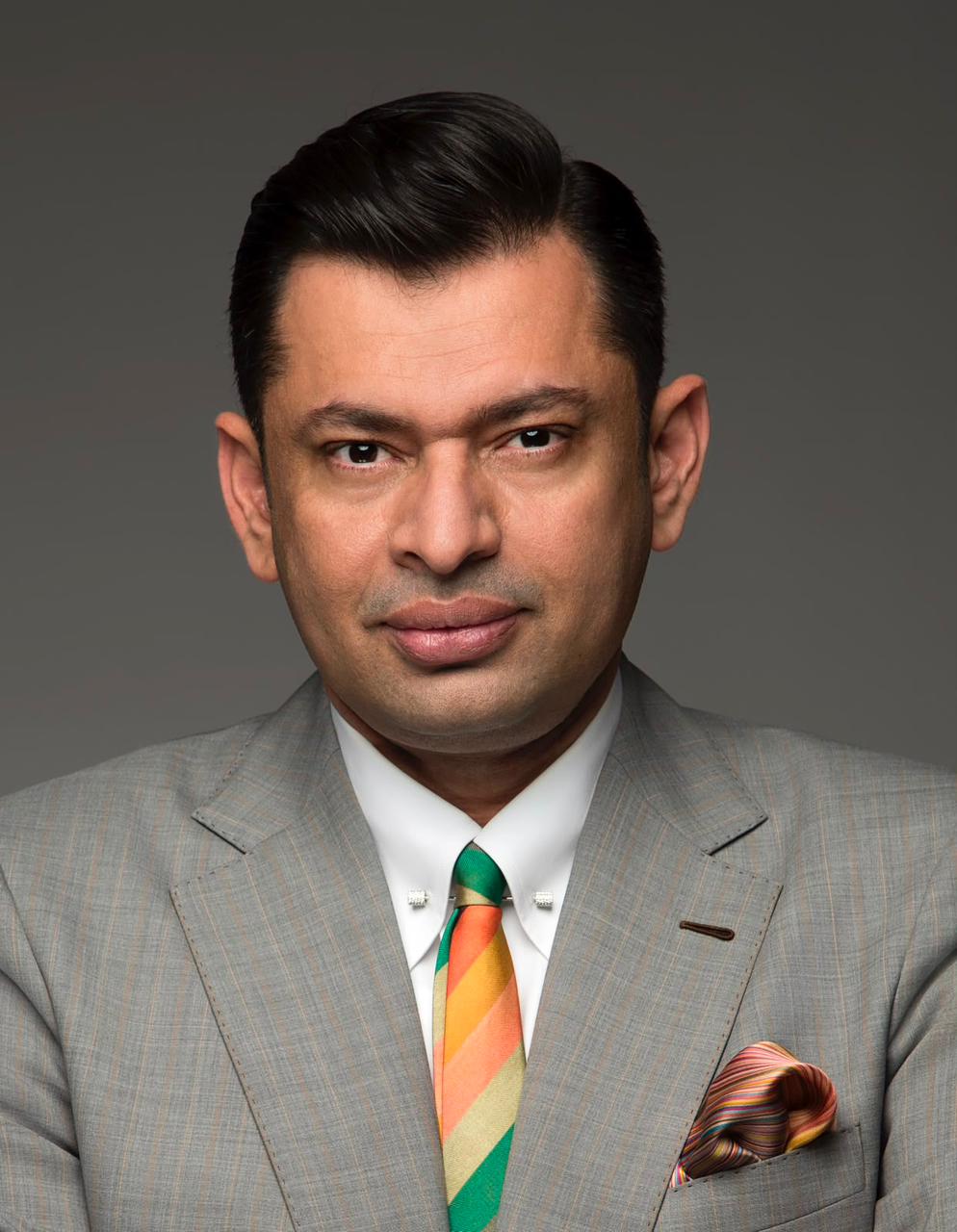
By:-Shamsher Ali Rao
Every year, towards the end of June, a familiar ritual is played out in Islamabad. The Federal Board of Revenue announces yet another record collection, the finance ministry takes credit for fiscal discipline, and the business community — the very people who wrote the cheques — cries foul. The just-concluded fiscal year was no exception. The FBR closed FY2025-26 at Rs13.01 trillion, an increase of 11 per cent over the Rs11.75 trillion collected a year earlier. Impressive, until one recalls that parliament had originally approved a target of Rs14.13 trillion, and that the benchmark retained by the IMF stood at Rs13.98 trillion. The year thus ended nearly a trillion rupees short. Put another way, the government had assigned the FBR the equivalent of a $50 billion target; it managed $46 billion.
It would be convenient to blame one side or the other. The truth, unfortunately, is that both are right, and therein lies the tragedy.
The government’s case rests on unforgiving arithmetic. Pakistan’s tax-to-GDP ratio hovers around 10.6 per cent, against an Asia-Pacific average exceeding 19 per cent; even India does considerably better. No state can hope to fund education, health, defence and debt servicing on one rupee out of every ten of national income, least of all one carrying public debt in excess of 80 per cent of GDP. The IMF’s $7 billion Extended Fund Facility, on which our external stability presently depends, has converted revenue targets into hard performance benchmarks; the Fund has gone so far as to link the release of a $1.2 billion tranche to the recovery of Rs322 billion stuck in tax litigation. For the current year, the target has been raised to Rs15.26 trillion — a 17 per cent jump over a figure the FBR has just failed to achieve. The money, as the mandarins of Q Block will tell you, has to come from somewhere.
The business community’s case rests on a simpler question: who actually pays? When the trade bodies of Karachi downed shutters against the Finance Act, they were not protesting taxation as such. They were protesting a system in which the documented pay for the undocumented, year after year, with no end in sight. The numbers for FY26 speak for themselves. The salaried class, whose tax is deducted at source before the employee ever sees his pay slip, contributed Rs633 billion, up from Rs585 billion the previous year. This single segment paid more than exporters (Rs174 billion), the entire real estate sector (Rs278 billion in transaction withholding) and retailers (some Rs70 billion) put together. The super tax, introduced as a one-time emergency measure, has quietly acquired permanence. And whenever even record collections fall short, the state reaches for the petrol pump: the petroleum development levy, charged at rates as high as Rs120 per litre, fetched Rs1.56 trillion — nearly Rs100 billion above its own target. It is a consumption tax by another name, borne disproportionately by the common man who has no lobby and no strike call.
Now place these contributions against the actual shape of the economy. Agriculture generates roughly 23 per cent of GDP and employs over 40 per cent of the labour force, yet its contribution to income tax has historically remained below one per cent. Retail and agriculture together account for nearly a fifth of national output while paying next to nothing in direct taxes. The informal economy is variously estimated at 33 to 40 per cent of GDP — an entire parallel Pakistan that is neither taxed nor documented. The formal edifice, meanwhile, rests on some 5.9 million filers, barely 2.2 per cent of a population of 250 million. Even this figure flatters the system: in recent years more than two-thirds of returns filed have been nil returns. We have become a country that produces filers, not taxpayers.
This, then, is the heart of the matter. Pakistan does not suffer from a collection problem; it suffers from a distribution problem. Unable or unwilling to reach the informal majority, the state returns each year to the formal minority and squeezes a little harder. In narrow accounting terms, the strategy works — the fiscal deficit has narrowed to 3.6 per cent of GDP, a 21-year low. But consider what the growth figures are actually telling us. FBR collections grew 10.7 per cent in a year when nominal GDP grew 14 per cent. The tax machinery is not even keeping pace with the inflationary growth of the economy it already covers. And the formal sector is visibly buckling under the weight: exports declined 5.6 per cent to $27.9 billion in the first eleven months of the year, with the FPCCI warning of worse to come.
Sitting in Dubai, where my work involves connecting Gulf capital with opportunities in the region, I see the consequences at first hand. When a family office or an institutional investor runs the ruler over Pakistan, the headline tax rate is rarely the deal-breaker. A known cost can always be priced. What cannot be priced is unpredictability: a “temporary” super tax now in its fifth year; an enforcement regime that treats every registered taxpayer as a suspect; hundreds of billions of rupees trapped in litigation; and a budget-making exercise in which the chambers of commerce submit proposals every year without ever learning whether anyone read them. Capital does not insist on low taxes. It insists on legible ones.
What is to be done? The broad contours of reform have been known for decades, and it is worth restating them plainly. Every additional rupee of revenue should come from widening the base, not from raising rates on those already within it. The tools now exist — electricity consumption data, banking records, property registries, and the FBR’s own digital invoicing and point-of-sale integration can identify untaxed commercial activity with a precision unthinkable a decade ago. It is telling that the business community itself has proposed a fixed monthly tax on shopkeepers, recovered through electricity bills. When formal business begs for the net to be widened, it is because it knows it is subsidising the silence of the informal sector.
Equally, the compact between citizen and state must be repaired, for it is presently broken in both directions: the state does not trust the citizen to declare, and the citizen does not trust the state to spend. If even a fraction of new revenue were ring-fenced for visible, audited public goods, and the accounts published, it would do more for compliance than any number of enforcement provisions. Fear may fill a quarter’s target; only trust builds a tax culture. And the formal sector must be treated as a client rather than a captive. Sunset the super tax on a published schedule. Bring corporate rates down as the base widens. Match every enforcement power with a taxpayer protection, and resolve disputes in months, not years — the FBR paid out Rs598 billion in refunds last year, up 21 per cent, yet the sums locked in litigation are now large enough for the IMF to write them into its conditionalities.
None of this is new. It is the settled consensus of virtually every serious study of Pakistan’s fiscal architecture over the past two decades. What has been missing is not analysis but nerve. Successive governments have found it easier to raise the petroleum levy than to bring a single new sector meaningfully into the net — for the simple reason that the documented cannot strike effectively, and the undocumented can.
The government needs money; the businessmen are unhappy. Both statements will remain true until Islamabad accepts that the road between them runs through the tens of millions who at present pay nothing at all. A tax system that rewards invisibility will harvest more invisibility. A system that rewards documentation — lower rates, faster refunds, predictable rules — will, in time, harvest documentation.
Pakistan’s revenue crisis will not be resolved in the collection halls of the FBR. It will be resolved on the day an ordinary shopkeeper concludes that it costs him less to be inside the system than to remain outside it. Until that day arrives, every record collection will carry the same footnote: extracted from the few, resented by all, and never quite enough.
Shamsher Ali Rao is a senior partner in Aures Consulting Group Limited.







Leave a Reply