

TIMES REPORT
PESHAWAR: In a significant step towards advancing equitable and evidence-based healthcare education in Pakistan, Khyber Medical University (KMU), Peshawar, in collaboration with Aga Khan University Karachi, has entered the Aim 3 pilot phase of a project aimed at integrating sex and gender perspectives into undergraduate medical education. According to details the project, funded by the Bill & Melinda Gates Foundation, was initiated in January 2025 to address longstanding gaps in medical education where biological sex differences and gender related social determinants of health are often overlooked.
Global evidence increasingly demonstrates that sex and gender influence disease risk, symptom presentation, diagnosis, treatment response, and access to healthcare across specialties including cardiology, orthopedics, surgery, immunology, mental health, and public health. Despite growing international momentum, these perspectives remain insufficiently integrated within medical curricula across many low- and middle-income countries, including Pakistan.
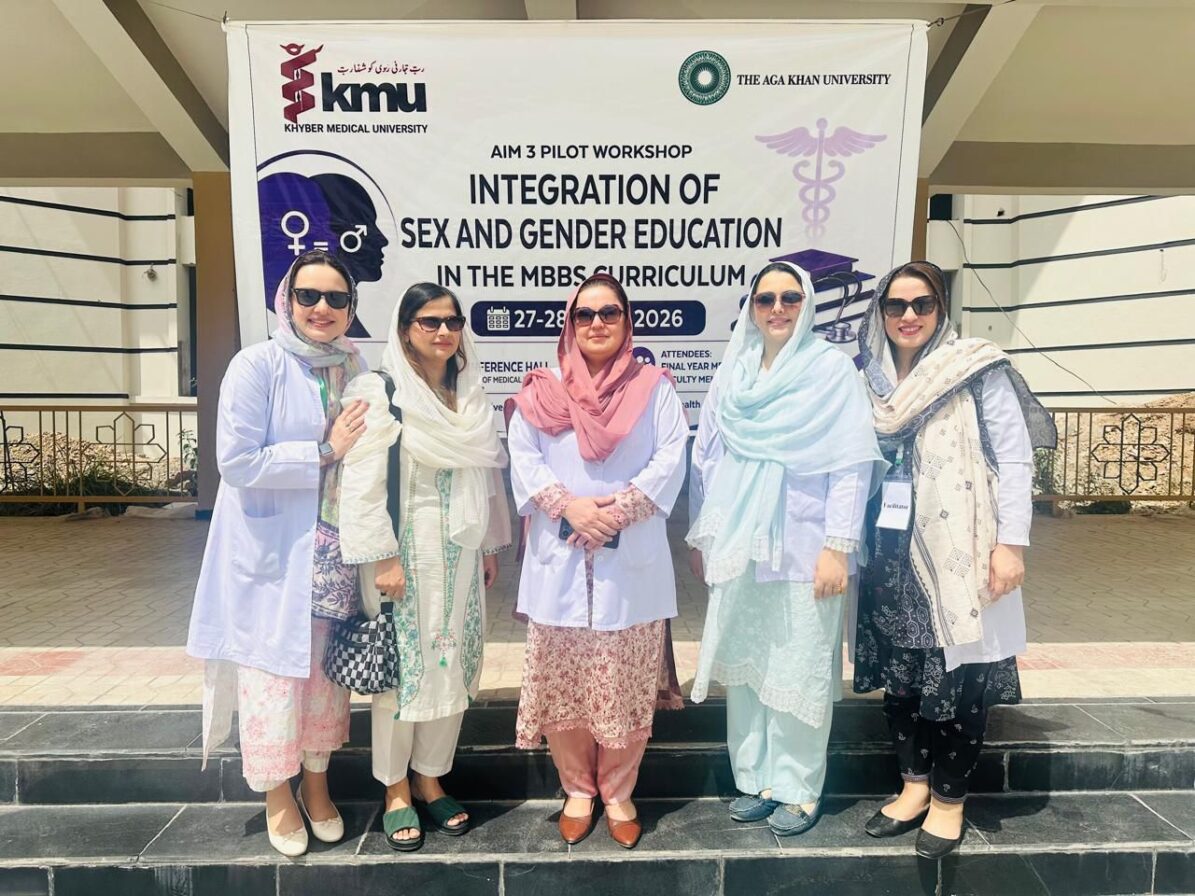
As part of the project’s implementation phase, KMU and AKU organized a two-day pilot workshop titled “Integration of Sex and Gender Education in the MBBS Curriculum” at KMU-Institute of Medical Sciences Kohat, engaging final year MBBS faculty members in practical strategies to integrate sex and gender concepts into teaching, assessments, case based learning, and clinical training. The initiative is being led under the principal investigator ship of Prof. Dr. Zia ul Haq at KMU and Prof. Dr. Zainab Samad at AKU.
At KMU, the Aim 3 pilot is being led by Dr. Maria Ishaq Khattak, who serves as the KMU Team Lead for the project. She coordinated the pilot workshop alongside Dr. Humera Adeeb, Dr. Bushra Mehboob, and Dr. Sayeda Saira Bokhari. The workshop was conducted with institutional support from dean clinical sciences Prof. Dr. Fozia Gul and Principal KIMS Kohat Prof. Dr. Mussarat Jabeen.
Officials involved in the initiative stated that the pilot marks an important transition from curriculum review and research to implementation and evaluation. Findings from the pilot are expected to inform broader curriculum reforms and contribute towards preparing future physicians to deliver more precise, inclusive, and equitable healthcare. The initiative places Pakistan among a growing number of countries working to align medical education with evolving global standards in health equity and precision medicine.






Leave a Reply