

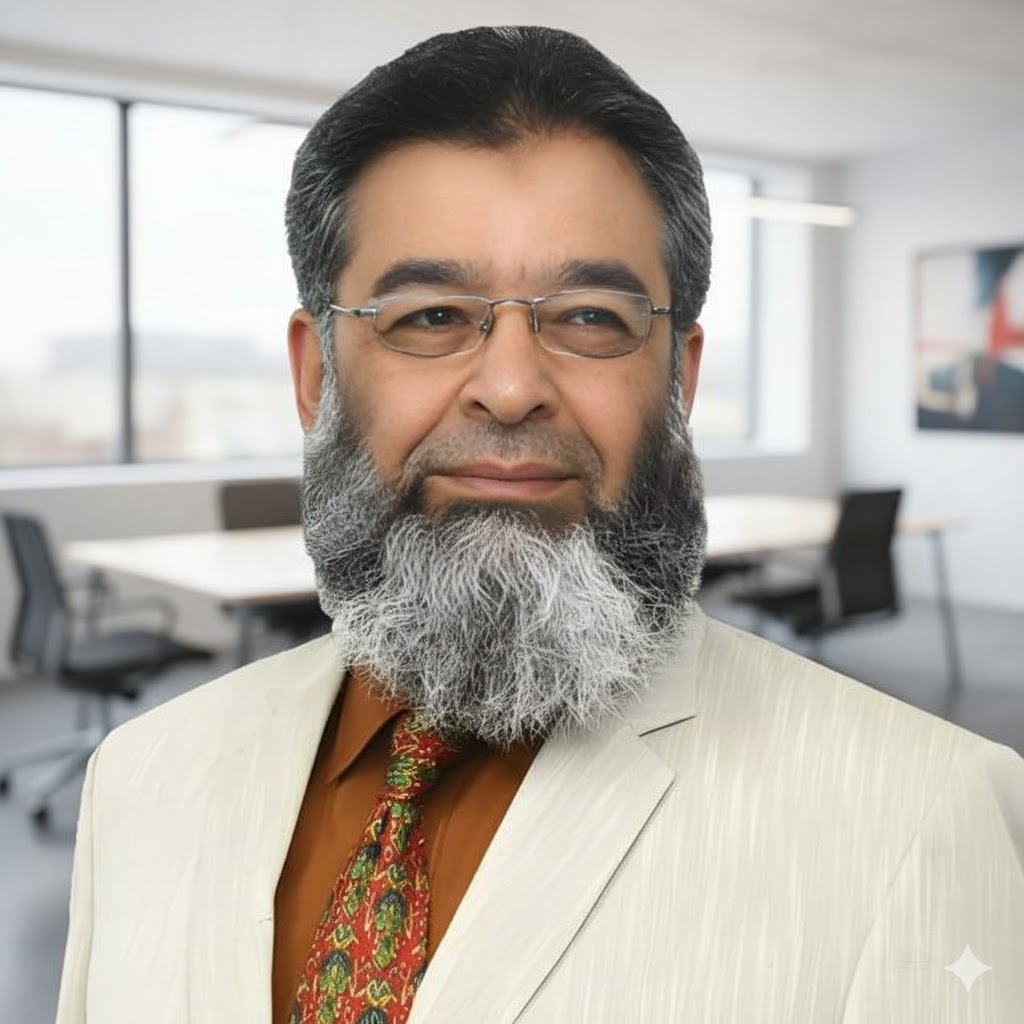
By Muhammad Mohsin Iqbal
When agitation takes root in thought, it gives rise to chaos. And when chaos settles in both heart and mind, the ability to distinguish between justice and injustice begins to fade, until it no longer seems to matter whether fairness prevails or not.
It was to restrain such tendencies that nations once envisioned a common platform—where humanity could be protected from destruction, and where disputes among states might be resolved under the umbrella of the United Nations, with justice visibly upheld. Yet from its very founding in 1945, certain decisions were made that now cry out for serious reconsideration and reform.
The United Nations arose from the ashes of two world wars, above all the second, which had brought untold sorrow to mankind. Its Charter opens with a solemn pledge by the peoples of the United Nations “to save succeeding generations from the scourge of war.” The purposes set forth in its first article are clear; to maintain international peace and security through collective action, to develop friendly relations among nations based on equal rights and self-determination, to achieve cooperation in solving economic, social, cultural and humanitarian problems, and to promote respect for human rights without distinction of race, sex, language or religion. In short, the organisation was meant to prevent future catastrophes, foster harmony, and uphold the dignity of all peoples.
The League of Nations, born after the Great War, had failed because it could not check aggression by the strong. The founders of the United Nations sought a stronger body, yet they built into it a compromise born of power realities. The Security Council, its most powerful organ, consists of fifteen members, five of whom—China, France, the Russian Federation, the United Kingdom and the United States—hold permanent seats and the right of veto over substantive decisions. Any one of these may block a resolution, even if the other fourteen members support it. This arrangement was a pragmatic concession to ensure the great powers of 1945 would join and remain engaged; without it, the organisation might never have come into being. But it created a hierarchy among sovereign states that sits uneasily beside the Charter’s own declaration of sovereign equality.
Over the decades, this veto has repeatedly shielded actions that the broader community of nations wished to condemn or restrain. It has allowed powerful interests to prevail where justice and human rights demanded otherwise. The most persistent pattern has been the protection extended to one particular state in the Middle East, where resolutions critical of policies that have caused immense suffering have been blocked time and again by a single permanent member. Such use of the veto has not only frustrated the will of the majority but has also eroded confidence in the very principle of equal justice that the United Nations was established to uphold.
The world has changed profoundly since 1945. New powers have risen, continents once marginalised now carry vast populations and growing influence, and the Global South rightly asks why structures frozen in the aftermath of one war should govern the realities of today. The veto has come to symbolise not strength in unity but privilege that undermines credibility. When the Council is paralysed, atrocities go unchecked, aggression faces no collective restraint, and smaller nations feel reduced to spectators in matters that threaten their very existence. Critics from many quarters—scholars, statesmen and ordinary citizens alike—have long argued that this structural inequality breeds impunity and alienates the majority of the 193 member states.
The time has come to bring an end to this injustice. Reform of the Security Council, including a fresh look at the veto, is no longer a distant ideal but a pressing necessity if the United Nations is to retain relevance and moral authority. Proposals abound; expansion of permanent membership to reflect contemporary realities, voluntary restraint on veto use in cases involving mass atrocities, or mechanisms to ensure that a single voice cannot indefinitely thwart the conscience of the world. Whatever the precise path, the goal must remain the same—to restore the organisation’s capacity to act decisively for peace and justice, true to the Charter’s noble spirit rather than the compromises of a bygone age.
In this difficult hour, it is heartening to witness diplomacy that rises above narrow calculation and serves the wider cause of peace. Pakistan has played a pivotal and constructive role in recent efforts to settle tensions between the United States and Iran, helping to broker a fragile ceasefire and create space for dialogue at a moment when conflict threatened to engulf the region and beyond. By acting as a trusted intermediary—leveraging its relations with both sides and its understanding of regional complexities—Islamabad has demonstrated the value of bridge-building in the shadow of the United Nations. Such initiatives remind us that even when the formal machinery of global governance falters, determined nations can still work to prevent escalation and open paths to negotiation. Pakistan’s contribution stands as a timely example of responsible statesmanship that seeks de-escalation rather than confrontation.
Yet mediation alone cannot cure the deeper ailment. The United Nations must evolve if it is to fulfil its founding promise. The veto, once a safeguard against hasty action, has too often become a shield for injustice. Nations must now summon the wisdom and courage to reconsider the structures established in 1945, not in a spirit of recrimination but of renewal. Only by restoring balance and fairness can the organisation truly serve as the centre for harmonising the actions of nations and safeguarding future generations from the scourge of war.
The alternative is clear: continued drift toward irrelevance, where chaos in thought and deed prevails because the mechanisms of justice have grown too feeble to matter. Humanity deserves better. The peoples of the United Nations, whose name graces the Charter, must now demand that their common platform live up to its highest ideals—before agitation once more takes root and justice fades entirely from view.



Leave a Reply