

TIMES REPORT
ISLAMABAD: The 1320MW Sahiwal Coal Power Plant, one of Pakistan’s flagship energy projects under the China-Pakistan Economic Corridor (CPEC), stands today not only as a symbol of energy security but also as a remarkable example of how modern coal-based power generation can coexist with environmental responsibility. Located in Punjab, this supercritical coal-fired power facility has redefined the perception of coal energy by integrating advanced emission control technologies, sustainable environmental practices, and extensive green initiatives to ensure a clean and green operational ecosystem.
From the very beginning, the plant has been designed with a strong focus on environmental compliance and sustainability. Unlike conventional coal-fired plants of the past, which were often associated with pollution and ecological degradation, the Sahiwal Power Plant incorporates state-of-the-art systems such as Flue Gas Desulfurization (FGD), Electrostatic Precipitators (ESP), Low-NOx burners, and Continuous Emission Monitoring Systems (CEMS). These technologies collectively ensure that emissions remain well within national and international environmental standards.
At the heart of the plant’s clean energy mechanism lies the Flue Gas Desulfurization (FGD) system, which plays a critical role in controlling sulfur dioxide (SO₂) emissions. Sulfur dioxide is one of the major pollutants produced during coal combustion and is known to contribute to acid rain and respiratory illnesses. The FGD system installed at Sahiwal utilizes a limestone-gypsum process to effectively remove sulfur compounds from the flue gases before they are released into the atmosphere.
In this process, flue gases generated from the boiler are directed into an absorber unit where they come into contact with a fine slurry of limestone. A chemical reaction takes place between the sulfur dioxide present in the gas and the calcium carbonate in the limestone, resulting in the formation of calcium sulfite, which is further oxidized into calcium sulfate, commonly known as gypsum. This process removes more than 90 percent of sulfur dioxide from the exhaust gases, significantly reducing air pollution and ensuring compliance with environmental standards.
The effectiveness of the FGD system at Sahiwal is evident in its emission levels, which consistently remain below the limits set by the Punjab Environmental Protection Agency, as well as international benchmarks such as those of the World Bank and the European Union. This demonstrates the plant’s commitment to adopting best-in-class technologies for environmental protection.
Complementing the FGD system is the Electrostatic Precipitator (ESP), another vital component in the plant’s emission control framework. The ESP is designed to remove particulate matter, including ash and dust, from the flue gases. When coal is burned, it produces fine particles that can pose serious health and environmental risks if released into the air. The ESP addresses this challenge by using electrostatic forces to capture these particles with exceptional efficiency.
As flue gases pass through the ESP, they are subjected to a high-voltage electric field that ionizes the particles. These charged particles are then attracted to oppositely charged collection plates, where they accumulate and are periodically removed. The efficiency of the ESP system at the Sahiwal Power Plant is reported to be as high as 99.9 percent in removing particulate matter from flue gases. This ensures that the emissions released into the atmosphere are virtually free of ash and dust, contributing to improved air quality in the surrounding areas.
In addition to FGD and ESP, the plant also employs Low-NOx burner technology to minimize the formation of nitrogen oxides (NOx), another harmful pollutant. By controlling the combustion process and reducing peak flame temperatures, these burners significantly lower NOx emissions, further enhancing the plant’s environmental performance.
A key feature that distinguishes the Sahiwal Power Plant from many other industrial facilities is its robust monitoring and compliance system. The plant is equipped with a Continuous Emission Monitoring System (CEMS), which operates round the clock to track emission levels in real time. This system allows engineers to continuously monitor pollutants such as SO₂, NOx, and particulate matter, ensuring that any deviations are immediately addressed. Additionally, ambient air quality monitoring stations have been installed to assess the impact of plant operations on the surrounding environment, reinforcing transparency and accountability.
While advanced technologies play a crucial role in emission control, the Sahiwal Power Plant has gone a step further by embracing large-scale afforestation and landscaping initiatives to create a truly green environment. The plant premises and surrounding areas have been transformed into lush green zones through extensive tree plantation campaigns. More than 70,000 trees have been planted, along with the development of over 152,000 square meters of grassland, significantly enhancing the ecological balance of the region.
This massive plantation drive is not merely a symbolic gesture but a well-planned environmental strategy aimed at offsetting carbon emissions, reducing dust levels, and improving air quality. Trees act as natural carbon sinks, absorbing carbon dioxide and releasing oxygen, thereby contributing to climate change mitigation. Moreover, the green belt around the plant helps in controlling soil erosion, stabilizing the land, and reducing the impact of dust storms that are common in the region.
The plantation initiative is further strengthened by active participation from plant employees, who regularly engage in tree-planting activities as part of their environmental responsibility. This culture of environmental stewardship has fostered a sense of ownership and commitment among the workforce, ensuring the sustainability of these green initiatives over the long term.
In addition to tree plantation, the plant has implemented effective ash management practices to prevent environmental contamination. The ash collected by the ESP is carefully handled and transported to designated ash yards, where it is regularly sprayed with water to prevent it from becoming airborne. This simple yet effective measure ensures that dust pollution is minimized and the surrounding environment remains clean.
Water management is another critical aspect of the plant’s environmental strategy. Wastewater generated during plant operations is treated through dedicated treatment systems before being discharged or reused, ensuring that water pollution is kept under control. Such measures highlight the plant’s comprehensive approach to environmental protection, addressing not only air quality but also water and land resources.
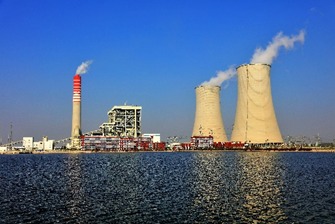
The visual impact of these combined efforts is striking. Visitors to the Sahiwal Power Plant often describe the facility as an oasis of greenery, with tree-lined roads, well-maintained lawns, and a clean industrial landscape that contrasts sharply with the traditional image of coal power plants. The emission stack releases what appears to be clean white vapor, often mistaken for clouds, reflecting the effectiveness of the emission control systems in place.
Despite being a coal-based facility, the Sahiwal Power Plant has successfully demonstrated that with the right technologies and practices, it is possible to achieve a balance between energy production and environmental protection. The integration of FGD and ESP systems ensures that harmful emissions are significantly reduced, while the extensive plantation and green initiatives create a healthy and sustainable environment.
Moreover, the plant’s adherence to international environmental standards and its proactive approach to sustainability serve as a benchmark for other industrial projects in Pakistan. At a time when environmental concerns are becoming increasingly critical, the Sahiwal Power Plant stands as a model of responsible industrial development, proving that economic growth and environmental conservation can go hand in hand.
In conclusion, the clean and green environment of the 1320MW Sahiwal Coal Power Plant is the result of a holistic strategy that combines advanced technology, rigorous monitoring, and proactive environmental initiatives. The successful implementation of FGD and ESP systems, along with extensive tree plantation and sustainable operational practices, has transformed the plant into a symbol of modern, environmentally conscious energy production. As Pakistan continues to expand its energy infrastructure, the Sahiwal model offers valuable lessons in achieving sustainability without compromising on efficiency or reliability.











Leave a Reply