

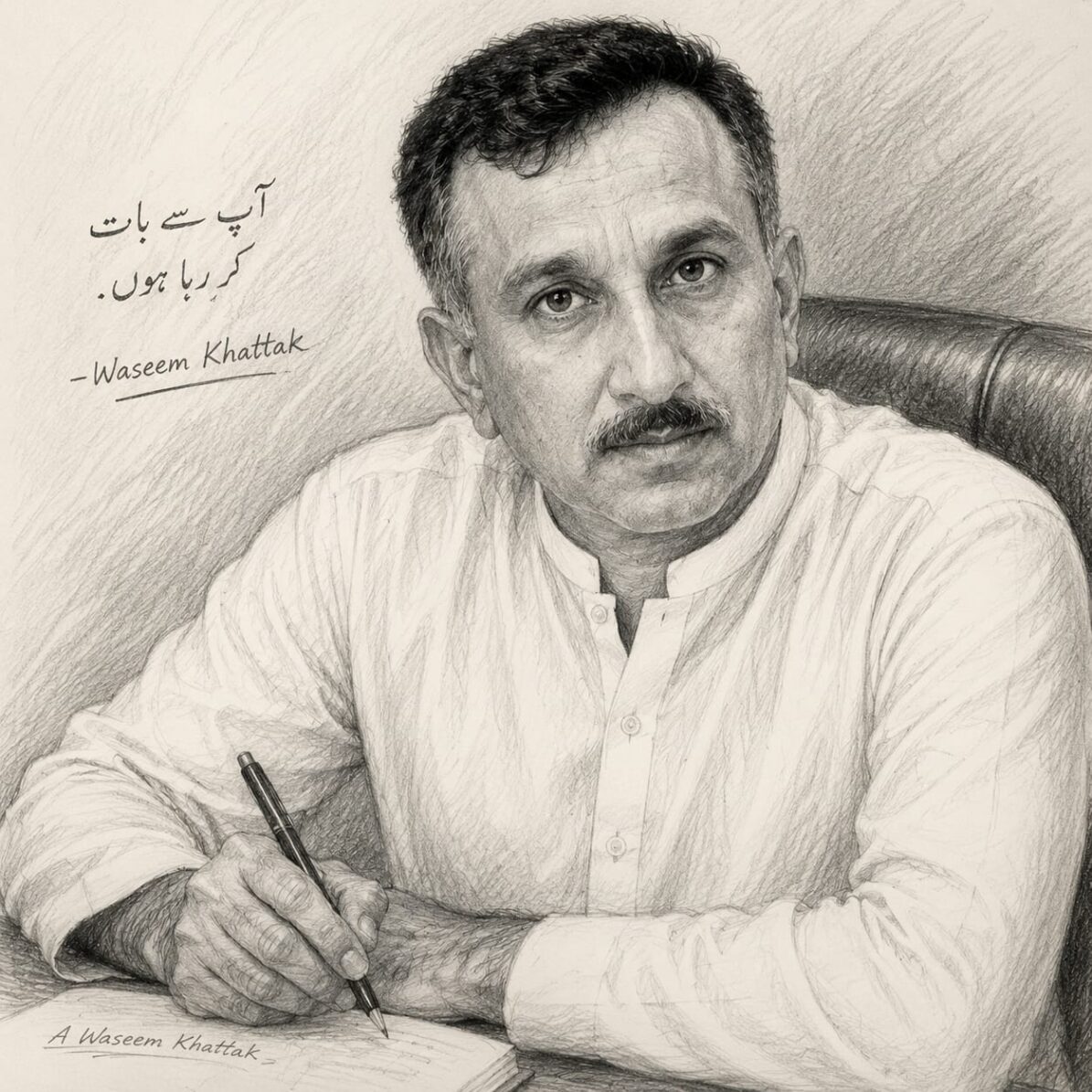
Rs. 116 Million for a Summer Festival While Schools Crumble
A state-of-the-art school building costs nearly Rs. 116 million to construct. That is precisely the amount the Khyber Pakhtunkhwa Elementary and Secondary Education Department has allocated for the Summer Learning and Grooming Festival 2026. This is not merely an expenditure — it is a statement of priorities, and it is the wrong one.
On the surface, the programme appears admirable: thousands of students across multiple districts will receive housing, meals, transportation, and opportunities for leadership, confidence, creativity, and physical development. The government calls it a comprehensive investment in children. But once one looks past the policy rhetoric and into the actual classrooms of this province, the picture falls apart. Most government schools in Khyber Pakhtunkhwa are in a state of neglect — children sit on dusty floors, teachers are absent or in excess, washrooms are non-existent or unsafe, and basic learning tools such as maps, globes, and even chalk are considered luxuries. Spending over a hundred million rupees on a week-long, temporary event is less a sign of progress and more a strategy of avoidance — a dazzling distraction from the hard, unglamorous work of fixing what is plainly broken.
Consider what the same amount of money could achieve through sustainable investment. Rs. 116 million could place approximately 120 new qualified teachers in schools across the province year-round — not for a few days of entertainment, but for a lifetime of education. These teachers would change minds, correct misconceptions, spark curiosity, and impact thousands of students every single school day. The same funds could rehabilitate more than 200 schools, providing functioning toilets, safe drinking water, adequate ventilation, and secure boundary walls — improvements that would immediately reduce dropout rates, particularly among adolescent girls, who are most likely to leave school when sanitation facilities are absent. If transportation is the barrier, the budget is more than sufficient to purchase or activate 15 to 18 school buses serving remote and mountainous communities for years to come. For learning resources, the same allocation could provide nearly 40,000 impoverished children with free books and stationery, enabling them to stay in school rather than dropping out for lack of basic supplies. Each of these investments offers measurable, sustained, and transformative returns — unlike a festival whose benefits evaporate the moment the tents are folded and the media cameras depart.
The problem, however, runs deeper than opportunity cost alone. The festival model carries risks that policymakers do not always acknowledge. First, it disrupts the school year: teachers and administrators are pulled away from their core responsibilities, leaving regular classes understaffed during a critical period. Second, there is no independent, verifiable evidence that previous editions of such festivals have improved learning outcomes, psychological wellbeing, or skill development. Without such evidence, continued funding amounts to pouring money into a well of good intentions with no measurable return. Third, events of this nature are inherently easier to organise in urban centres, systematically excluding children in the most remote areas of the province and reinforcing the very inequalities the government claims to be fighting. Finally, large-scale, short-term projects with limited oversight are historically prone to financial leakage, favouritism, and corruption — eroding both resources and public trust.
There is also a moral dimension to this debate that must not be ignored. When parents in remote villages — whose children cannot read, sit on broken chairs, and drop out because they lack notebooks — hear that millions have been spent on a summer festival, the message they receive is devastating: their children are not important enough for systemic change, only for symbolic gestures. This corrodes the trust between the state and its people, leaving marginalised communities disillusioned and disengaged. An education system is supposed to be the great equaliser. When resources are channelled into temporary, optional events rather than into basic infrastructure, it becomes an instrument of visibility over vulnerability. The children most in need — those from conflict-affected districts, impoverished families, children with disabilities, and girls in conservative areas — will derive no benefit from a festival. They are too far away, too poor to attend, or simply not accounted for in the planning documents.
Honesty compels us to acknowledge that festivals and high-visibility events are rarely designed with children as the primary beneficiaries. They are designed for image, for donor satisfaction, and for the ticking of boxes in policy documents. True reform requires the courage to reject the glamorous scheme in favour of the unglamorous solution — to understand that fixing a school toilet, while not photogenic, is profoundly more meaningful than a press release about a summer camp. That is not the kind of courage visible in KP’s education leadership today. What we see instead is a continued search for quick wins that generate headlines but deliver little lasting change.
The path forward is neither complicated nor unknown — it simply requires political will and administrative discipline. First, all time-bound discretionary expenditure such as this festival should be halted, and every available resource redirected to a School Rehabilitation Fund and a Teacher Recruitment Fund. Second, a transparent, digitised monitoring system must be established so that citizens can track precisely how much is being spent on each school, what has been accomplished, and what remains to be done — because public accountability is the only reliable safeguard against waste. Third, parents, teachers, and local communities must be brought into the budgeting process to ensure that allocations reflect ground realities rather than bureaucratic assumptions. Fourth, an independent review of all past festivals and similar programmes should be conducted to assess their actual educational impact; those that cannot demonstrate meaningful outcomes should be discontinued permanently. Fifth, a multi-year infrastructure plan — prioritising the most deprived districts first — must replace the current cycle of ad hoc, high-profile spending.
The choice before us is clear. We can continue the theatre of temporary entertainment, providing a few hundred children with a few days of activities, while millions of others remain deprived of their fundamental right to education. Or we can summon the collective will to invest in what genuinely matters: teachers who stay, schools that stand, and systems that serve every child, every day, throughout the year. The children of Khyber Pakhtunkhwa are not asking for festivals. They are asking for futures — classrooms where they can learn safely, teachers who believe in them, books that open doors, and a government willing to make structural commitments rather than seasonal spectacles. The time for excuses is over. The time for real, structural, and sustainable change is now. It begins with the courage to say: too much has been spent on appearances, and too little has been invested in the reality that every child in this province deserves.
Waseem Khattak is a freelance writer and education analyst with a keen interest in public policy, governance, and reforms in the education sector of Pakistan. He writes on issues related to educational development, system gaps, and policy impact on students and institutions.
awaseemkhattak@gmail.com
Working as Communication officer at Hayatabad Medical Complex Peshawar








Leave a Reply