

By Junaid Qaiser
The Middle East has become all too accustomed to living under the looming threat of crisis. Each new confrontation seems to have the potential to spark a broader regional conflict, pulling in global powers, disrupting energy markets, and jeopardizing international security. Over the last two weeks, that danger felt alarmingly close as the United States and Iran exchanged military pressure, edging toward further escalation.
However, today, there is an unexpected lull.
After thirteen consecutive nights of American airstrikes against Iranian targets, the bombing campaign has come to a halt. According to statements from senior American officials, the pause is deliberate. US Ambassador to the United Nations Mike Waltz described President Trump’s decision as an effort to give negotiations “some space” and allow diplomatic efforts to move forward.
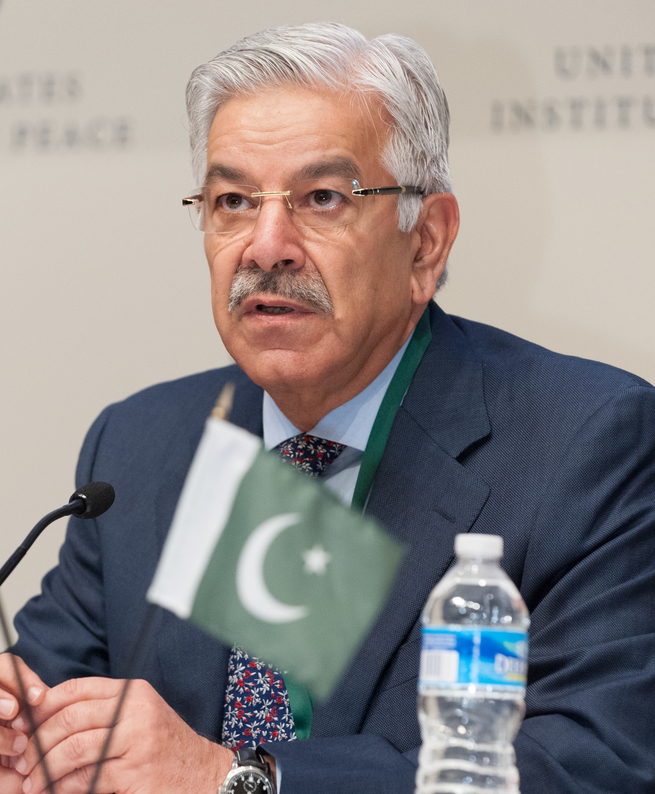
What makes this moment particularly significant is the role played by regional actors working quietly behind the scenes. Diplomatic sources in Washington have indicated that Pakistan remained actively engaged throughout the latest escalation, maintaining communication with Tehran, Washington, Riyadh and Beijing while tensions were at their highest.
Pakistan’s position throughout the crisis has been consistent. Islamabad has repeatedly argued that dialogue remains the only sustainable path toward de-escalation. While others focused on military options, Pakistan continued advocating for engagement, understanding that every conflict eventually ends at a negotiating table.
Recent reports from Turkish and regional media further highlight the growing diplomatic activity surrounding the crisis. Turkish Foreign Minister Hakan Fidan reportedly held discussions with senior leaders in Qatar and Pakistan, including Field Marshal Syed Asim Munir, regarding efforts to advance negotiations between Tehran and Washington. Qatar and Pakistan, both maintaining important relationships across regional divides, appear to have intensified efforts to facilitate communication between the opposing sides.
Pakistan occupies a unique position within this framework. It maintains constructive relations with the United States while also preserving important ties with China, Saudi Arabia, Qatar, Turkey and Iran. In a region often defined by competing alliances, Pakistan’s ability to engage with multiple stakeholders gives it a credibility that few countries can claim.
The current pause in hostilities also reveals the practical limits of military escalation. Reports from American media suggest that concerns over munitions supplies, risks to regional allies, economic repercussions and questions about the effectiveness of additional strikes all contributed to the decision to halt the bombing campaign.
These factors should not be viewed as signs of weakness. Rather, they demonstrate the complexity of contemporary warfare. Military operations no longer exist in isolation. Every strike carries economic consequences, diplomatic costs and strategic risks that extend far beyond the battlefield.
The reaction of energy markets illustrates this reality. Oil prices declined sharply following signs of de-escalation, reflecting global relief that the conflict had not expanded further. With critical maritime routes such as the Strait of Hormuz remaining central to global energy security, any prolonged confrontation between Washington and Tehran would have consequences reaching far beyond the Middle East.
For this reason, the current pause deserves careful protection.
There are still substantial obstacles to overcome. Iran continues to portray the halt in hostilities as evidence that American pressure has failed. The United States maintains that its military capabilities remain fully intact and that the pause should not be interpreted as retreat. Deep disagreements remain over regional security, nuclear issues and broader strategic interests.
Nevertheless, diplomacy often advances not through dramatic breakthroughs but through small openings. The absence of airstrikes for two days may appear modest, but in a region where escalation can unfold rapidly, even a brief pause creates opportunities that did not previously exist.
The challenge now is transforming this temporary calm into a sustainable political process. Success is far from guaranteed. Yet the alternative—a return to military escalation—would carry enormous risks for the region and the wider world.
Pakistan’s role in this moment should therefore not be underestimated. By maintaining communication with all sides and advocating dialogue when tensions were highest, Islamabad has demonstrated the value of patient diplomacy. It has shown that influence is not measured solely by military strength but also by the ability to build bridges between adversaries.
As the United States and Iran weigh their next steps, the world should hope that the current pause evolves into something more lasting. History has repeatedly shown that wars are easier to start than to end. Creating space for talks is often the hardest part.
For now, that space exists. The responsibility falls on all parties to use it wisely.
In a region that has seen too much conflict and too little compromise, making room for talks may prove to be the most important achievement of all.
Making Room for Talks







Leave a Reply