

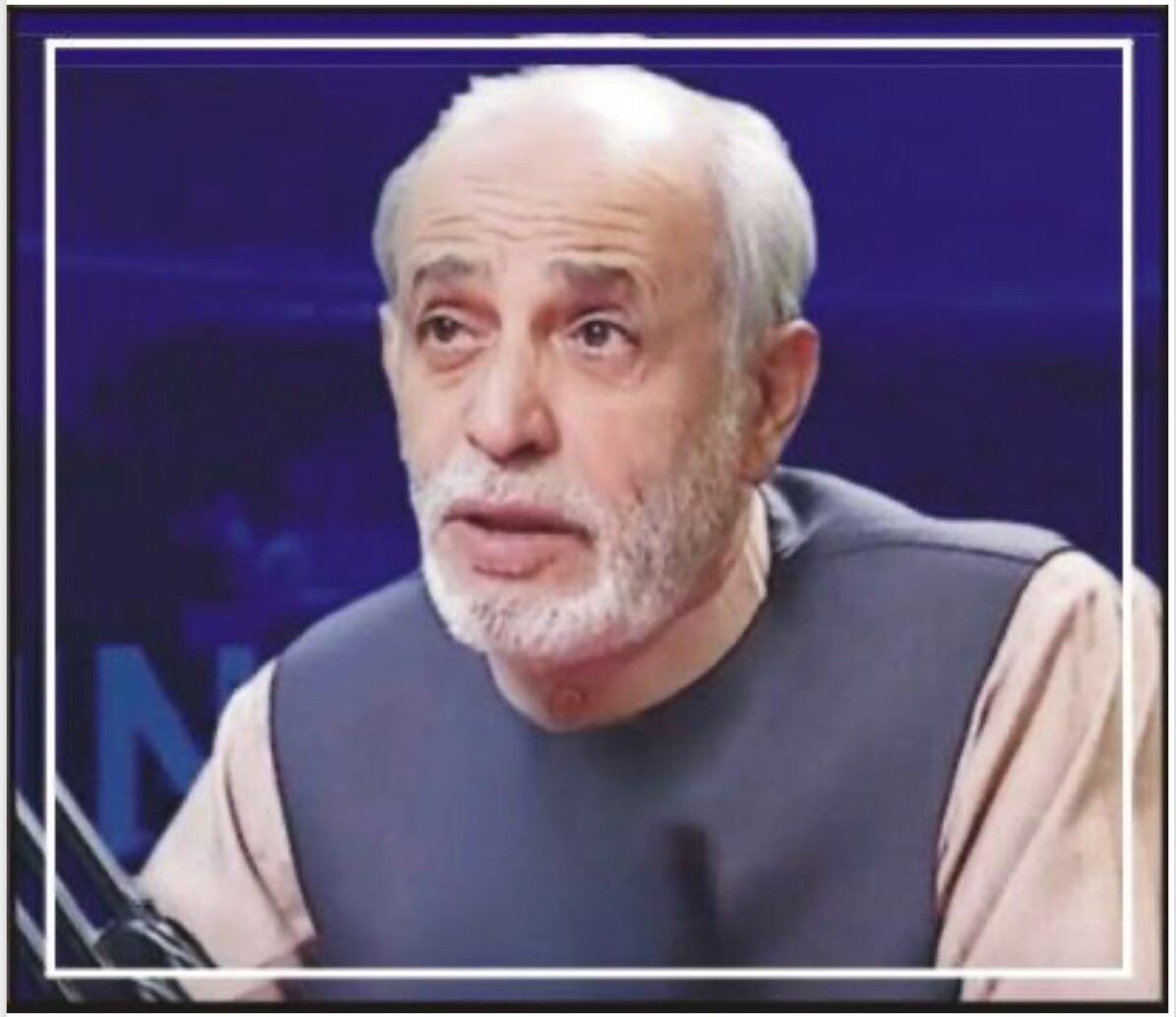
Shamim Shahid
The participation from Afghanistan in funeral of late Iranian spiritual leader Imam Ali Khamenayee generated heated debate amongst the Afghans, both living inside or scattered in rest of the world. Beside a highly official delegation headed by Deputy Prime Minister Mullah Abdul Ghani Biradar, the Iranian government had also invited a group of opposition Afghan leaders included young Ahmad Masuod and Shia leader Ustad Mohaqqiq. Ex President Hamid Karzai and several leaders have also been invited but they were denied travelling rights from Kabul to Tehran by Taliban officials.
The presence of representatives from rival or hostile group has not only made surprising the Taliban leaders in Kabul but it made anger all those Afghans who since a long are unhappy with foreign countries, especially neighbouring Pakistan and Iran intervention in internal affairs of their motherland. Though this decision on the part of Iranian authorities may be a lesson for the Taliban regime as they yet to receive recognition of rest of the world countries. On different grounds, the world countries are hesitating to recognise the Taliban regime in Kabul. In this respect, Taliban regime must read writing on the walls and must review its internal policies without any further delay.
No one can neglect the fact that despite its traditional hostilities with United States, the Islamic Republic of Iran had played a key role in United Kingdom (UK) framed forward policies. This policy is now owned and executed by US with help of its allies including Pakistan and several others. Amidst its status as a sleeping partner in US lead strategies, which caused complete collapse of Afghanistan historical traditions and system of governance, the Islamic Republic of Iran has maintained cordial, friendly, neighbourly and diplomatic relations with Afghanistan. But on the other hand, Pakistan remained in hot water with Afghanistan since its inception some 79 years back.
On such grounds former Afghan Ambassador to Islamabad, Najibullah Ali Khil is right that Iran has exploited tense and uncordial relations between Islamabad and Kabul in its favour or succeeded in materialising its designs. Ali Khel in his latest analysis states that the current strained relationship between Islamabad and the Taliban has provided Tehran with an unprecedented opportunity to further expand its influence in Afghan affairs. Ali Khil says that the crisis between Pakistan and the Taliban has worked in Iran’s favor, giving the country a historic chance not only to maintain and strengthen its relations with the Taliban but also to play a central mediating role in fostering understanding with opposition groups.
According to Ali Khel, unlike Pakistan’s policies, Iran may view Afghanistan’s long-term stability as being in its own interest, since stability would enable Tehran to expand bilateral economic cooperation and trade, manage water-related issues, facilitate transit routes to Central Asia, and even gain access to China through the strategically important Wakhan Corridor. Najibullah Ali Khil further explains in his analysis that Iran’s foreign policy has moved beyond purely religious considerations and is now driven largely by pragmatism, focusing on national interests and countering American influence. In this context, the tensions between Kabul and Islamabad have significantly assisted Tehran in advancing these objectives.”
In the light of Najib Ullah Alikhel analysis, responsibility rests with no other than occupants of important office holders of effective state organs at Rawalpindi-Islamabad to review its acts and actions regarding Afghanistan. Like Pakistan, the Islsmic Republi of Iran also forcibly evacuated the Afghan refugees but the reaction of Afghans is positive. Whereas Pakistan getting very negative reaction in response of its decision of forcibly evacuating the Afghan nationals.
Taliban regime awarded respect to late Abdul Ahad Mohmand
Afghanistan’s Taliban regime deserves much more appreciation for awarding well respectable and dignified protocol to the dead body of first ever astronaut, Abdul Ahad Mohmand who died in Germany couple of days back. Media reports from Kabul reveal that after arrival in Hamid Karzai International Airport at Kabul, the dead body of motherland’s first astronaut, Abdul Ahad Momand,was received with due honour and respect by high ranking Taliban officials. A squad of Afghanistan armed forces gave salut to the dead body, packed in coffin and covered with floral wreaths. Later Abdul Ahad Mohmand was laid to rest in Shuda graveyard at heart of Kabul City.
The funeral prayers were held at Kabul’s Eidgah Mosque before Momand was buried at Maranjan Hill Cemetery, named as Shujada graceyard by late Afghan President Dr Najib Ullah. The ceremony wattended by Taliban officials, family members and hundreds of mourners who gathered to pay their final respects to Momand.
According to the Taliban’s Ministry of Foreign Affairs, Mohmand’s body was repatriated from Stuttgart, Germany, at the request of his family so he could be buried in his homeland. Family members said he had been battling cancer.
Mohmand made history in 1988 when he became the first Afghan and the fourth Muslim to travel into space. He flew aboard the Soviet Soyuz TM-6 mission to the Mir space station, spending nearly nine days in orbit and carrying out scientific experiments with Soviet and Syrian crew members. Born in Andar district of Ghazni province, Momand graduated from Afghanistan’s military institutions before receiving advanced pilot and cosmonaut training in the former Soviet Union. After serving as a military pilot, he was selected for the joint Soviet-Afghan space mission that made him one of Afghanistan’s best-known scientific figures.
Following decades of political upheaval in Afghanistan, Momand settled in Germany, where he spent much of his later life. Despite living abroad, he remained widely recognized in Afghanistan for his pioneering role in space exploration and his contribution to the country’s scientific legacy.
His death prompted tributes from Afghans at home and abroad, with many remembering him as a symbol of national achievement and one of the country’s most distinguished public figures. His burial in Kabul marked the end of a career that secured him a unique place in Afghanistan’s history as its first astronaut.


Leave a Reply