

TIMES REPORT
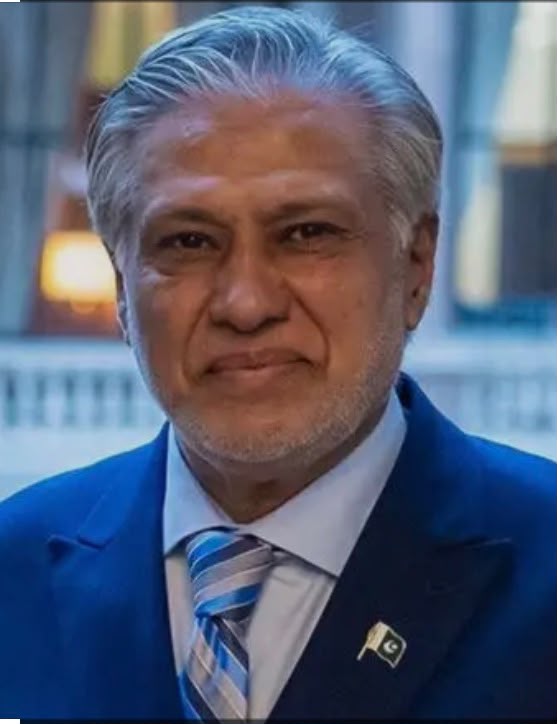
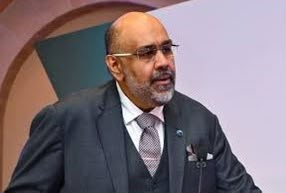
LAHORE: Deputy Prime Minister and Foreign Minister Ishaq Dar on Thursday said Pakistan is now being recognized on the global stage as a peacemaker for its role in facilitating dialogue between the United States and Iran.
Speaking to the media after participating in the 983rd annual Ghusal ceremony of Data Darbar, Ishaq Dar extended heartfelt congratulations to the nation on the occasion of the annual Urs of Hazrat Data Ganj Bakhsh on behalf of President Asif Ali Zardari, Prime Minister Muhammad Shehbaz Sharif, PML-N leader Muhammad Nawaz Sharif, and Punjab Chief Minister Maryam Nawaz.
He said development work at Data Darbar was progressing steadily, adding that the ongoing expansion project was one of the largest initiatives undertaken at the shrine.
He credited Punjab Chief Minister Maryam Nawaz and her team for the project and expressed his belief that the expansion and improvement of places of worship contribute positively to a country’s development.
Referring to recent regional developments, Dar said Pakistan played an important role in facilitating dialogue between the United States and Iran, describing it as a blessing from Allah Almighty.
He said Prime Minister Shehbaz Sharif, Field Marshal Syed Asim Munir, and the Foreign Ministry made sincere efforts for successful mediation process between US and Iran.
Dar noted that Pakistan, once described as an isolated country, is now gaining recognition worldwide.
He said Allah Almighty had blessed Pakistan with the status of a middle power and that the government’s devotion to religious values and the Haramain Sharifain had also brought blessings to the country.
He said Pakistan had already emerged as a nuclear and missile power and that the government’s focus was now on transforming the country into an economic power under the leadership of Prime Minister Shehbaz Sharif.
Recalling the PML-N’s past economic performance, Dar said Pakistan had witnessed strong macroeconomic indicators during 2013–2017.
“This was the same country which, from 2013 to 2017, had its voice heard across the world. All macroeconomic indicators had improved. The growth trajectory was such that even Europe used to appreciate it. Foreign investment had reached its peak,” he said.
“Pakistan, that had become the 24th largest economy in the world, then fell to the 47th spot in the next four years,” he added. Dar said efforts were now underway to reverse that decline.
“Pakistan is moving towards growth, development, and public welfare,” he said.
Referring to the country’s economic challenges, Dar said the government inherited a damaged economy and that rebuilding it would take time. “The four-year gap caused significant destruction, and naturally it takes time to repair the damage.
However, the situation is now moving in a positive direction,” he added.
Discussing regional tensions, Dar said Pakistan strongly condemned the attack on Iran and remained actively engaged in diplomatic efforts.
He revealed that he had held more than 150 contacts with his counterparts, while Prime Minister Shehbaz Sharif maintained regular communication with world leaders. He also praised Field Marshal Syed Asim Munir for his effective backchannel diplomacy.
According to Dar, Pakistan’s international image has changed significantly and the country is now being viewed as a peacemaker, a middle power and a net security provider.
Commenting on the Federal Budget 2026-27, he said the government had made every effort to provide maximum relief to salaried individuals while facilitating traders, industries, and businesses.
He urged devotees visiting the shrine of Data Sahib to pray for the country’s peace, prosperity, and progress, expressing confidence that conditions would continue to improve.
Responding to a question, Dar said Pakistan is a peace-loving country that respects international law and the sovereignty of all nations, regardless of their size. However, he warned that any hostile action against Pakistan would receive a strong response.
He further claimed that after 47 years, Iran and the United States returned to the negotiating table and that Pakistan deserved credit for facilitating the process.
Ishaq Dar explained that Pakistan’s role was limited to facilitation and, therefore, details of the negotiations could not be made public during the process.
Dar said that once the agreement was signed, it was placed on the record of the National Assembly.
Dar further noted that when Pakistan offered to host the talks, some people suggested holding the negotiations in another country because reaching Pakistan would take around twenty hours from US.
“The agreement is named the Islamabad Memorandum of Understanding, and it is a matter of great pride for Pakistan,” he said.
According to Dar, the memorandum was signed by U.S. President Donald Trump, Iranian President Masoud Pezeshkian, while Prime Minister Shehbaz Sharif signed as the facilitator.
He also acknowledged the support of Qatar, the United Arab Emirates, Saudi Arabia, China, Türkiye, and Egypt in the process.
Dar said that everyone should welcome Islamabad Memorandum of Understanding.
Referring to the G7 meeting held on June 18, he said that U.S. President Donald Trump had suggested completing the agreement through electronic signatures.
Later, Dua was also offered for progress and prosperity of the country.
Leave a Reply